REVIEW · HALF-DAY
Half-Day Aruba Animal Sanctuary Guided Tour
Aruba’s best animal encounter is not limited to one farm. This half-day outing takes you to an ostrich farm, a donkey refuge, and Philip’s Animal Garden, where you can feed animals and get close to creatures ranging from peacocks to tiny monkeys. Danny and Ricardo are among the guides praised for friendly, informative driving and good timing.
I like the easy hotel or port pickup, and I like the variety: three very different stops in one outing. The one-hour visits keep the day moving, and cold bottled water is provided. The main caution is transportation. Although air-conditioned coach service is advertised, some departures have used older open-air or poorly cooled buses, which can be uncomfortable in Aruba’s heat.
Key points to know before you book
- Feed an ostrich at Aruba Ostrich Farm: You get a guided look at these huge flightless birds and their emu relatives, with time for a close encounter and photos.
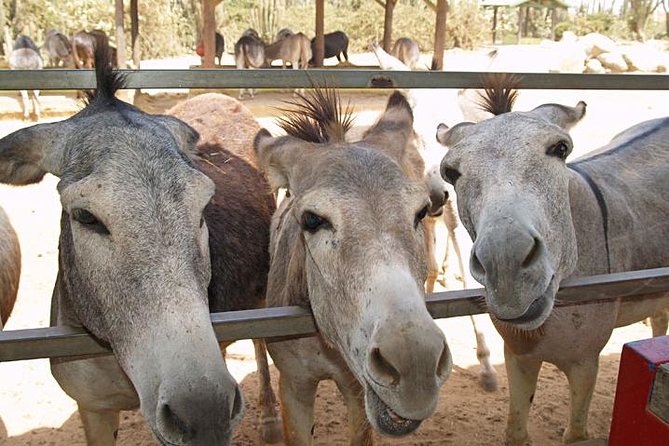
- Bring food for the donkeys: Carrots or apples can make the Donkey Sanctuary visit more interactive, though the tour does not include food for the animals.
- Expect a wide mix of animals: Philip’s Animal Garden may include goats, peacocks, turtles, horses, cats, monkeys, and other rescued or adopted animals.
- Plan for heat: Much of the experience takes place outdoors, so sunscreen, light clothing, and water matter.
- Allow closer to five hours: The stated duration is about four hours, but some outings run longer depending on pickup and traffic.
- Check the vehicle details: Most people praise the transport, but a few have reported old buses, open windows, or air-conditioning problems.
Three animal stops, one easy half-day
This is a good choice if you want to see a side of Aruba beyond beaches and hotel pools without arranging several separate rides. You leave at about 9:00 a.m., ride between the sites, and return after roughly four hours, though the total can reach five hours.
The outing is built around three one-hour stops. That rhythm works well for families and for anyone who likes variety. You are not spending the whole morning at one enclosure, and each place offers a different kind of animal contact.
The guide adds value during the drives. Danny has been praised for giving useful information without talking nonstop, allowing you to enjoy the island scenery. Ricardo has also been singled out for mixing island history and landmarks with humor. That balance matters on a driving tour. A guide who fills every quiet moment can wear you out, while a silent driver leaves you guessing where you are.
The group can reach a maximum of 25 people. That is large enough to make a guided outing affordable, but small enough that the stops should remain manageable. The three locations have their own staff and layouts, so the quality of explanations can vary from place to place.
More Half-Day Trips in the world:
- Chiang Mai: Elephant Sanctuary Feeding Program Half-Day Tour
★ 4.8 · 4,527 reviews - Krabi: Ao Nang Elephant Sanctuary Half-Day Tour
★ 4.8 · 1,796 reviews - Koh Samui: Half-Day Ethical Elephant Sanctuary with Mud Spa
★ 4.8 · 574 reviews
Aruba Ostrich Farm: a lively first stop
The ostrich farm is often the strongest part of the morning. Ostriches are among the largest living birds, and seeing one close up gives you a better sense of their size than any photograph can. The farm also houses emus, the tall Australian birds that look related but have their own distinct behavior.
A guided tour lasts about an hour, with admission included. You can expect information about the birds and an opportunity to feed an ostrich, often making this the stop where you get the most memorable photo. The birds are not timid, so listen carefully to instructions and keep food offered at the proper height.
The farm has a bar and a gift shop, useful touches on a hot morning. You may also find staff who keep the explanation lively and humorous. Several people especially liked the quality of the ostrich guide, so this stop appears to benefit from having a dedicated local presenter rather than relying only on the main bus guide.
I would give this stop your full attention. It is easy to treat a farm visit as a quick photo stop, but the bird facts and feeding session make it more than that. Keep in mind that the experience is outdoors, and shade may not be available everywhere. Wear sunscreen and a hat, and take the water offered by the guide.
Donkey Sanctuary Aruba: carrots, cats, and gentle residents
The Donkey Sanctuary is a nonprofit, volunteer-run organization founded in 1997 with a simple mission: save the donkeys. It is a more purposeful stop than a standard animal attraction because the visit helps support a refuge built around animal care.
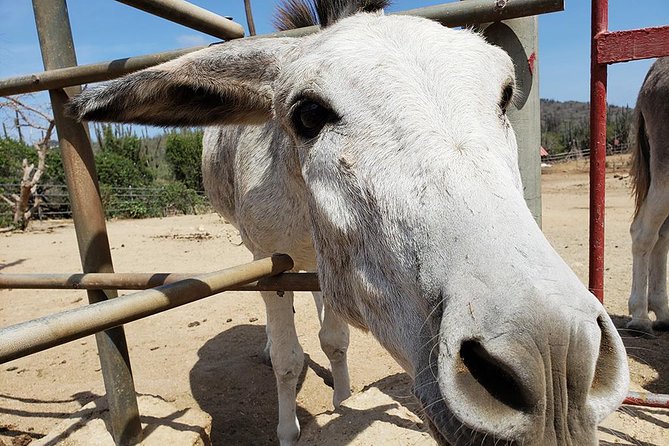
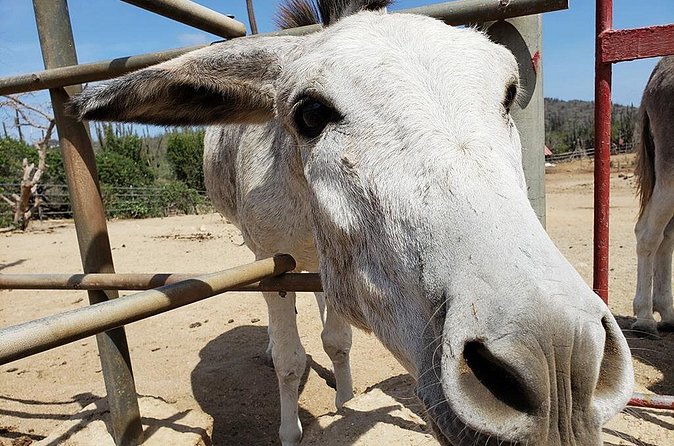
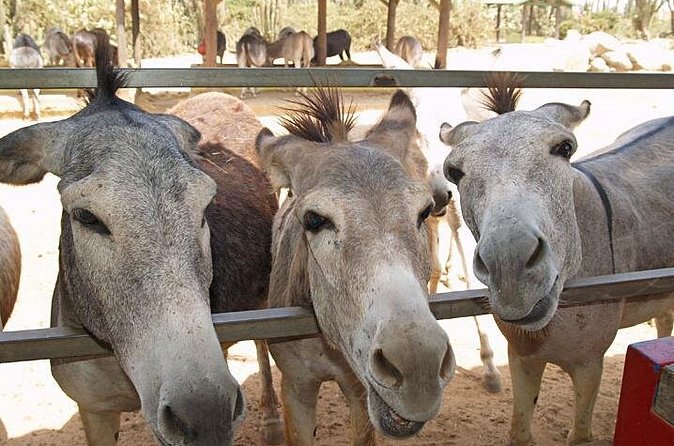
The donkeys are friendly and accustomed to people. If you want the best interaction, bring carrots or apples from elsewhere in Aruba. The tour does not include animal food, and the sanctuary may offer its own food for purchase, but bringing your own gives you a useful option. Two bags of carrots can be more than enough, so break them into smaller portions rather than feeding everything at once.
The donkeys are not the only attraction. Peacocks wander through the grounds, and friendly cats may appear near the paths. One memorable resident is Camino, a three-legged donkey who has become a favorite for many visitors. Encounters like this help explain why the sanctuary matters: you are not just looking at animals, you are seeing rescued creatures that now have a safe place to live.
Plan on about an hour here. That is enough time to feed several donkeys, take pictures, and look around without turning the stop into a long wait in the sun. The setting is informal, so do not expect a polished zoo-style presentation at every turn. The appeal is the direct contact and the clear support for a nonprofit mission.
Philip’s Animal Garden: the widest mix of creatures
Philip’s Animal Garden offers the largest variety and the least predictable stop. Philip Merryweather began rescuing and adopting abused and abandoned animals, turning the property into a shelter and rehabilitation center for exotic and domestic animals.
At the entrance, food is sometimes provided for feeding the animals. That changes the visit from simply walking past enclosures to having direct contact. Small monkeys may carefully take food from your hand, and some are happy to receive back scratches. The tiny hands of the monkeys are a highlight, but follow staff directions and avoid sudden movements.
You may see goats, peacocks, turtles, horses, cats, miniature horses, and a camel, along with other animals. One person counted what felt like a million peacocks, which gives you a good idea of the place’s character. It is busy with animal life rather than arranged like a formal museum.
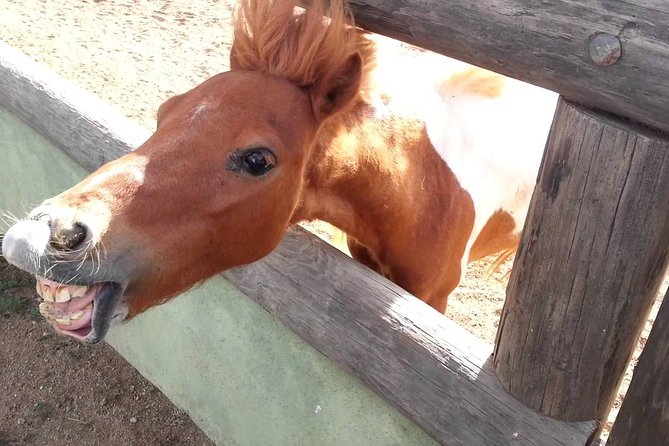
The garden is also the most uneven stop. Some areas may feel basic, and not every animal has a staff member nearby to explain its story. A few enclosures have drawn criticism for being small or isolated, including an area with miniature horses. If you want a carefully designed zoo with interpretive signs and polished exhibits, this may not meet your expectations.
If you enjoy rescued animals, informal encounters, and a wide mix of species, you will probably find the garden rewarding. Give yourself time to look behind the obvious paths, since the little monkeys near the back have become a favorite part of the visit. Keep an eye on geese and other assertive animals when food is involved.
More Guided Tours in the world:
- Phuket: Elephant Sanctuary Guided Tour with Hotel Transfers
★ 4.8 · 2,020 reviews - Bali Zoo: Guided Ethical Elephant Care Experience
★ 4.7 · 2,019 reviews - Bali Zoo: Guided Breakfast With Observing Orangutans
★ 4.5 · 936 reviews - Ubud: Sacred Monkey Forest Sanctuary Ticket and Guided Tour
★ 4.8 · 675 reviews
What the guide adds between the farms
The driving time is not dead time. Guides point out historical and interesting island landmarks as you move between stops, giving you a quick look at Aruba beyond the resort areas. This is especially useful if you are early in your stay and want to get your bearings.
Danny has received particular praise for being friendly, funny, patient, and informative. Families with children as young as two and five have found the pace workable. That said, the amount of commentary can depend on the guide and where you sit in the vehicle. A noisy bus can make it hard to hear, so staying near the front may help if guide commentary matters to you.
The tour is designed for most people to participate, but each stop involves walking outdoors and standing near animals. Children must be accompanied by an adult. This is not a passive sightseeing drive, so young children should be watched closely around large birds, donkeys, monkeys, and food.
The air-conditioning question

Transportation is the one part I would check carefully before paying. The tour is described as using an air-conditioned coach, and many people had a comfortable ride with plenty of cold water. Others were picked up in an open-air bus or an old repainted school bus with windows removed. One vehicle briefly broke down, and another was noisy enough to make the guide difficult to hear.
That inconsistency matters in Aruba. The heat can make a short outdoor walk feel long, and the vehicle is your recovery space between stops. If air-conditioning is essential for you, confirm the vehicle arrangement with El Tours & Transfers before departure rather than assuming every outing uses the same bus.
Even on a hot day, the guide appears to compensate by providing as much bottled water as needed. Still, water does not replace shade or a cool ride. Wear breathable clothing, bring sunscreen, and consider a hat. If the day is especially warm, expect the actual outing to last closer to five hours, not exactly four.
Is the $57 price good value?
At $57 per person, the value is strongest if you would otherwise pay separately for transportation and admission to three animal sites. The price includes local taxes, a professional guide, bottled water, hotel or port pickup and drop-off, and admission to the ostrich farm and Philip’s Animal Garden. The Donkey Sanctuary does not charge admission.
You also save the trouble of finding each location and arranging rides across the island. For a family, that convenience can matter more than squeezing the lowest possible price from each stop. The guide’s island commentary adds another layer, especially if this is your first time in Aruba.
Food and drinks are not included unless specified. Animal food may be available at some stops, but bring carrots or apples for the donkeys if that experience matters to you. Small extra costs are easy to overlook when comparing tours, so carry some money for snacks, drinks, gifts, or feed.
The price is less convincing if you mainly want a polished wildlife park. Philip’s Animal Garden has a rougher, shelter-like feel, and transportation quality can vary. You are paying for access to three distinct animal operations, not a single carefully controlled zoo.
Who will enjoy this tour most?
I would choose this outing for animal lovers, families, and first-time Aruba visitors who want a simple half-day plan. Children can feed animals, see unusual species, and move between three locations without a long lecture at any one stop. The one-hour schedule also helps if your family’s attention span is limited.
It works for adults who prefer local, hands-on places to standard sightseeing. The Donkey Sanctuary has a clear rescue purpose, and Philip’s Animal Garden reflects one person’s long effort to care for abandoned and mistreated animals. Those settings feel more personal than a large commercial attraction.
You may want another activity if you dislike heat, outdoor walking, or informal animal facilities. The vehicle issue is also worth taking seriously if you require reliable air-conditioning. And if your main goal is a long, quiet animal encounter, three short stops may feel rushed.
Practical tips for a smoother morning
- Bring sunscreen, a hat, and light clothing. The heat is a repeated theme of this outing.
- Pack carrots or apples for the donkeys, and break them into small portions.
- Carry a phone or camera, but keep it secure around animals reaching for food.
- Drink the bottled water provided, even if you do not feel thirsty.
- Ask about the vehicle if air-conditioning is important to you.
- Keep your schedule flexible. The tour is advertised at about four hours but can take five.
- If you want to hear the guide clearly, sit near the front when possible.
- Children must stay with an adult, especially during feeding sessions.
- Remember that food and drinks are not included unless specifically noted.
- Book with the weather in mind. Poor weather can lead to a new date or a full refund.
The tour is recommended by 93 percent of participants and has a 4.8 rating from 181 reviews, which matches its strongest qualities: friendly guides, good animal contact, a family-friendly pace, and simple transport arrangements. The occasional vehicle problem keeps it from being a flawless choice, but the core experience remains appealing.
Cancellation is free up to 24 hours before the start time for a full refund. Changes or cancellations inside that window are not accepted, and weather or minimum group requirements can also affect departure.
Should you book the Aruba Animal Sanctuary Tour?
Book it if you want to feed an ostrich, hug a donkey, meet rescued animals, and see three different parts of Aruba in one morning. I especially like the mix of purpose and fun: the Donkey Sanctuary supports animal rescue, while the ostrich farm and Philip’s Animal Garden offer hands-on encounters that work well for children and adults.
Go in with realistic expectations. This is not a luxury vehicle tour or a polished zoo visit, and Philip’s Animal Garden can feel basic. If you confirm the transportation, prepare for heat, and bring food for the donkeys, the $57 price gives you a practical and varied way to spend half a day.
FAQ
What time does the tour start?
The tour starts at 9:00 a.m.
How long does the animal tour last?
The advertised duration is approximately four hours, though some outings take about five hours.
Does the tour include hotel pickup and drop-off?
Yes. Hotel and port pickup and drop-off are included.
Are admission fees included?
Admission to the attractions is included. The Donkey Sanctuary has free admission.
Can children join the tour?
Yes. Children can participate, but they must be accompanied by an adult.
What happens if the tour is canceled because of bad weather?
You will be offered a different date or a full refund if poor weather causes the tour to be canceled.
Just added around the world
- Zen In The Zoo★ 5.0 · 2 reviews
- ZANZIBAR: Jozani Forest, butterfly center & Reptile park★ 4.7 · 3 reviews
- Wuppertal: Admission to the Green Zoo Wuppertal★ 4.6 · 7 reviews
- Zanzibar: Jozani Monkeys, Butterfly Garden & Reptile Park★ 5.0 · 2 reviews
- Monkey Forest, Waterfall ,Temple and Rice Terrace★ 4.9 · 26 reviews
- Ubud :Monkey forest, Water Temple and waterfall Private Tour★ 5.0 · 2 reviews
- Wings Wildlife Park Burnie Shore Excursion★ 4.2 · 13 reviews
- Warsaw Zoo Skip-the-Line Entry Ticket with Private Transport★ 4.8 · 3 reviews
Half-Day, compared.
Chiang Mai: Elephant Sanctuary Feeding Program Half-Day Tour
Read our review →
Krabi: Ao Nang Elephant Sanctuary Half-Day Tour
Read our review →
Koh Samui: Half-Day Ethical Elephant Sanctuary with Mud Spa
Read our review →
Johannesburg: Lion & Safari Park Half-Day Tour
Read our review →
Ko Lanta Yai: Half-Day Ethical Elephant Sanctuary Tour
Read our review →
Phuket Elephant Sanctuary: Half-Day with Vegetarian Meal
Read our review →
Bonorong Wildlife Sanctuary Half-Day Tour from Hobart
Read our review →