
REVIEW · KOH SAMUI
Koh Samui: Half-Day Ethical Elephant Sanctuary with Mud Spa
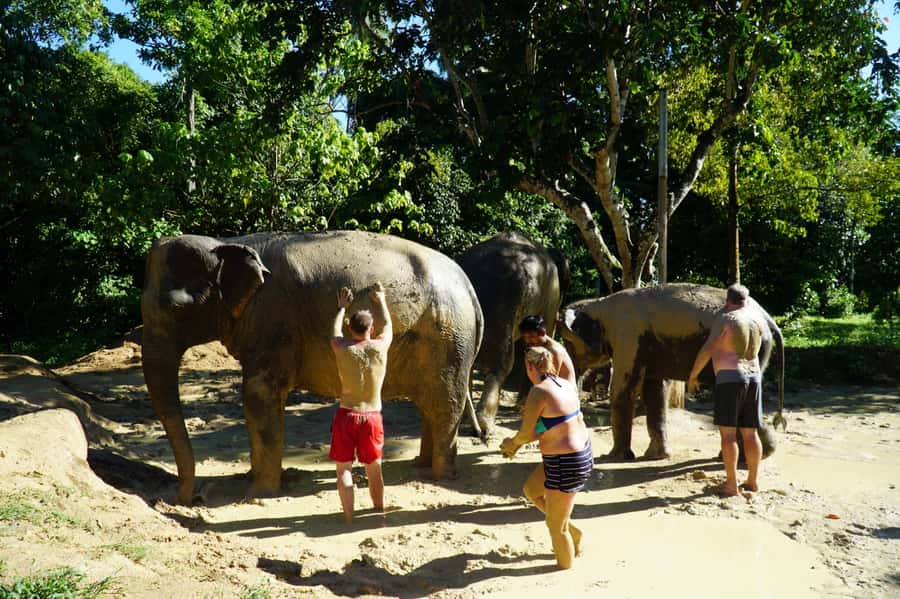
The mud spa is the star here. You help prepare food, feed rescued elephants, walk with them through the jungle, and then get muddy beside them before washing them in a stream. It is a close, hands-on visit, not a distant viewing session.
I like the time spent with each elephant, including learning its story and meeting its mahout, or caretaker. I also like the practical ending: a short noodle soup lesson, seasonal fruit, and a filling meal. The one drawback is simple: you will get sweaty, muddy, and wet, so this is not a polished sightseeing stop.
Key things to know before booking
- The mud spa includes a river wash: After the mud play, you help rinse the elephants with water and brushes.
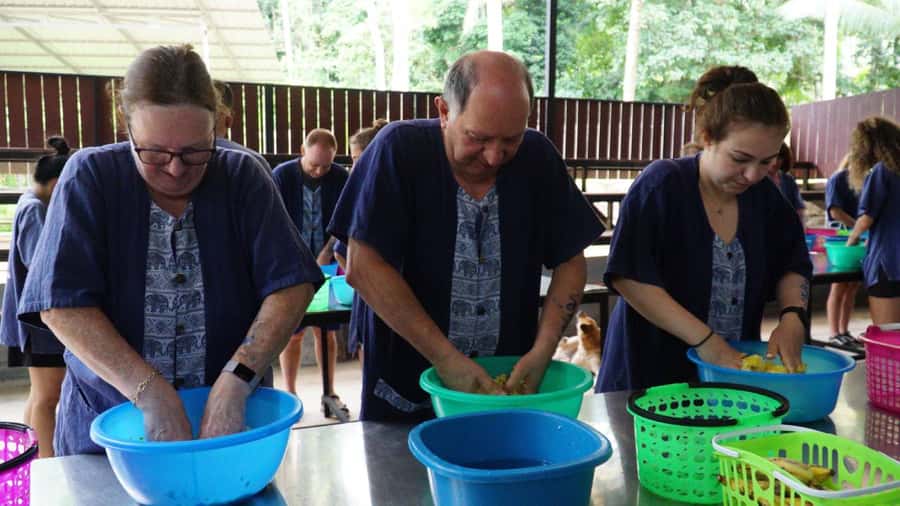
- Food preparation comes first: You make a health supplement before feeding the elephants.
- The jungle walk is part of the four-hour visit: You see the elephants moving through their daily surroundings rather than only meeting them in a yard.
- Guides shape the mood: Pong, Jack, Lana, Go, and other English-speaking guides are known for mixing useful information with plenty of jokes.
- The cooking class is brief and easy: You prepare Thai noodle soup, then sit down to eat it with seasonal fruit.
- Bring proper clothes: Sunscreen, insect repellent, a towel, spare clothes, and shoes suitable for mud or walking will make the day much easier.
Meeting Koh Samui’s rescued elephants
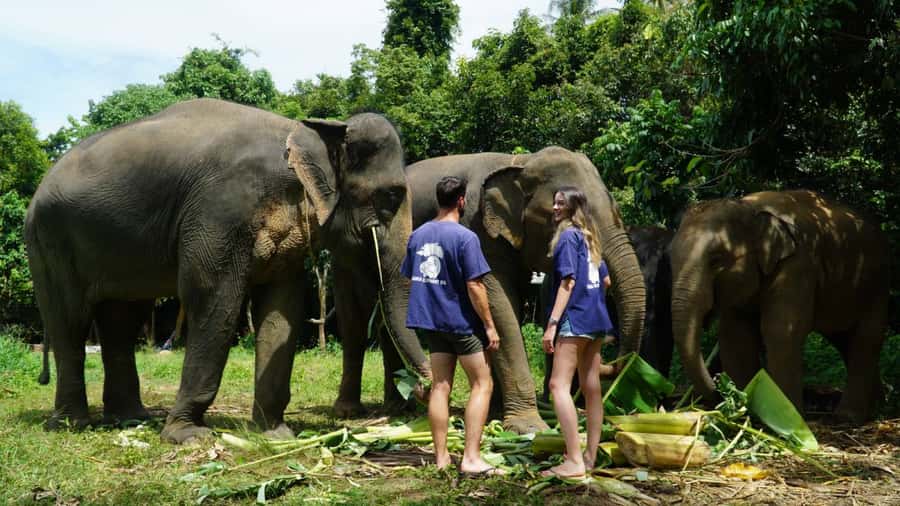
Samui Elephant Spa offers a four-hour visit focused on rescued elephants and direct care. The program describes elephants formerly used in logging, riding, or shows, and the daily work of the sanctuary is presented through feeding, bathing, and time outdoors.
I would pay attention to the way the animals are handled. Each elephant has a mahout, and the caretakers are described as having strong bonds with the animals. The elephants are allowed to roam, and several accounts describe plenty of land and access to a stream. Those details matter because an ethical visit should show care and choice, not tricks or forced performances.
You should still keep your expectations sensible. This is a managed encounter, not a completely wild one. You will be close enough to feed and touch the elephants, and the program is built around human interaction. The value comes from seeing how the sanctuary cares for them and from supporting that work, rather than pretending you are watching untouched wildlife.
The advertised price is $80 per person. That is not a budget activity, but it covers four hours, an English or Thai-speaking guide, food, drinks, the cooking class, and accident insurance. If you choose transport, hotel pickup is included in the selected option. For a special occasion, such as a honeymoon or family day, the price can make sense because the program combines several activities instead of charging separately for each one.
More Elephant Sanctuaries in Thailand:
- Chiang Mai: Elephant Sanctuary, Waterfall & Bamboo Rafting
★ 4.9 · 9,160 reviews - Chiang Mai: Elephant Sanctuary & Waterfall Group Tour
★ 4.9 · 5,780 reviews - Chiang Mai: Elephant Sanctuary Feeding Program Half-Day Tour
★ 4.8 · 4,527 reviews
Preparing food and meeting the mahouts
The visit begins with an introduction to the program. You learn how the day will work, then help prepare a health supplement for the elephants. This small task gives the feeding session more meaning. You are not simply handed a basket of fruit and sent toward an animal. You get a basic explanation of what the elephants eat and why the supplement is used.
Next, you meet the mahouts. These caretakers explain the elephants’ behavior, background, and daily routine. The individual stories are an important part of the visit. An elephant is easier to understand when you know a little about its past and see the person responsible for its care.
Feeding is close and active. You offer the prepared food and other snacks while the mahouts guide the encounter. Expect trunks reaching toward you, a lot of excitement, and plenty of chances for photos. The elephants are described as relaxed and free to move around, but you should still follow every instruction. These are powerful animals, and a gentle approach is better for everyone.
I like this part because it gives you time to slow down. Many animal activities rush people through a photo opportunity. Here, feeding is one of the main blocks of the morning or afternoon, and the caretakers help you understand what you are seeing.
Walking through the jungle with the elephants
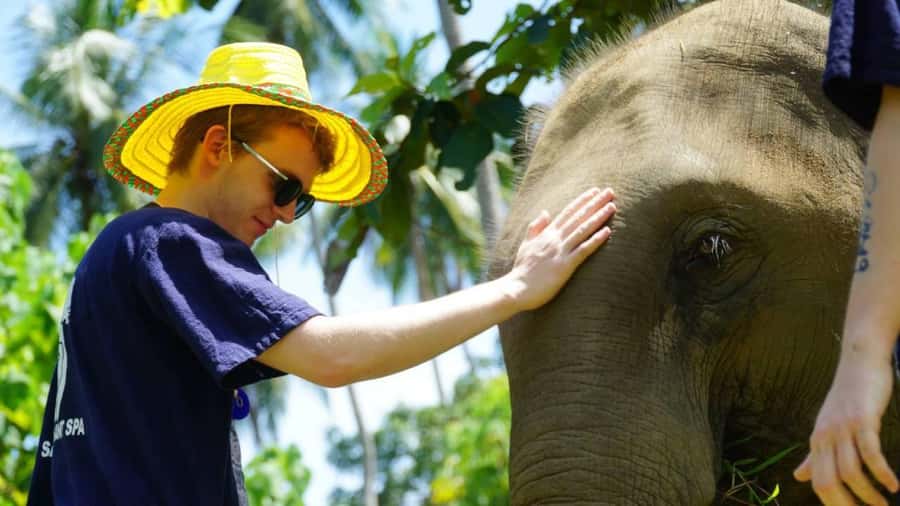
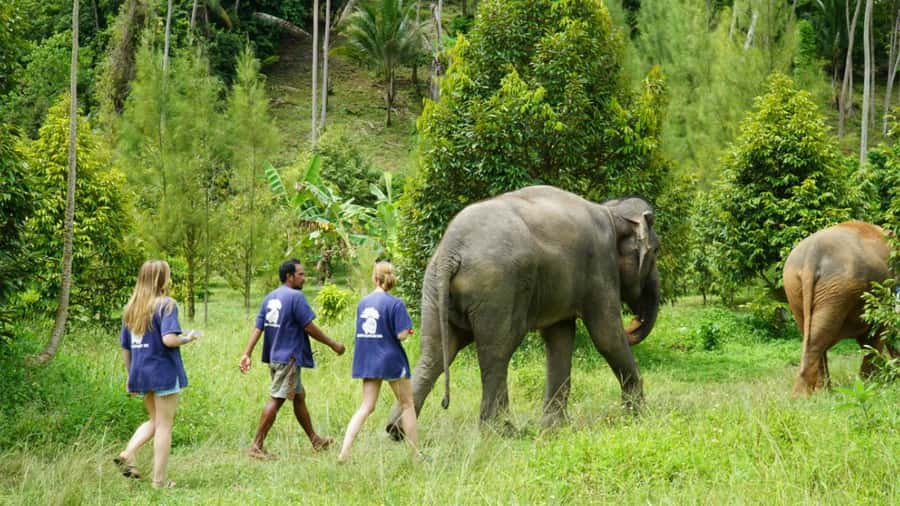
The guided walk takes the elephants and the group into the jungle area around the sanctuary. This is more interesting than watching them stand in one place. You see how they move, feed, and interact with the space around them.
The walk also changes the pace of the day. After the lively feeding session, you spend time following the elephants outdoors. The route is not described in exact detail, so wear shoes you do not mind getting dirty and be ready for uneven ground. Some people choose walking shoes, while others bring flip-flops for the wet parts. I would use shoes with a secure fit for the walk, then change later.
Mosquitoes can be a problem. Insect repellent is specifically worth packing, especially for the jungle section. Sunscreen, sunglasses, and a hat or light clothing will also help, although you should wear clothes that can handle sweat and mud.
The walk is one of the better signs of the sanctuary’s approach. The point is not to make an elephant perform. You follow its daily movement and learn how the sanctuary gives the animals room to spend time outside.
The mud spa and stream bathing
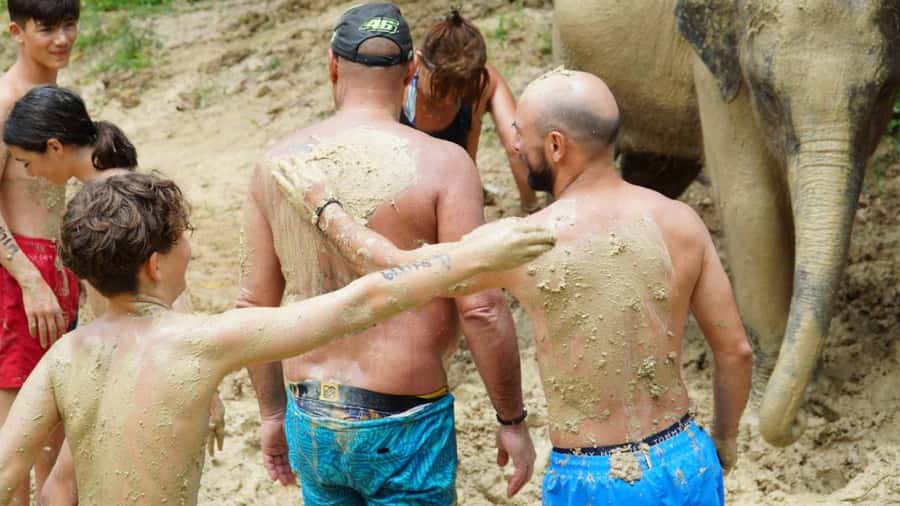
The mud session is the most playful part of the program. You join the elephants in the mud, helping cool them and coating them with mud as the caretakers direct the activity. It is messy, physical, and funny in the best way.
This is also the part that needs the clearest warning. Your swimsuit will get dirty. So will your shirt, shorts, feet, and possibly your hair. Bring spare clothes and a towel, and use the changing facilities before the meal. The sanctuary advises a swimsuit, flip-flops, or walking shoes, plus clothing you do not mind getting muddy.
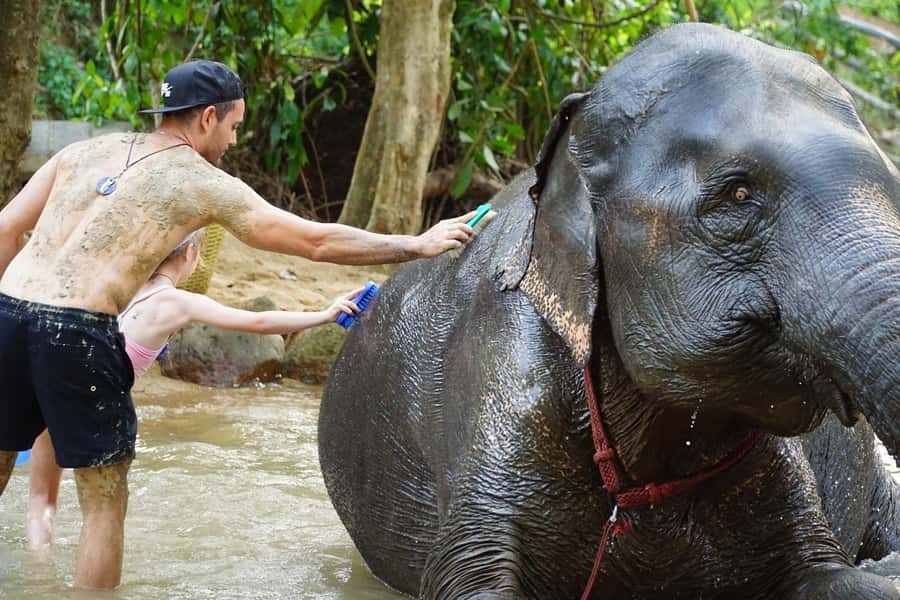
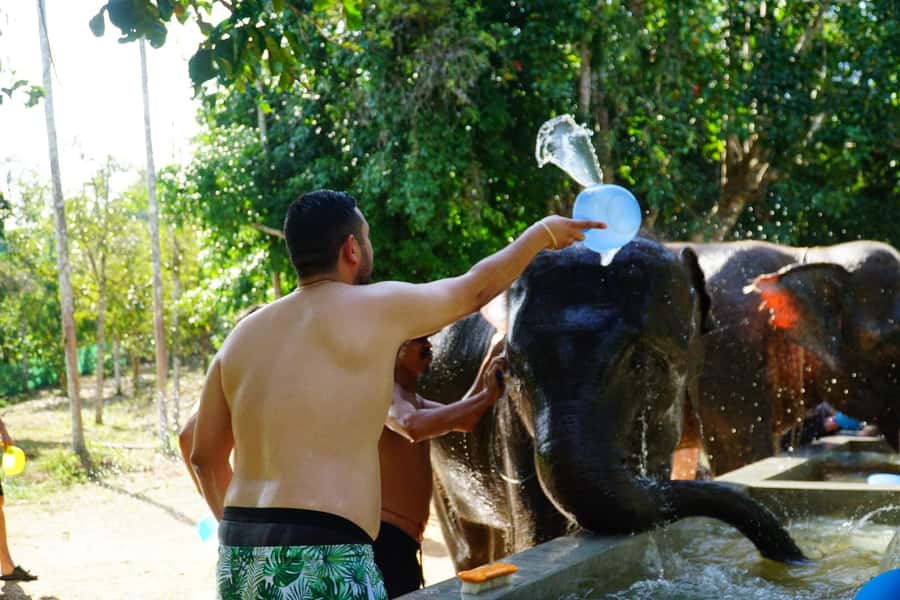
After the mud spa, you help wash the elephants in the water. Brushes are used to rinse away the mud, and this is where the encounter becomes calmer. You can expect water splashing, wet feet, and close contact with the elephants as they are cleaned.
Some accounts describe washing them in a stream and playing with them in the water. The exact flow may depend on conditions and the elephants themselves. Do not expect every elephant to behave on command. That is a good thing. The caretakers should decide how close you get and how long an animal wants to stay involved.
I like that the program pairs mud play with washing. The mud bath alone could feel like a staged photo opportunity. Learning that mud helps cool the elephants, then helping rinse them, gives the activity a simple purpose.
More Spa and Hot Spring Visits in Thailand:
- Ubud: Riverside Spa Treatment near Bali Zoo
★ 4.9 · 315 reviews - Monkey Forest, Holy Water Temple & Hot Springs Tours
★ 5.0 · 17 reviews - Balinese Traditional Food Cooking Class with Ubud Monkey Forest and SPA
★ 5.0 · 6 reviews - Ubud: Massage & Flower Bath at Tejas Spa Monkey Forest
★ 5.0 · 4 reviews
A short Thai noodle soup lesson
Once you are clean and dry, the day finishes with a cooking class. You learn to prepare noodle soup and then eat the meal with seasonal fruit. Soft drinks, water, coffee, and tea are also included.
Do not book this expecting a long formal cooking school. The class is described as a short demonstration and hands-on introduction before you sit down with your bowl. That makes it a good ending after an active morning, but it may feel brief if cooking is your main interest.
The soup is practical travel food: warm, filling, and easy to enjoy after mud, water, and a jungle walk. You leave with a new dish to try at home, even if the lesson is not detailed enough to replace a dedicated Thai cooking course.
This meal also gives the day a clean finish. You have time to change, cool down, eat, and say goodbye before returning to your hotel or villa.
Guides, transport, and the pace of the day
The guide can make a real difference. Names connected with this program include Pong, Jack, Lana, Go, Luna, and Terrapan. You may not have the same guide, but the program is built around a live English or Thai-speaking guide who stays with you through the activities.
The strongest guide style here is energetic and informal. Pong and Jack are described as funny while still explaining the elephants and the sanctuary. That suits a muddy, social activity. If you prefer a quiet nature walk with long stretches of silence, this may feel lively. If you want clear instructions and a relaxed mood, the humor should help.
Hotel pickup is optional. Morning pickup windows are roughly 8:15 to 9:00 a.m., depending on your area. Afternoon pickup runs about 12:30 to 1:15 p.m. The listed areas include Maenam, Bophut, Choengmon, Chaweng, Lamai, Butterfly Garden, Ban Tai, and Bang Por.
The vehicle is a van. Villas on steep slopes may not be reachable, so you may be given a nearby meeting point. Confirm that point before the day, especially if your accommodation sits high on a hillside. You can also meet directly at Samui Elephant Spa by using the supplied Google Maps location or searching the name.
Transport has an advertised perfect-score rating from 86 percent of customers, and the timing details suggest a planned pickup system. Still, island roads and multiple stops can affect the schedule. Keep a little space around the four-hour activity if you have a ferry, flight, or fixed dinner reservation.
What the $80 price really covers
At $80, this is best viewed as a full half-day outing rather than a simple animal entrance ticket. The cost includes the guide, one meal, fruit, drinks, insurance, and the main hands-on activities. Transport costs are covered only if you select the pickup option.
The strongest value comes from the range of activities. You prepare food, feed elephants, walk with them, join the mud spa, help wash them, shower, change, and cook soup. You are not paying for only a few minutes beside an elephant.
Photography is not included. An onsite photographer can take pictures, and you can buy them separately. One account puts the cost at 500 Thai baht per photo. If you want to stay focused on the animals, buying a few professional images may be useful. If you prefer to control your own spending, bring a waterproof phone case and take your own pictures when the guide says it is safe.
A high score of 4.8 from 574 ratings suggests the program has been well received, but the ethical question deserves your attention. Look for the practical signs: no tricks, no riding, room to roam, careful mahouts, and the ability to respect an elephant’s choice to move away. The information supplied for this activity describes those features, including elephants rescued from logging and shows. That makes it a stronger choice than an attraction built around rides or performances.
Who will enjoy this sanctuary visit
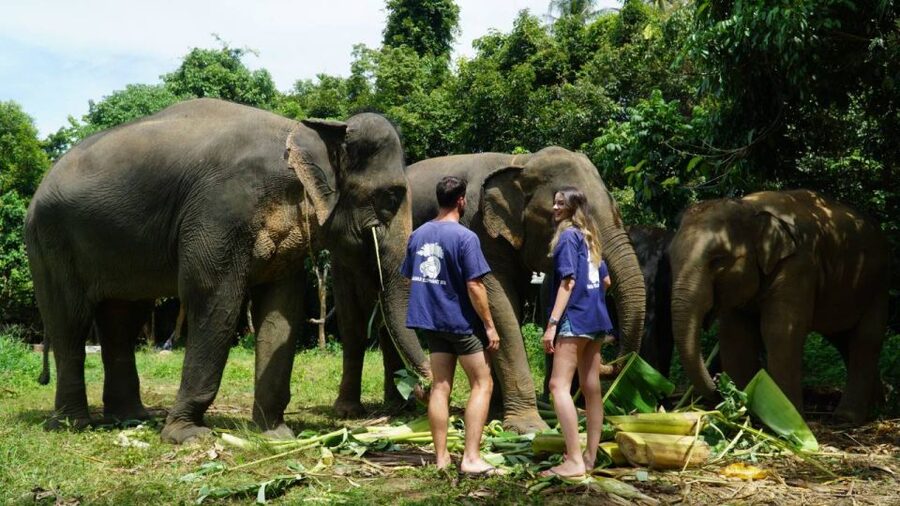
This tour suits couples, families, and first-time visitors to Koh Samui who want a memorable animal encounter without spending a full day on an excursion. The hands-on format works well for people who like learning by doing.
It is especially good for you if:
- You want close contact with elephants but do not want riding or performances.
- You enjoy messy outdoor activities.
- You want transport from a Koh Samui hotel.
- You like a guide who jokes and keeps the group moving.
- You want a meal included at the end.
- You are comfortable changing clothes and getting wet.
It may not suit you if you want a quiet, distant wildlife observation. It is also a poor fit if you dislike mud, strong sun, insects, or group activities. The elephant interaction is close, and the day is active rather than luxurious.
Families should bring spare clothes for children and make sure everyone follows the mahouts’ instructions. The program is simple enough for many ages, but the supplied details do not give a minimum age or accessibility information, so ask before booking if those points matter to you.
What to pack for a better day
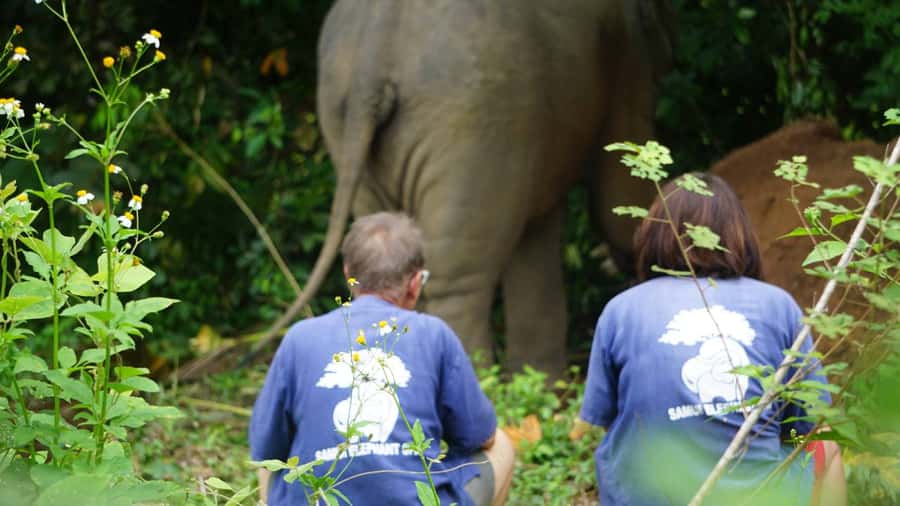
Pack as if you are going to get dirty, wet, and hot.
- Swimsuit or clothes you do not mind muddy
- Complete spare outfit
- Towel
- Sunscreen and sunglasses
- Insect repellent
- Flip-flops or secure walking shoes
- Waterproof protection for your phone
- Drinking water, although water and other drinks are supplied
Wear clothes that dry easily. Avoid anything valuable or difficult to clean. Put sunscreen on before the walk, and use insect repellent before entering the jungle area.
Free cancellation is available up to 24 hours before the activity for a full refund. You can also reserve now and pay later, which helps if your Koh Samui schedule is still changing.
Should you book the Samui Elephant Spa?
I would book this if you want a close, active elephant experience with a clear rescue and care focus. The best parts are the generous feeding time, the jungle walk, the mud spa, and the stream wash. The noodle soup and fruit make the final hour useful rather than just a farewell.
I would skip it if you want a quiet sanctuary visit with no touching or bathing. You should also think twice if mud, mosquitoes, and wet clothes sound unpleasant.
For most visitors, the $80 price is reasonable because it covers a full four hours, food, drinks, a guide, and several distinct activities. Choose the transport option if you are not comfortable arranging your own way there. Bring insect repellent, a towel, and spare clothes, then let the day be as muddy as it promises.
FAQ
How long is the Samui Elephant Spa experience?
The activity lasts four hours.
How much does the experience cost?
The listed price is $80 per person.
Are hotel transfers included?
Hotel transfers are included only if you select the pickup option when booking.
Which areas have scheduled pickup?
Pickup areas include Maenam, Bophut, Choengmon, Chaweng, Lamai, Butterfly Garden, Ban Tai, and Bang Por. Morning and afternoon pickup windows vary by area.
Can the van reach every villa?
No. Some villas are on very steep slopes that the van cannot access. A nearby meeting point may be arranged.
What should I wear?
Wear a swimsuit, flip-flops or walking shoes, and clothing you do not mind getting sweaty or muddy. Bring spare clothes and a towel.
Is food included?
Yes. The program includes one meal, seasonal fruit, soft drinks, drinking water, coffee, and tea. You also take part in preparing Thai noodle soup.
Are photographs included?
No. An onsite photographer is available, but photographs cost extra.
More Half-Day Trips in Thailand
- Krabi: Ao Nang Elephant Sanctuary Half-Day Tour
★ 4.8 · 1,796 reviews - Ko Lanta Yai: Half-Day Ethical Elephant Sanctuary Tour
★ 4.8 · 338 reviews - Phuket Elephant Sanctuary: Half-Day with Vegetarian Meal
★ 5.0 · 252 reviews - Krabi: Observation-Only Elephant Sanctuary Half-Day & Meal
★ 5.0 · 3 reviews
Just added around Thailand
- Elephant Sanctuary Small Group Tour in Phuket★ 5.0 · 3 reviews
- Phuket Guided Tour to Elephant Sanctuary with Hotel Transfers★ 5.0 · 14 reviews
- Krabi Immersive Elephant Sanctuary Experience★ 3.5 · 2 reviews
- Krabi Elephant Sanctuary and Emerald Pool Adventure★ 5.0 · 2 reviews
- Guide Tour to Khaolak Elephant Sanctuary in Small Group★ 5.0 · 47 reviews
- Ethical Elephant Observation by Samui Elephant Sanctuary★ 4.5 · 6 reviews
- Early Bird James Bond Island and Elephant Sanctuary from Khaolak★ 5.0 · 2 reviews
- Guided Tour to Takua Pa and Elephant Sanctuary in Khao Lak★ 5.0 · 4 reviews
Koh Samui Zoos, compared.
Koh Samui: Elephant Sanctuary Entry and Feeding Experience
Read our review →
Koh Samui: Ethical Elephant Sanctuary Tour with Buffet Lunch
Read our review →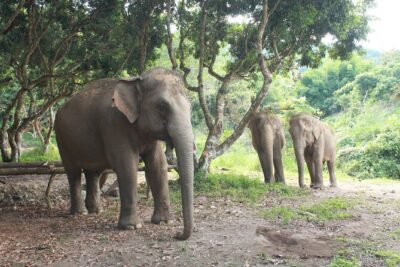
Ethical Elephant Observation by Samui Elephant Sanctuary
Read our review →
Koh Samui: Elephant Sanctuary and more – Full Day
Read our review →Browse the lists this tour appears in