
REVIEW · CAMBODIA
From Siem Reap: Elephant Sanctuary Experience with Transfers
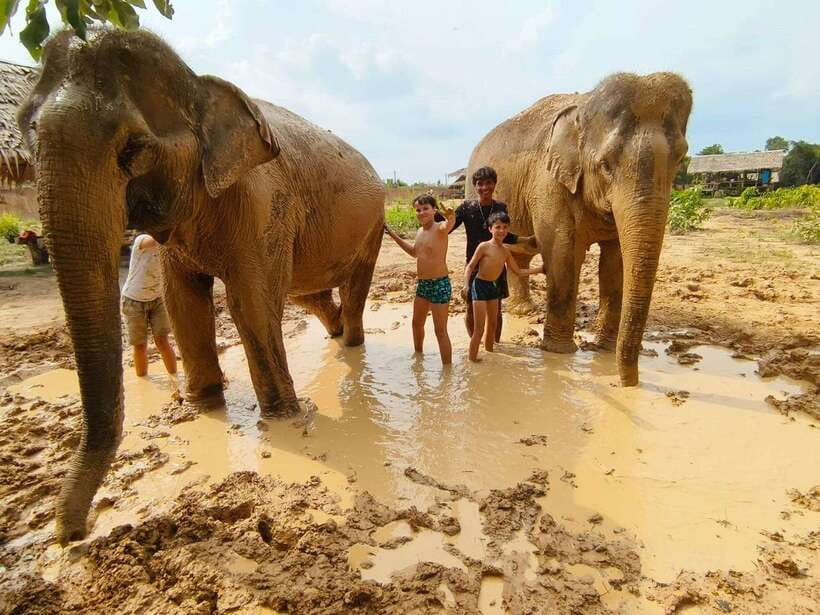
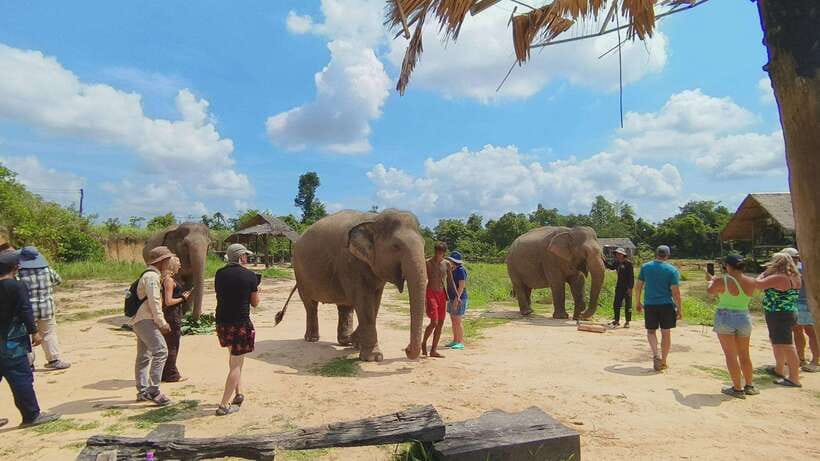
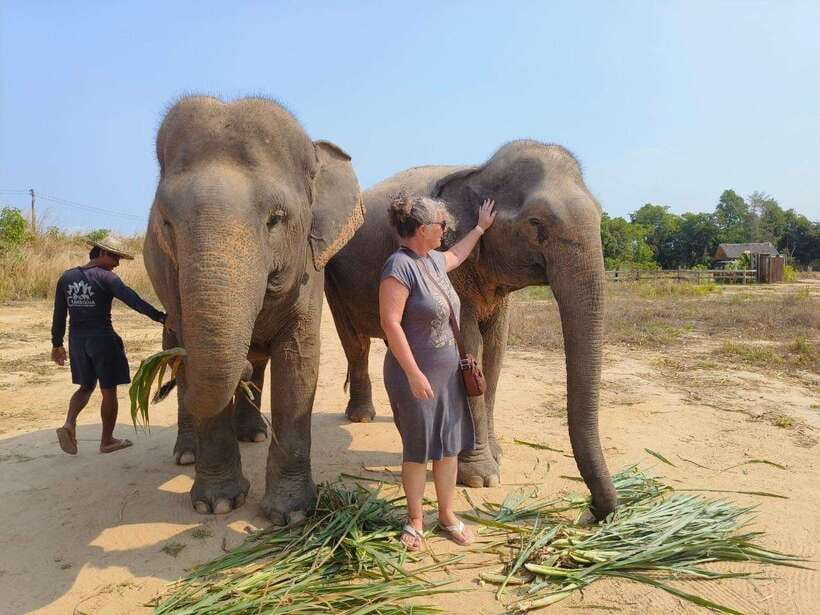
The best part of this Siem Reap outing is simple: the elephants set the pace. You can prepare food, feed them by hand, walk through the forest, watch them play, and perhaps join them at the mud area or creek. The sanctuary cares for three rescued elephants, and the staff make it clear that no animal is forced to perform.
I like the small scale and the firm safety briefing. A group of five with three elephants feels far more personal than a crowded animal attraction. I also like the practical care on show, from handmade rice balls to special food intended to support digestion. The main drawback is that the sanctuary sits about an hour from Siem Reap, and mud bathing or river bathing depends on what the elephants feel like doing that day.
Key points at a glance
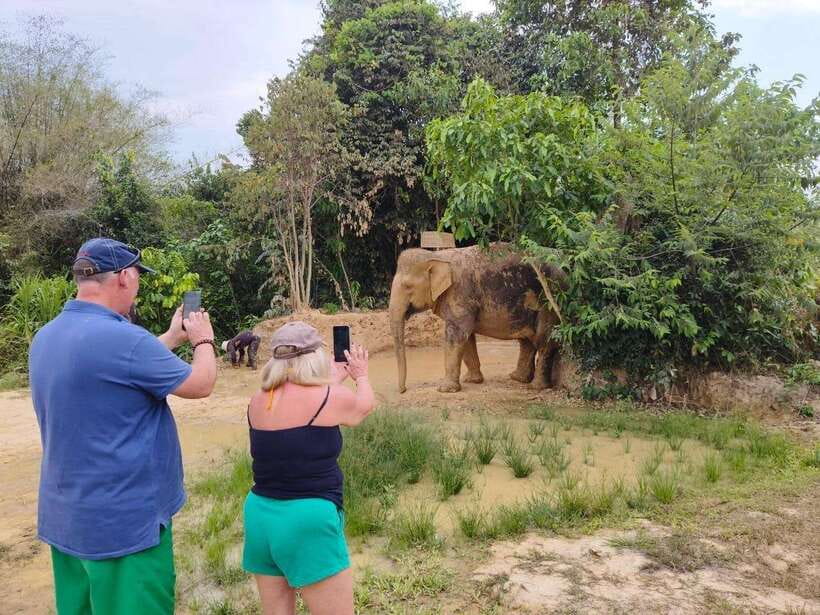
- Three rescued elephants: The sanctuary is a small home rather than a large animal park.
- Elephants choose the program: Mud baths, swimming, and close contact are never guaranteed.
- Hands-on feeding: You prepare healthy snacks, including rice balls, then offer them by hand.
- About one hour from Siem Reap: Hotel pickup and drop-off make the rural setting easy to reach.
- Strong animal-care rules: Staff explain how to approach the elephants and what not to do.
- Small groups available: A smaller group gives you more time to watch, feed, and ask questions.
A small sanctuary where the elephants come first
This experience is designed around observation and respectful contact, not a show. You do not come for tricks, riding, or a fixed performance. You come to see three rescued elephants living in a broad green area, moving between the forest, pond, muddy ground, and nearby creek.
That distinction matters. An elephant may wander off while you are holding food. It may ignore the mud bath. It may decide that the river is not interesting that afternoon. Here, that is treated as a good thing, not a failure of the program.
The staff explain this before you meet the animals. You learn how powerful elephants are, how to behave around them, and why certain past injuries or habits affect the way you approach each one. The rules may feel strict, especially for children or anyone focused on getting a particular photograph, but they protect both people and elephants.
The guides are another strong part of the visit. Anne is praised for her warm, clear explanations, and other visitors have also referred to her as Ann. She helps explain the elephants’ personalities and offers practical support, including taking photographs for solo visitors. The guide’s role is not just to move you from one activity to the next. It is to help you understand when to get closer and when to give an elephant room.
More Elephant Sanctuaries in the world:
- Chiang Mai: Elephant Sanctuary, Waterfall & Bamboo Rafting
★ 4.9 · 9,160 reviews - Chiang Mai: Elephant Sanctuary & Waterfall Group Tour
★ 4.9 · 5,780 reviews - Chiang Mai: Elephant Sanctuary Feeding Program Half-Day Tour
★ 4.8 · 4,527 reviews
The one-hour ride from Siem Reap
Your day begins with hotel pickup in Siem Reap. Wait in the lobby for the guide, then settle into a minivan for the journey to the Cambodia Elephant Sanctuary. The drive takes about an hour, making this more of a half-day countryside outing than a quick stop near town.
The transfer is useful because the sanctuary is outside the center and you do not need to arrange separate transport. It also gives you a change of scene after time around Siem Reap’s temples and busy streets. The destination is a forested setting with plant life, open space, water, and mud, all of which help explain why the experience feels different from an urban animal attraction.
Pickup timing deserves a little care. One person reported waiting longer than expected, while another advised calling the contact number early to confirm the pickup, driver, and ticket details. I would follow that advice. Make sure the operator has your correct hotel and wait in the lobby rather than outside on a side street.
The total outing lasts between 3.5 and 6 hours, depending on the start time and schedule. A shorter version can take around three and a half hours, while other departures may use more of the day. Check the available start time before booking, especially if you are combining this with Angkor Wat or another fixed appointment.
Meeting the elephants after the safety talk
The first stop at the sanctuary is an introduction from the local guide. This is where you learn about the animals, their backgrounds, and the correct way to behave around them. You also hear the central rule: the sanctuary is their home, and the people adapt to the elephants rather than making the elephants adapt to a tourist timetable.
That message is reinforced through the way the activity operates. The elephants move freely around the property. They are not chained for the experience, and there are no rides or performances. You may be asked to wait, step aside, or change position when an elephant moves through the area.
For me, this is where the visit gains its value. Feeding an elephant is memorable, but understanding the reason behind a safety instruction makes the contact more meaningful. These are large, strong animals with individual temperaments. The guide helps you read the situation instead of treating the elephants like oversized domestic pets.
The close contact is still real. You can get near them, see their expressions and movements, and watch them interact with one another. But the experience works best if you accept that observation is sometimes the main event.
Making rice balls and preparing elephant food
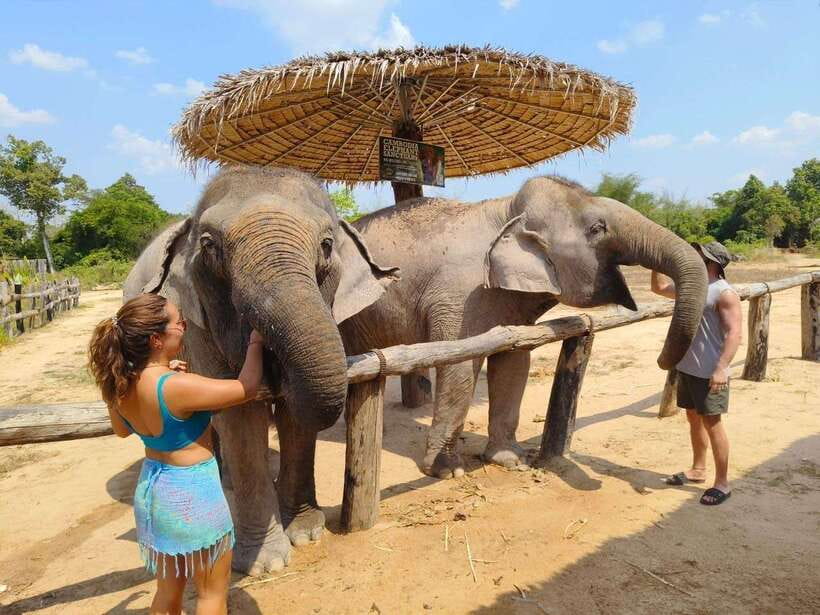
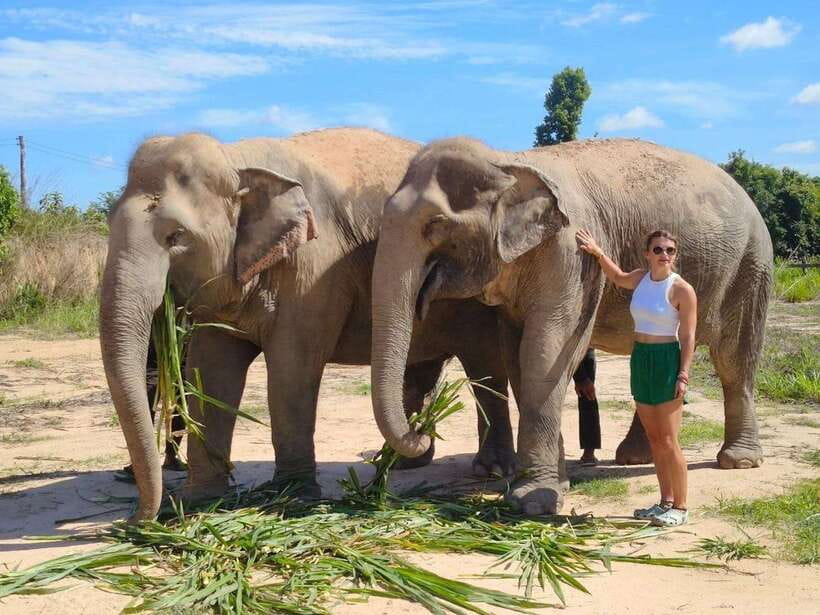
After the introduction, you help prepare food. The handmade snacks include rice balls and other healthy treats, with bananas also used during feeding. The process gives you something useful to do before approaching the elephants, and it shows how much food is needed to care for animals of this size.
You then feed the elephants by hand under staff direction. This is likely to be the most accessible part of the experience for children and for anyone nervous about close contact. You can focus on the elephant’s movements, follow the guide’s instructions, and take photographs without rushing into a more active encounter.
The food preparation also includes a special item intended to support digestive health. That small detail adds substance to the visit. You are not simply handing out treats for a photograph. You are learning that elephant care includes diet, digestion, injuries, behavior, and long-term welfare.
Take the instructions seriously. Keep your attention on the guide, avoid sudden movements, and do not try to invent your own way of feeding. The staff set boundaries for good reason. A large animal can move quickly even when it appears calm.
More Zoos with Hotel Transfers in the world:
- Phuket: Guided Tour to Elephant Sanctuary & Hotel Transfer
★ 4.8 · 292 reviews - Krakow: Zoo Visit with Hotel Pickup & Drop-Off
★ 4.6 · 151 reviews - Singapore: Morning Zoo Ticket with Hotel Pickup
★ 4.3 · 127 reviews - Gamboa Wildlife and Sloth Sanctuary Tour with Pickup
★ 4.5 · 122 reviews
Walking through the forest and watching natural behavior
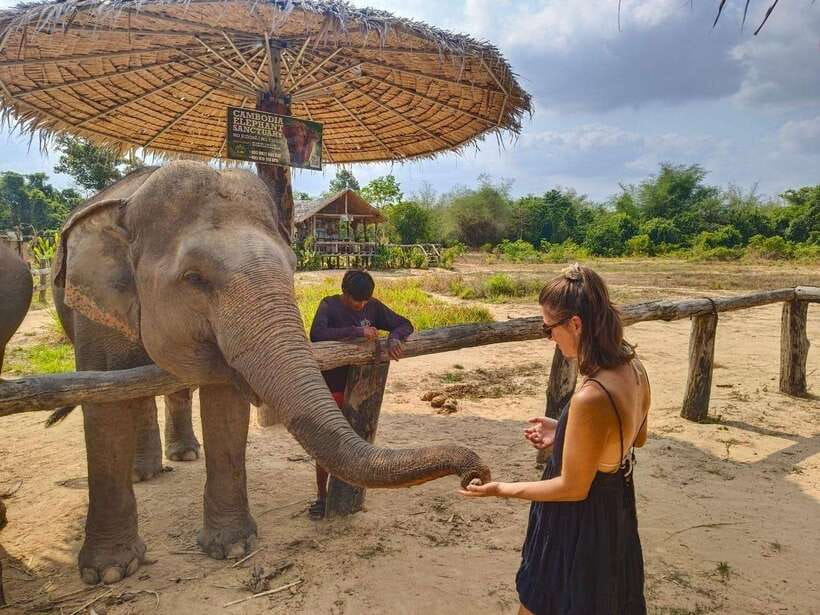
The sanctuary gives you time to walk through the Cambodian forest and notice the plants around you. This is not described as a demanding trek, but you should expect uneven outdoor ground and a setting that is more natural than polished.
The forest walk matters because it places the elephants in a wider setting. Rather than seeing them only at a feeding station, you can watch them roam, browse, approach water, and respond to one another. The guide can point out differences in their behavior and explain how their past lives affect the care they receive now.
Do not expect a scripted parade. An elephant might walk steadily beside the group, or it might stop and focus on food. The charm comes from the lack of a rigid performance. You get a better sense of the animal when it is allowed to make ordinary choices.
This part also gives you a break from direct contact. That is important. A good elephant experience should include quiet watching, not only touching and feeding. If an elephant moves away, use the moment to observe its body language and the way the staff respond.
Mud baths, pond time, and the possibility of a river bath
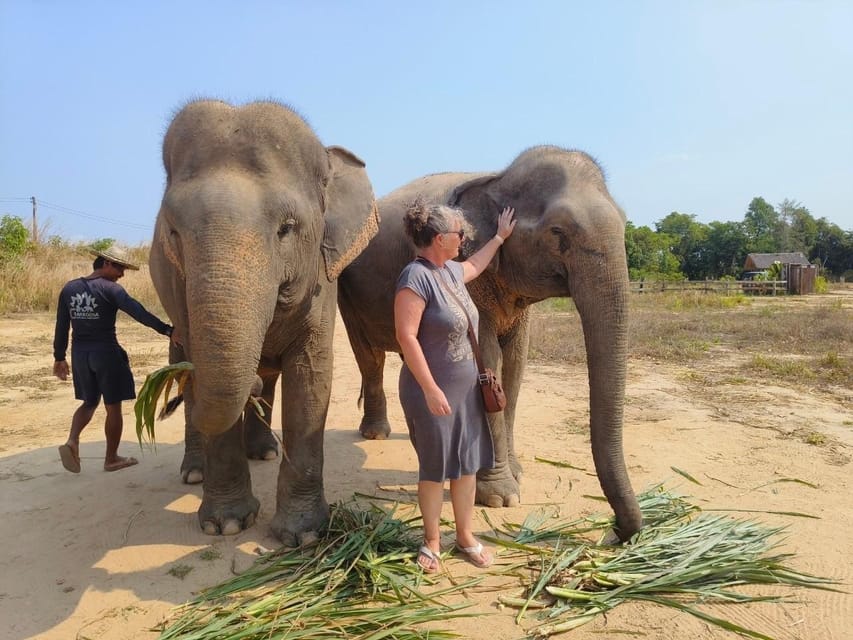
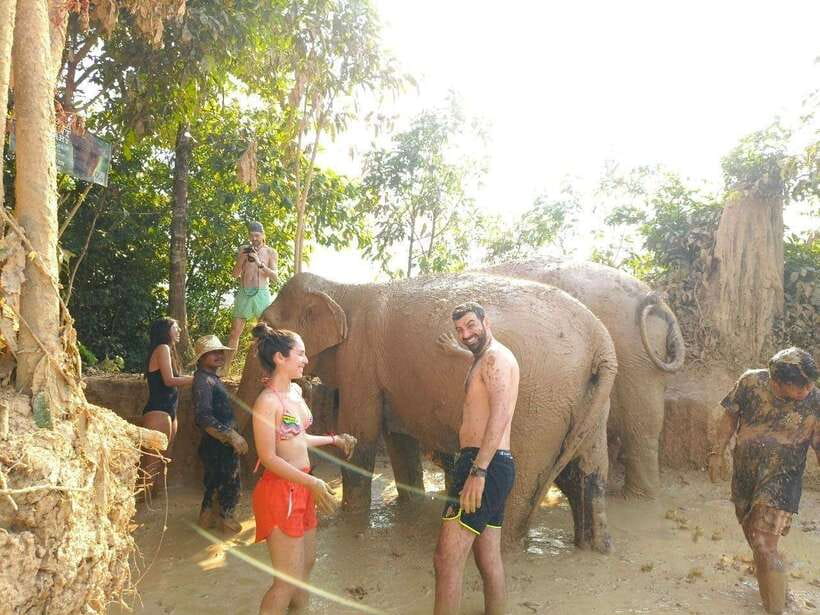
The mud bath is one of the most talked-about parts of the day, and it is also the least predictable. If the elephants choose to visit the muddy area, you may help cover them with mud while learning why elephants use it. You can expect to get dirty, so this is not the place for clothes you want to keep spotless.
The elephants may also play near the pond. Watching them splash, eat, and move through the water can be just as enjoyable as stepping into the mud yourself. The staff do not force the animals into the activity, so the mud section may be shortened or skipped if the elephants are not interested.
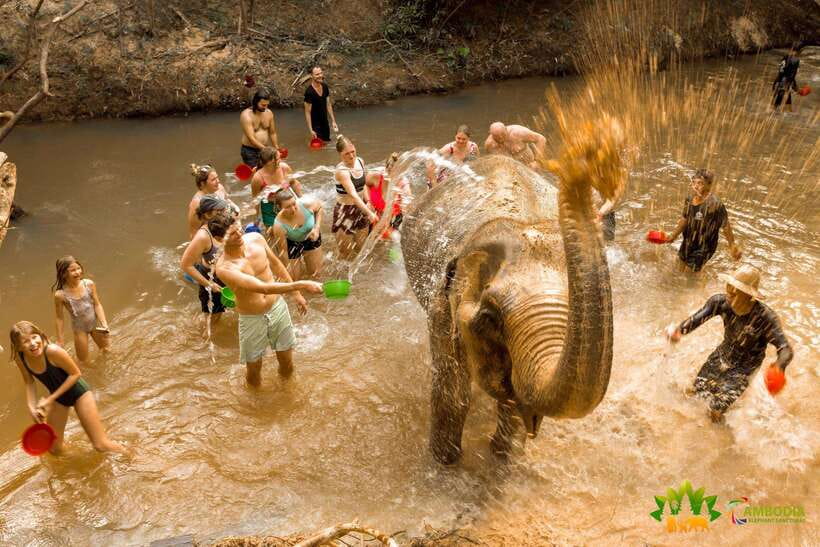
After that, the schedule may include bathing with the elephants in a creek or river. You may use a scrubbing brush while standing in the water, following the coordinator’s instructions. Several people describe this as the most thrilling part because it allows close contact in a playful setting.
Still, treat the river bath as a possibility, not a promise. One of the most positive features of this experience is that the elephants remain in charge. If they do not want to enter the water, you will watch them elsewhere instead.
You should also expect to be wet and muddy if the animals cooperate. Wear clothes and shoes that can handle water and dirt. The supplied information does not list a towel or change of clothing, so pack anything you will need afterward rather than assuming it will be provided.
What the small group format changes
A small group can make a major difference here. With three elephants and only a handful of people, you have a better chance to hear the guide, see what is happening, and take turns feeding without a crowd pressing around the animals.
The smaller setting also supports calmer behavior. You are less likely to feel pushed into a quick photograph or a noisy line. The elephants have more room, and the guide can give more direct reminders about safe distances and respectful contact.
Small groups are available, but the exact size depends on the departure. If personal attention is important to you, select the small-group option when it appears during booking. It is particularly useful for solo visitors, families who need help with photographs, or anyone who wants more time to ask about elephant care.
The sanctuary itself is small, with three rescued elephants. That means you should not compare it with a huge reserve containing dozens of animals. The tradeoff is intimacy. You see fewer elephants, but you can learn more about the individuals in front of you.
Is $69 a fair price?
At $69 per person, this is not the cheapest animal encounter near Siem Reap. The price includes hotel pickup and drop-off, an English-speaking guide, water, coffee, and seasonal fruit, as well as the sanctuary activities.
The value depends on what you want. If you only want a quick photograph beside an elephant, this outing may feel long and expensive. If you want transport into the countryside, an educational introduction, food preparation, feeding, forest time, and the chance to see mud or river bathing, the price is easier to justify.
I especially value the included transfer. A private ride to a rural sanctuary, arranged independently, would add time and cost. The guide also provides a layer of safety that you would not have if you simply arrived and tried to approach the elephants on your own.
There is another value that is harder to measure. The money supports a place caring for rescued elephants without rides or shows. You should still ask questions and observe how animals are handled, but the practices described here focus on choice, space, and respectful care.
Who should book this experience?
I would choose this outing if you care about animal welfare and want contact that is active but not theatrical. It suits couples, solo visitors, families with older children who can follow safety rules, and anyone who wants a break from temple sightseeing.
It also works well for people who enjoy learning. The guide discusses individual elephants, their traits, their histories, and the practical work involved in keeping them healthy. You are not just taking part in a feeding session. You are seeing how food, water, mud, movement, and boundaries fit into daily care.
This is less suitable if you need a guaranteed swimming session, a precise timetable, or a fully dry and polished activity. The elephants may refuse the mud or water. The drive takes about an hour each way, and outdoor conditions can be wet, hot, or muddy.
The experience is not suitable for wheelchair users, according to the activity information. Pets are not allowed. If mobility, heat, or uneven ground is a concern, ask the provider for current details before paying.
Practical advice before you go
Wear clothes that can get dirty and wet. Bring suitable footwear, sun protection, and anything you need after a river or mud activity. Seasonal fruit and water are included, along with coffee, but the information does not promise a full meal.
Listen closely during the safety briefing. The rules are part of the experience, not an annoying delay. They explain how to avoid startling an elephant and why the animals’ past injuries or habits matter.
Keep your schedule flexible after the tour. The stated duration ranges from 3.5 to 6 hours, and pickup times can vary. I would not book a tight airport transfer or a fixed temple entry immediately afterward.
Weather does not necessarily ruin the day. Rain can make the mud and forest setting feel even more natural, though you should be ready for wet clothing and slippery ground. The key is to accept the outing as an outdoor animal-care experience rather than a climate-controlled attraction.
You can cancel up to 24 hours before the activity for a full refund, and the reserve-now, pay-later option lets you hold a place without paying immediately. Those terms are useful if your Siem Reap schedule is still changing.
Should you book it?
Book this experience if you want a small, hands-on encounter where the elephants’ welfare comes before a guaranteed performance. The strongest reasons are the three rescued elephants, the clear safety rules, the forest setting, and the freedom for the animals to choose whether they feed, play in mud, or enter the water.
Skip it if you want a short activity close to town or need every part of the itinerary to happen on schedule. The hour-long transfer and uncertain bathing activities require patience.
For most visitors who care about ethical animal contact, I think the $69 price is reasonable. Go with clean expectations: you are visiting the elephants on their terms. That is precisely what makes the experience worth considering.
FAQ
How long does the elephant sanctuary experience last?
The activity lasts between 3.5 and 6 hours. Check the available start times when booking because the schedule can vary.
How far is the sanctuary from Siem Reap?
The minivan ride to the Cambodia Elephant Sanctuary takes about one hour. Hotel pickup and drop-off are included.
How many elephants does the sanctuary care for?
The sanctuary cares for three rescued elephants.
Will I be able to feed the elephants?
Yes. You prepare handmade healthy snacks, including rice balls, and feed the elephants under the guide’s instructions.
Is bathing with the elephants guaranteed?
No. The elephants decide whether they want to use the mud area, pond, or river. If they do not want to bathe or play, the staff do not force them.
What is included in the price?
The experience includes an English-speaking guide, hotel pickup and drop-off, water, coffee, and fruit.
Is the activity suitable for wheelchair users?
No. The activity information says it is not suitable for wheelchair users. Pets are also not allowed.
Just added around the world
- Zen In The Zoo★ 5.0 · 2 reviews
- ZANZIBAR: Jozani Forest, butterfly center & Reptile park★ 4.7 · 3 reviews
- Wuppertal: Admission to the Green Zoo Wuppertal★ 4.6 · 7 reviews
- Zanzibar: Jozani Monkeys, Butterfly Garden & Reptile Park★ 5.0 · 2 reviews
- Monkey Forest, Waterfall ,Temple and Rice Terrace★ 4.9 · 26 reviews
- Ubud :Monkey forest, Water Temple and waterfall Private Tour★ 5.0 · 2 reviews
- Wings Wildlife Park Burnie Shore Excursion★ 4.2 · 13 reviews
- Warsaw Zoo Skip-the-Line Entry Ticket with Private Transport★ 4.8 · 3 reviews
Cambodia Zoos, compared.
Elephant Sanctuary Cambodia, Pickup and drop off included
Read our review →
Siem Reap: Elephant Sanctuary Included Hotel Pickup Drop-off
Read our review →
Cambodia Wildlife Sanctuary and Countryside Tour
Read our review →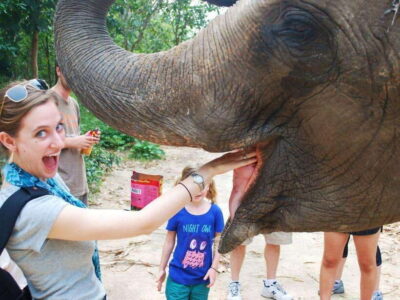
Phnom Tamao Wildlife Center & Buddha Kiri Cambodia Day Tour
Read our review →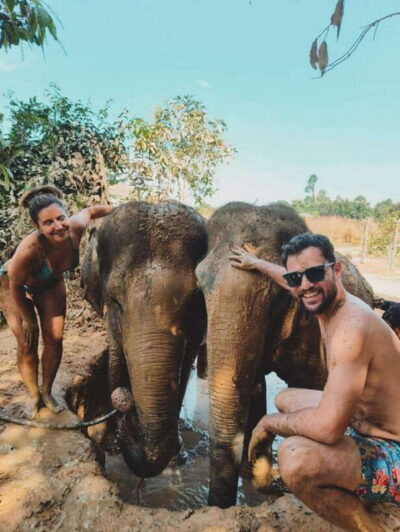
Cambodia Elephant Sanctuary and Banteay Srey Temple Tour
Read our review →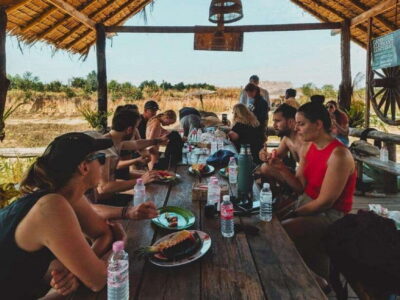
Cambodia Elephant Sanctuary Include Hotel Transfer Roundtrip
Read our review →Cambodia Elephant Sanctuary and Banteay Srey Temple Tour
Read our review →Browse the lists this tour appears in