REVIEW · ZOOS AND WILDLIFE PARKS
Discovery of the Souss Massa Animal Park in 4×4
The best part of this full-day 4×4 outing is its mix of rare wildlife and wild Atlantic scenery. In one long day, you move from the Souss Massa animal park to fishing villages, cliffside homes, a river mouth, a desert dam, and the silver workshops of Tiznit. It is much more varied than a standard zoo visit or a quick coastal drive.
I like the private format, which gives your group room to set the pace, and I like the guides’ apparent strength in explaining local geography, ecology, history, and daily life. Hamid, Abdou, Abdul, and Omar are named in past bookings, so ask who will lead your day. The main drawback is time: eight to ten hours in a vehicle, with several brief stops, can feel long if your priority is a slow beach morning.
Key points to know before booking
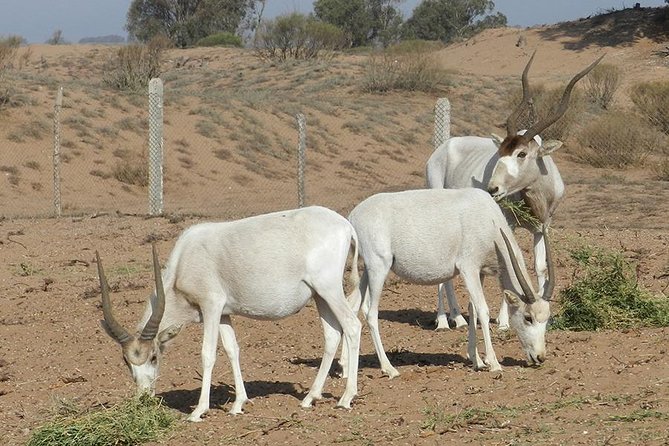
- Rare North African wildlife: Look for addax, oryx, Dama and Dorcas gazelles, red-necked ostriches, and the endangered bald ibis.
- A private 4×4 day: Only your group participates, with pickup offered and return to the Agadir meeting point.
- More than an animal park: Tifnit, Sidi R’bat, Massa, the Youssef Ibn Tachfine Dam, and Tiznit add culture and coastal scenery.
- A real off-road section: The sandy Atlantic track from Tifnit to Sidi R’bat covers about 20 kilometers and takes roughly two hours.
- Lunch costs extra: The tour price includes private transport and the Souss Massa National Park entrance, but not food.
- Best for curious families and small groups: The day suits people who want wildlife, local life, and flexible guiding in one outing.
Why Souss Massa is worth a full day from Agadir
Souss Massa sits south of Agadir in a dry zone where ocean, river, dunes, scrub, and farmland meet. That mix gives the area its appeal. You are not visiting one fenced attraction and heading straight back to town. The route shows how animals, fishing families, water supplies, and small Moroccan cities fit into the same region.
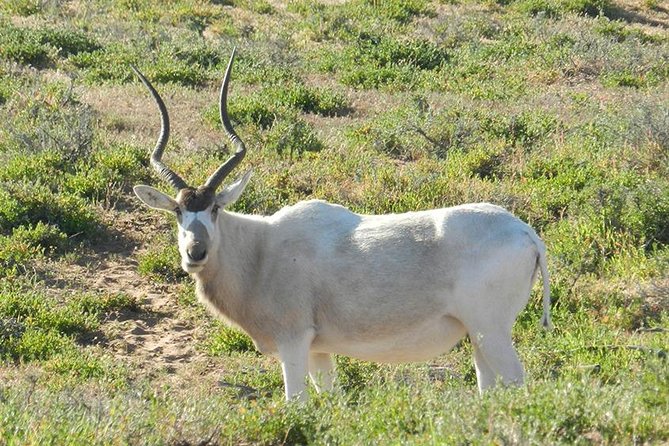
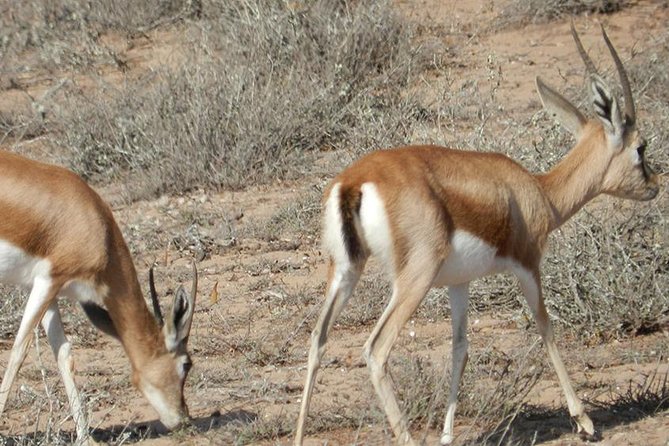
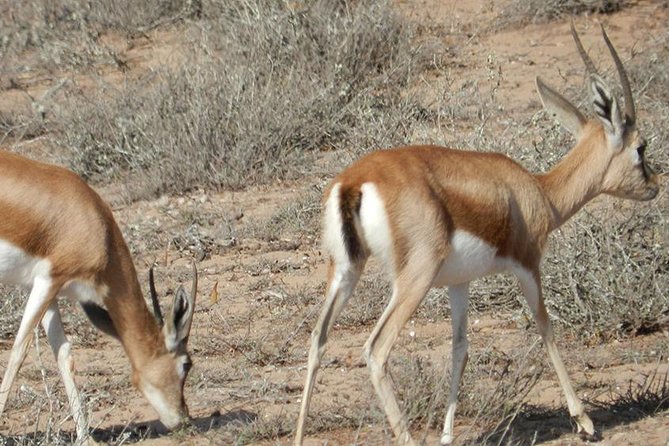
The wildlife stop is the heart of the trip. The park protects animals that once lived across much wider parts of Morocco and the Sahara. Addax numbers in the wild are now very small, and the species disappeared from Morocco in 1956 after poaching and intensive hunting. Dama gazelles are also in danger of extinction.
That conservation angle matters. You are seeing living examples of Morocco’s effort to protect animals that were pushed out of the country or reduced to scattered populations. I would not treat this as a guaranteed safari with animals appearing on cue. It is a protected animal park, not open desert, and the quality of your viewing will depend on the route, timing, and guide.
The day starts at 8:30 a.m. at Agadir VisiteN 20, Bloc C, Complexe Tivoli, in the beach district on Boulevard du 20 Aout. Pickup is offered, but confirm the exact pickup arrangement when you book. The trip ends back at the same meeting point.
A few more animal parks around the world worth a look
- Chiang Mai: Elephant Sanctuary, Waterfall & Bamboo Rafting
★ 4.9 · 9,160 reviews - Ubud: Monkey Forest, Jungle Swing, Rice Terrace, and Water Temple
★ 5.0 · 7,160 reviews - Chiang Mai: Elephant Sanctuary & Waterfall Group Tour
★ 4.9 · 5,780 reviews
Addax, gazelles, oryx, and ostriches at the animal park
The Souss Massa National Park stop is scheduled for about two hours, and entrance is included. That is enough time to make the wildlife the main focus without turning the whole day into a single attraction.
The addax is built for hard desert conditions. It travels in groups across sandy areas and follows pasture that appears after scattered rainfall. The animal can measure about 110 to 130 centimeters in length, stand 95 to 115 centimeters high, and weigh from 60 to 125 kilograms. Those figures give you a useful sense of scale when you are trying to distinguish it from other antelopes.
The Dama gazelle is the largest of the gazelles and can reach more than 100 kilometers per hour at peak speed. It is also rare and wary, fleeing over long distances when threatened. Your guide can help you tell it apart from the Dorcas gazelle, which is smaller and adapted to similarly dry conditions.
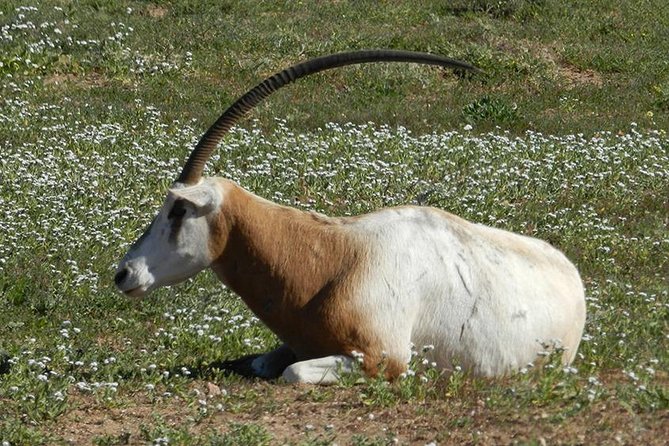
The park also features oryx and the red-necked ostrich. Children tend to enjoy the ostriches, while adults may find the antelope conservation story more memorable. Ask your guide to explain which animals are native to the area, which have been reintroduced, and how the park supports endangered species. The supplied information confirms the species present, but not a guaranteed number of sightings, so keep expectations realistic.
This is where the private setup pays off. If one person wants more time with the animals or needs a short pause, you are not tied to a large coach group. The tradeoff is that private tours can cost more than a basic shared excursion. At $121.95 per person, the value improves for a small group that would otherwise book several separate outings, since transport, park admission, guiding, and multiple regional stops are combined.
Tifnit and the Atlantic track to Sidi R’bat
After the animal park, the route continues to Tifnit, a small fishing village on the Atlantic coast. The scheduled stop is only about 15 minutes, so think of it as a quick photo and orientation break rather than a long village visit.
You can walk briefly on the beach and see small motorboats and fishing activity. This is a useful contrast with the protected animal park. Here, the focus shifts from conservation to the people who make a living along the coast.
The journey from Tifnit to Sidi R’bat is one of the day’s more unusual sections. The 20-kilometer sandy track takes around two hours. That does not mean two hours of constant high-speed driving. It means a slower route along the wild Atlantic coast, with the 4×4 able to handle ground that would be unsuitable for an ordinary car.
This part may be the biggest reason to choose the tour instead of a conventional sightseeing bus. You get a feel for the open coastal zone, not just a paved road between attractions. It can also be the least comfortable section. If you are prone to motion sickness or dislike rough roads, sit where the ride feels easiest and bring water. The tour description does not promise a specific vehicle model, so ask the provider about seating if that matters to you.
Fishermen’s cliff homes at Sidi R’bat
Sidi R’bat offers a short, human-scale stop. Its troglodyte homes are cut into the cliff facing the ocean. Fishermen use these shelters to stay near the water for several days, store equipment, and keep their belongings close while fishing.
The visit lasts about 30 minutes, often with a tea break. That is enough for a look at the cliff homes and the coast, but not enough for a long hike or a detailed architectural tour. I would treat the stop as a chance to understand a practical way of life rather than expect a museum-style presentation.
The tea is a small but welcome touch after the sandy track. Reviews of this outing also describe warm local hospitality and Moroccan snacks at a cliff home, but the formal inclusions only guarantee transport and the national park entrance. Ask your guide what is planned on your date and never assume food or tea is included.
This stop suits you if you enjoy ordinary places with a strong local story. It may feel brief if you want to spend the day photographing the ocean or walking the beach.
Same place, a different set of animals:
- Amsterdam: ARTIS Amsterdam Royal Zoo Entry Ticket
★ 4.6 · 5,651 reviews - Ubud: Waterfall, Rice Terraces & Monkey Forest Private Tour
★ 4.9 · 4,894 reviews - Dubai: Aquarium and Underwater Zoo Experience
★ 4.2 · 4,872 reviews - Chiang Mai: Elephant Sanctuary Feeding Program Half-Day Tour
★ 4.8 · 4,527 reviews
Massa and the search for the bald ibis
The route then reaches Massa, near the mouth of the Oued Massa and within the wider Souss Massa National Park area. The stop is scheduled for about 30 minutes and has a major bird conservation focus.
The bald ibis is among the world’s most endangered bird species. It once lived around much of the Mediterranean, including Egypt, and even nested in the European Alps in the 16th century. Hunting, agricultural expansion, and widespread pesticide use caused its numbers to fall. Morocco now holds only a small number of breeding colonies.
This is an important place to slow down and listen. You may not get a perfect bird sighting in half an hour, and the information provided does not promise binoculars, a dedicated bird guide, or a guaranteed view. Still, the stop adds substance to the animal park visit. You see that conservation here is not limited to large mammals. Wetlands and river mouths also support threatened species.
If birdlife is your main interest, ask in advance how much time can be devoted to observation. The standard route has many stops, so the day favors variety over specialist birdwatching.
The Youssef Ibn Tachfine Dam above the desert
The Youssef Ibn Tachfine Dam is a 20-minute photo stop at a high point overlooking the reservoir. The lake holds about 300 million cubic meters of water, a striking amount in an otherwise dry setting.
The value of this stop is not a long visit. It is the view and the explanation. Water storage shapes farming, settlement, and daily life in southern Morocco, so the dam gives you a practical way to understand the region’s limits. Ask your guide how the reservoir serves nearby communities and agriculture.
Because the stop is short, wear shoes that are comfortable on uneven ground and keep your camera ready. You are not visiting a dam facility or taking a boat ride. This is an overlook and photo break.
Tiznit’s walls and silver workshops
The final major stop is Tiznit, about 100 kilometers south of Agadir. The city is enclosed by roughly six kilometers of ramparts and is known across Morocco for silver jewelry.
The proposed visit includes a small drive around the walls and through the medina, plus an optional visit to a silver jewelry workshop. The word optional matters. You can decide if the craft stop interests you, but ask clearly about the plan and any shopping pressure before you enter.
Tiznit gives the day a cultural finish. After wildlife, fishing, cliffs, and water infrastructure, you see a compact Moroccan city with a strong craft tradition. The silver workshop can be worthwhile if you want to understand how local jewelers work. If shopping is not your thing, the walls and medina drive may be enough.
The 30-minute schedule is tight. You will get an introduction, not an extended city tour. I would not book this excursion mainly for Tiznit, but it is a useful final stop that broadens the day beyond nature.
Guides, transport, and the private format
This is a private activity, so only your group participates. That gives you a major advantage over a large coach tour: you can ask questions, adjust the rhythm when possible, and keep the day more personal.
Several guides are named in past bookings, including Hamid, Abdou, Abdul, and Omar. Hamid is described as tailoring outings to family interests, while Abdou and Abdul are praised for detailed explanations and a friendly manner. Omar is associated with a long private 4×4 day that began around 8 a.m. and returned around 8 p.m. Names and assignments can change, so request a particular guide if that is important to you.
Private transportation is included. The tour lasts about eight to ten hours, though the exact return time can vary with traffic, stops, and the pace of your group. Families with children have used the service, including children as young as two and a half, and the activity information says most people can participate. Service animals are allowed, and the meeting point is near public transport.
The day is suitable for families, couples, and groups that want a broad regional introduction. It is less suitable if you want a relaxed beach day, a serious birding program, or a long hike.
Is $121.95 a fair price?
At $121.95 per person, this is not the cheapest way to see one attraction. The price makes more sense when you count what is bundled: private transport, a full day on the road, the national park entrance, a guide, the sandy coastal route, and several stops that would be difficult to connect independently.
Lunch is not included, so budget for that separately. The supplied details do not name a restaurant or set meal. Ask the guide where lunch will happen and how much time is planned, especially if you are traveling with children.
For two people, the cost may feel high compared with a shared bus trip. For a family or small group, the private arrangement can offer better value because the vehicle and guide serve only you. Group discounts are offered, so larger parties should ask for the current rate rather than assume the per-person price is fixed.
Free cancellation is available if you cancel at least 24 hours before the 8:30 a.m. start. Changes or cancellations inside that window are not refunded.
What to bring and how to pace the day
Bring water, sun protection, comfortable walking shoes, and a light layer for the coast. The Atlantic can feel different from inland Agadir, while the animal park and dam stops may be exposed.
A camera with a useful zoom helps with animals and birds, but do not expect every sighting to be close. Keep snacks with you because lunch is extra and the route is long.
I would also confirm four things before departure:
- Who your guide will be
- Whether hotel pickup is included for your address
- Where lunch will be arranged
- How much time will be spent at the optional silver workshop
These questions prevent small surprises on a day with a full schedule.
Should you book this Agadir 4×4 excursion?
I would book it if you want to connect wildlife, coastal life, conservation, and Moroccan crafts in one private day. The strongest parts are the rare animals, the sandy Atlantic track, the cliff homes at Sidi R’bat, and the chance to have a guide explain how the region works.
I would skip it if you want a slow, quiet outing with one main focus. The route covers a lot of ground, several stops last only 15 to 30 minutes, and the total day can run close to ten hours.
For families, small groups, and first-time visitors who want more than Agadir’s beach and resort zone, this is a strong choice. Ask about lunch, guide assignment, and the exact pickup plan, then expect a busy but rewarding day rather than a leisurely safari.
FAQ
Where does the tour start?
It starts at Agadir VisiteN 20, Bloc C, Complexe Tivoli, Secteur Balnéaire, Boulevard du 20 Aout, Agadir 80010, Morocco. Pickup is offered, so confirm the arrangement when booking.
What time does the excursion begin?
The stated start time is 8:30 a.m.
How long does the tour last?
The experience lasts approximately eight to ten hours and returns to the starting meeting point.
Is this a private tour?
Yes. Only your group participates in the activity.
What is included in the price?
Private transportation and entrance fees to Souss Massa National Park are included.
Is lunch included?
No. Lunch is not included in the tour price.
Can I cancel for a full refund?
Yes, if you cancel at least 24 hours before the experience start time. Cancellations made less than 24 hours before the start are not refunded.
Just added around the world
- Zen In The Zoo★ 5.0 · 2 reviews
- ZANZIBAR: Jozani Forest, butterfly center & Reptile park★ 4.7 · 3 reviews
- Wuppertal: Admission to the Green Zoo Wuppertal★ 4.6 · 7 reviews
- Zanzibar: Jozani Monkeys, Butterfly Garden & Reptile Park★ 5.0 · 2 reviews
- Monkey Forest, Waterfall ,Temple and Rice Terrace★ 4.9 · 26 reviews
- Ubud :Monkey forest, Water Temple and waterfall Private Tour★ 5.0 · 2 reviews
- Wings Wildlife Park Burnie Shore Excursion★ 4.2 · 13 reviews
- Warsaw Zoo Skip-the-Line Entry Ticket with Private Transport★ 4.8 · 3 reviews
Zoos and Wildlife Parks, compared.

Chiang Mai: Elephant Sanctuary, Waterfall & Bamboo Rafting
Read our review →
Ubud: Monkey Forest, Jungle Swing, Rice Terrace, and Water Temple
Read our review →
Chiang Mai: Elephant Sanctuary & Waterfall Group Tour
Read our review →
Amsterdam: ARTIS Amsterdam Royal Zoo Entry Ticket
Read our review →
Ubud: Waterfall, Rice Terraces & Monkey Forest Private Tour
Read our review →
Dubai: Aquarium and Underwater Zoo Experience
Read our review →
Chiang Mai: Elephant Sanctuary Feeding Program Half-Day Tour
Read our review →