
REVIEW · CHIANG MAI
Chiang Mai: Elephant Sanctuary, Monk Trail & Doi Suthep Tour
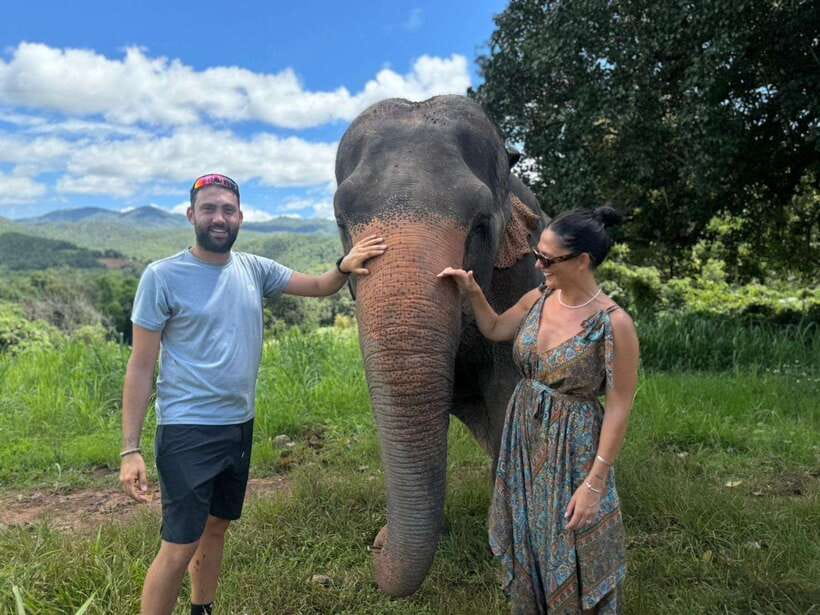
Chiang Mai’s best day trips often force you to choose between temples and elephants. This one puts both on the same plate, with a forest walk at Wat Pha Lat, the golden shrine of Doi Suthep, and several hours caring for elephants at Pon Elephant Thailand. Guides such as Sumit, Paul, Ronnie, and Suriya are known for explaining Buddhist customs, local history, and elephant behavior in clear, friendly English.
I like the mix of quiet woodland and major temple sights. I also like that the elephant visit involves feeding, walking, preparing medicine balls, and bathing, with no riding or forced tricks. The main drawback is the long day: about 10 hours, including roughly 160 minutes in the van, and the trail can be muddy or slippery after rain.
Key points to know before you book
- Three very different Chiang Mai experiences: Forest trail, mountain temple, and elephant care all fit into one day.
- No elephant riding: The animals are allowed to move freely, and activities are not forced.
- A real walk is included: The Monk Trail section takes about 40 minutes and calls for proper shoes.
- Small groups can feel personal: Some departures have had only two or three people, while the exact group size can vary.
- Lunch is included: Expect a homemade Thai meal, fresh fruit, and local desserts, though food quality may vary.
- Bring clothes you can get wet in: Bathing the elephants can leave you muddy and soaked.
Why this Chiang Mai day works so well
At $57 per person, this is a strong value if you want several major Chiang Mai experiences in one outing. The fee covers city-center hotel transfers, an English-speaking guide, accident insurance, entrance tickets, drinking water, lunch, elephant food, and use of showers and toilets at the sanctuary.
You are not just being driven from one photo stop to another. The day has three clear parts. You walk through forest to a peaceful temple, learn how Chiang Mai’s main shrine fits into Thai Buddhism, and then spend a long block of time with elephants in a setting that does not offer riding.
I especially like the balance between sightseeing and participation. At the temples, you listen, look, and walk. At Pon Elephant Thailand, you prepare food and medicine balls, feed the elephants, walk beside them, and help bathe them in the river.
The cost becomes less attractive if you want a relaxed day with plenty of free time. This is a packed route, and the drive to Mae Wang District takes about 80 minutes each way. Still, the transport matters. The road is winding in places, and a careful driver makes that long transfer much easier.
More Elephant Sanctuaries in Chiang Mai
- Chiang Mai: Elephant Sanctuary, Waterfall & Bamboo Rafting
★ 4.9 · 9,160 reviews - Chiang Mai: Elephant Sanctuary & Waterfall Group Tour
★ 4.9 · 5,780 reviews - Chiang Mai: Elephant Sanctuary Feeding Program Half-Day Tour
★ 4.8 · 4,527 reviews
Starting early from Chiang Mai
Pickup is available from accommodations in Chiang Mai city center or from a central meeting point, depending on the option you choose. The usual start is around 8 a.m., with return around 5 p.m., though starting times depend on availability.
The van ride to the first stop takes about 20 minutes. Air-conditioning, drinking water, and hotel drop-off are useful comforts on a full day. If you are prone to motion sickness, bring personal medicine and consider sitting near the front.
A small group can make a big difference here. Some departures have been especially intimate, with only two or three people. That gives you more room to ask questions and makes it easier for the guide to adjust the pace. Group size is not guaranteed, so book this for the route and activities, not on the assumption that you will receive a private tour.
The guide can also help shape the day around conditions. Heavy rain may make the trail muddy, and the order of the temple and elephant visits can change. That flexibility is useful, but it also means you should keep your schedule open until the evening.
Walking the Monk Trail to Wat Pha Lat
The first major stop is reached by a nature trail that takes about 40 minutes. The route leads to Wat Pha Lat, a forest temple associated with meditation and monastic life.
This is a very different experience from the large temple later in the day. Here, the appeal is the setting: trees, a small stream, ordained trees, old structures, and a wooden tunnel. The temple feels tied to the forest rather than separated from it.
Your guide can explain the role of monks, the meaning of the site, and how Buddhist practice connects with quiet natural places. That context helps you notice details you might otherwise pass without a second look.
The walk is not described as a difficult mountain trek, but it is still a real trail. Wear hiking or walking shoes with grip. Several people have completed it in ordinary footwear, but that is not a good reason to bring sandals or smooth-soled shoes. During the rainy season, mud can add a little challenge.
Some versions of the day place the Monk Trail after Doi Suthep, and the route may be walked downhill. That is easier on the lungs, though downhill walking can still bother knees. The operator can adjust the plan to suit the day’s conditions.
Wat Phra That Doi Suthep and the view over Chiang Mai

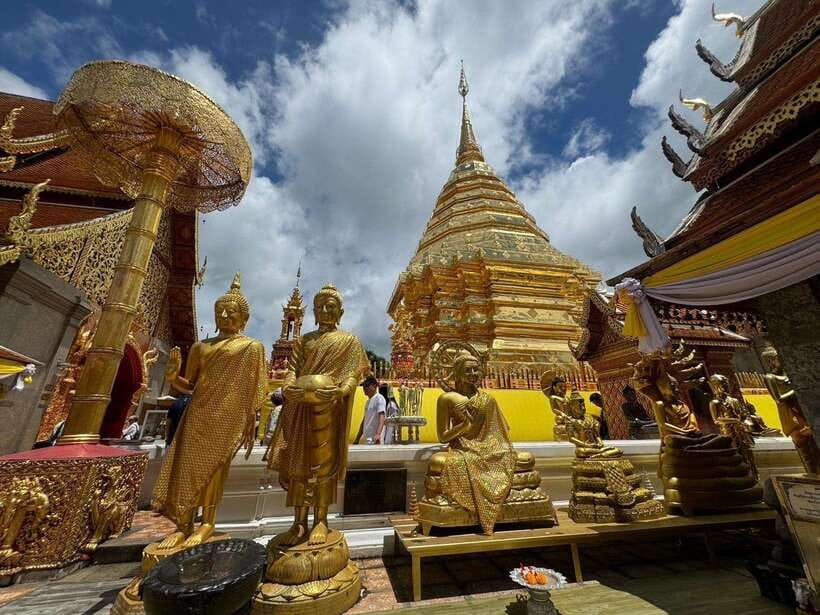
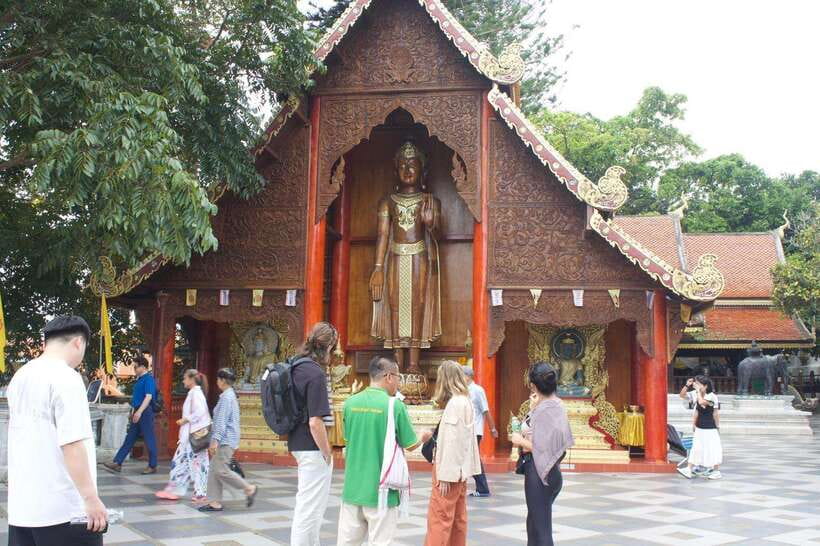
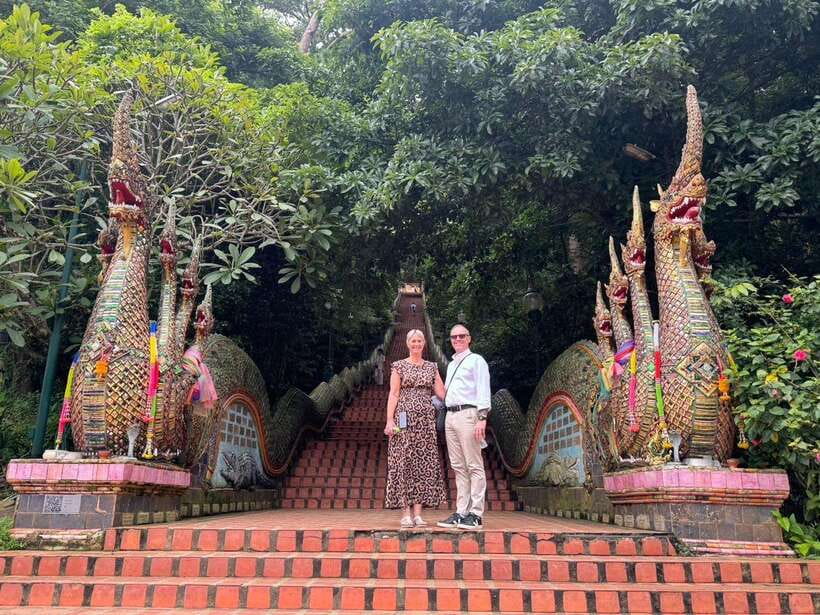
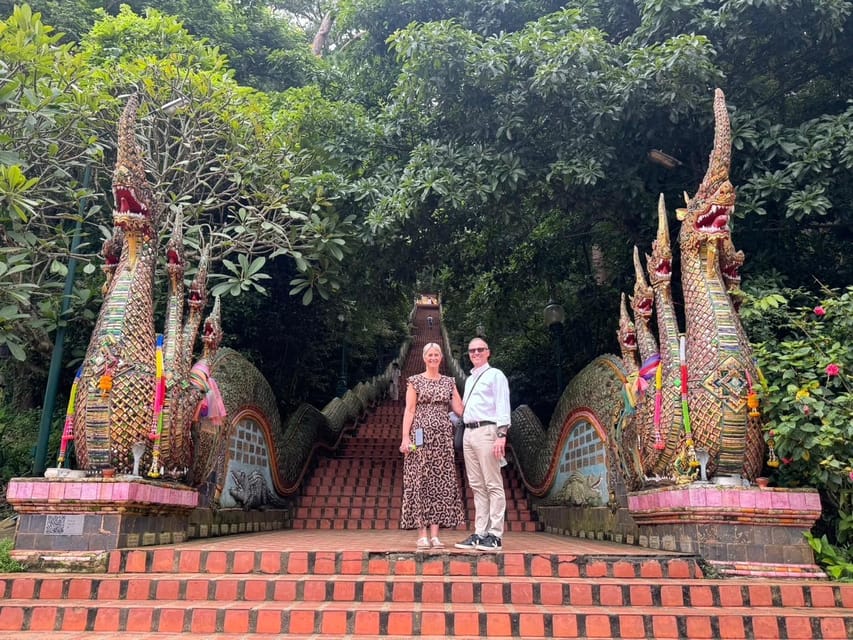
Wat Phra That Doi Suthep receives about 90 minutes, enough time to see the principal areas without turning the visit into a rushed stop. The temple sits high on Doi Suthep and is Chiang Mai’s best-known religious site.
You will see the golden pagoda, temple halls, statues, shrines, fruit trees, and rock gardens. The terrace also gives you a broad view over Chiang Mai. On a clear day, this may be the visual high point of the tour.
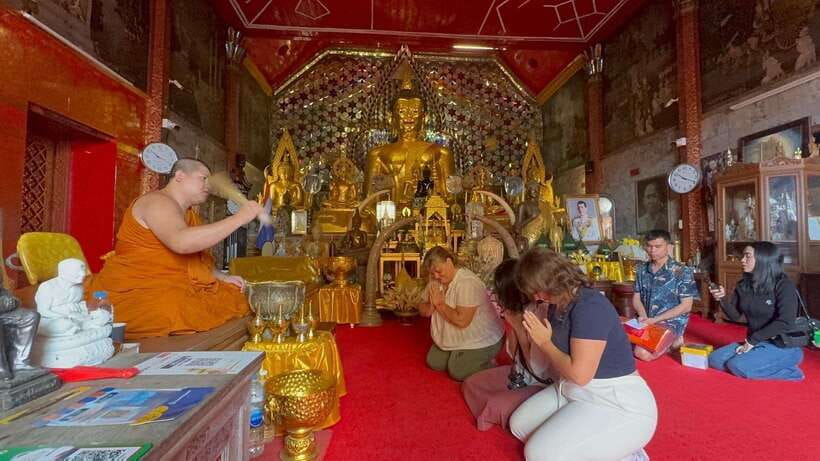
A guide adds real value here. Sumit, Paul, Ronnie, Suriya, and other guides have been praised for explaining Buddhist customs, temple history, and the proper way to pray. Some visitors have also been introduced to monks and received a blessing, though that should be treated as a possibility rather than a promised part of every departure.
Dress respectfully. Your knees and shoulders should be covered, and you should remove shoes where required. Lightweight clothing that meets temple standards will also work well later at the elephant camp.
The temple is active and important, not simply a decorative stop. You will get more from it if you listen to the guide’s explanations instead of treating the pagoda as a quick photo backdrop.
Same place, a different set of animals:
- Chiang Mai: Elephant Sanctuary, Long Neck & Sticky Waterfall
★ 4.9 · 2,262 reviews - Chiang Mai: Small Group Ethical Elephant Sanctuary Tour
★ 4.9 · 1,572 reviews - Chiang Mai: Doi Inthanon and Elephant Sanctuary Tour
★ 4.9 · 1,091 reviews - 3-in-1: Doi Inthanon Tour, Elephant Sanctuary, and Trekking Trail
★ 5.0 · 1,087 reviews
The 80-minute drive to Pon Elephant Thailand
After the temple portion, the van travels to Pon Elephant Thailand in Mae Wang District. The drive takes about 80 minutes each way, so this is the part of the day that determines whether the tour feels worthwhile to you.
I think the transfer earns its place because the elephant program occupies about three and a half hours. You are not driving that far for a brief encounter. Once you arrive, the day becomes hands-on and slower.
The route may be tiring for people who dislike long van rides or winding roads. A careful driver, air-conditioning, water, and the chance to leave nonessential belongings in the van make the journey more manageable.
Meeting elephants without riding them
The elephant program focuses on care rather than performance. You learn about the animals’ history and behavior in Thailand, then take part in several practical activities.
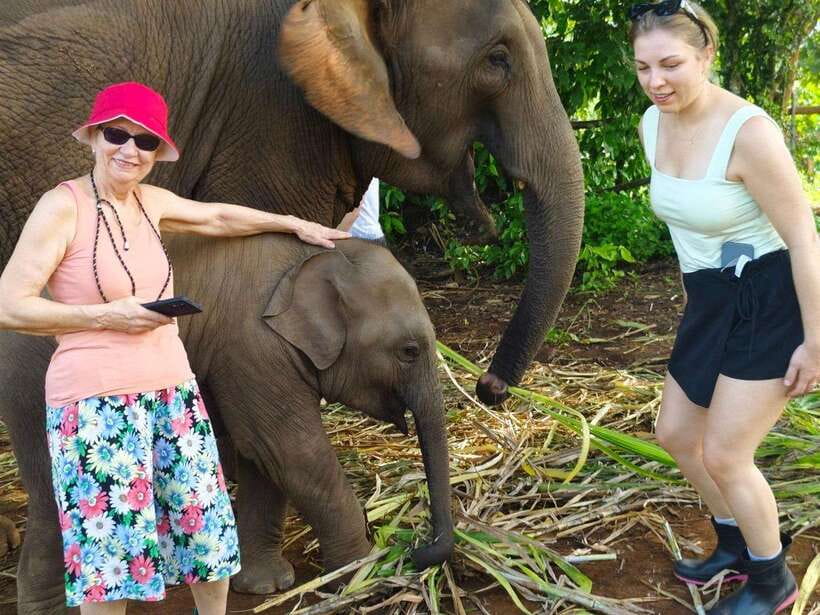
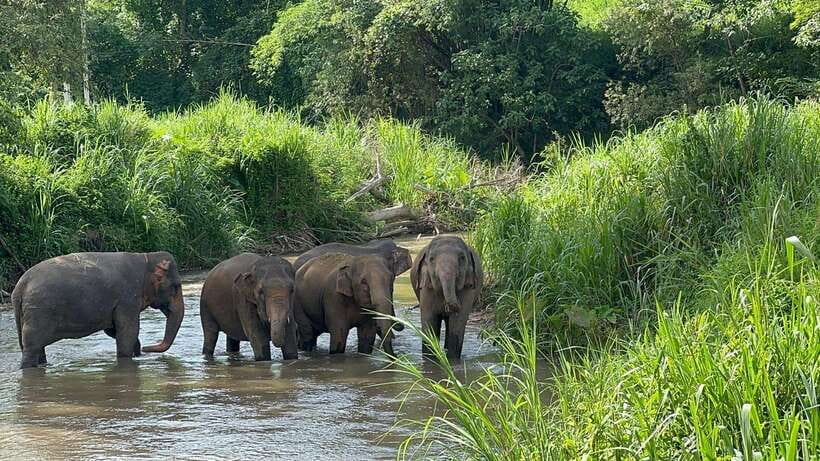
You may prepare food, feed the elephants, make medicine balls, walk through the forest beside them, and help bathe them in the river. The program says elephants are not forced to take part, and elephant riding is prohibited.
That distinction matters. You should still pay attention to how the animals are handled and keep a respectful distance when asked. The strongest part of the experience is not simply getting close to a large animal. It is learning to watch its mood, movement, and appetite, then follow the staff’s instructions.
The age range of the elephants can make the visit more interesting. The program has included elephants from young animals to one around 72 years old. Seeing different ages helps you understand that these are individuals with different sizes, energy levels, and habits.
Feeding is usually the easiest activity for most people. Bathing is messier and more memorable, but it also requires practical planning. Wear swimwear or quick-drying clothes under clothes that can get dirty. Bring a towel, flip-flops, sunscreen, insect repellent, and a full change of clothes.
Showers and toilets are available. Towels are not included, so do not assume you can borrow one. You may also want a waterproof way to carry your phone, though glass objects, drones, and several other items are not allowed.
Thai lunch with a local family
Lunch follows the elephant activities and is included in the price. The meal is homemade Thai food provided by a local family, with drinking water, fresh seasonal fruit, and local desserts.
This is a welcome pause after walking and getting wet. It also keeps the day from becoming a series of disconnected attractions. You eat near the community connected to the sanctuary rather than being sent to an unrelated tourist restaurant.
Food quality may vary. Some people have found the lunch delicious, while one meal was described as cold and disappointing. I would treat lunch as a convenient and local part of the package, not the reason to book the tour.
If you have dietary needs, the supplied information does not promise specific alternatives. Ask before booking rather than assuming that every preference can be met on the day.
The guides make the difference
The guide is central to this experience because the day moves between Buddhism, local history, forests, and elephant welfare. A quiet temple can feel flat without explanation, and an elephant visit can become shallow if nobody explains what you are seeing.
Sumit has been especially appreciated for humor, patience, history, and photography. Paul is often noted for thoughtful explanations and a friendly manner. Ronnie is described as energetic and funny, while Suriya is praised for calm explanations and care with the group. Yoong and Jakkie have also led departures with strong attention to questions and timing.
You should not book on the promise of one particular guide unless the operator confirms that request. Guide assignments can change. Still, the repeated praise for the guiding style tells you what to expect: cultural explanations, help with photographs, and a guide who stays involved from pickup through drop-off.
The guide can also help with small but useful details, such as showing you how to pray, taking photos at the temple, offering ponchos in heavy rain, or adjusting the pace when conditions change.
What to pack for the full day
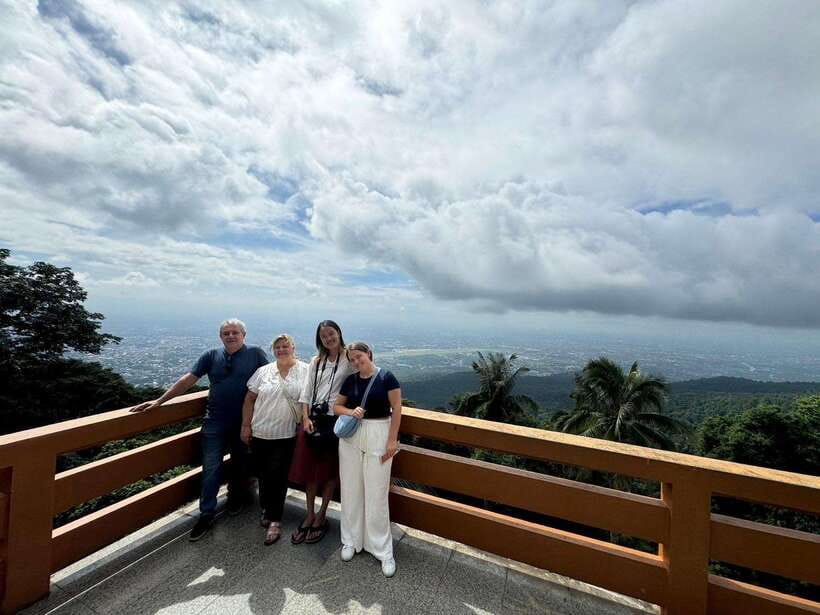
Pack for two separate settings. The temple calls for covered knees and shoulders, while the elephant camp calls for clothing that can get wet and dirty.
Bring:
- Comfortable walking or hiking shoes
- Swimwear and a complete change of clothes
- A towel, since one is not included
- Flip-flops for the shower or river area
- Sunscreen and insect repellent
- Personal medicine
- Cash and a passport or accepted copy
- A phone case or bag that can handle water
Avoid bringing a stroller, scooter, nonfolding wheelchair, large handcart, drone, glass objects, alcohol, or drugs. Smoking is not allowed in the vehicle, and riding the elephants is not part of the program.
The activity is not suitable for children under two, babies, pregnant women, wheelchair users, people with serious mobility, heart, or back problems, or those with recent surgery. The supplied restrictions also include people with epilepsy, animal allergies, altitude sickness, fear of heights, low fitness, or motion sickness, as well as people over 70, 80, or 95 depending on the stated restriction. If any of these apply to you, confirm your suitability before paying.
Is $57 a fair price?
For $57, you receive a full day, transport, a guide, temple entry, elephant food, lunch, water, insurance, and the main activity fees. Paying separately for several of these pieces would likely take more planning and could cost more.
The value is strongest if you are visiting Chiang Mai for a short time and want a broad introduction to the area. You get a forest temple, a major pilgrimage site, a mountain view, an ethical elephant program, and a local meal in one booking.
The value is weaker if you prefer to explore slowly or already plan to visit Doi Suthep on your own. In that case, a dedicated elephant-care visit or a quiet temple day may suit you better.
Free cancellation up to 24 hours before the start and reserve-now, pay-later terms reduce the risk of booking. Check the pickup option carefully, since city-center transfers are included but locations outside the stated area may not be.
Should you book this Chiang Mai tour?
Book it if you want a busy but well-rounded day, especially if ethical elephant care matters to you. It suits couples, families with older children, and active adults who enjoy walking, cultural explanation, and getting wet for a worthwhile experience.
Think twice if you have limited stamina, dislike long van rides, need wheelchair access, or want a quiet schedule. The trail, temple stairs and surfaces, mountain roads, and river bathing all demand some physical ability.
For the best day, wear proper shoes, cover your shoulders and knees, bring a towel and dry clothes, and keep an open mind about the schedule. If you want temples, forest, elephants, food, and a guide who can connect those pieces, this is a practical way to see several sides of Chiang Mai in one long day.
FAQ
How long does the Chiang Mai temple and elephant tour last?
The activity lasts one full day. The usual schedule runs from about 8 a.m. until around 5 p.m., though the exact starting time depends on availability.
What is included in the $57 price?
The price includes Chiang Mai city-center hotel transfers, an English-speaking guide, first-class travel accident insurance, drinking water, lunch, food for feeding the elephants, shower rooms, toilets, and entrance tickets.
Is hotel pickup included?
Pickup and return transfers are included for hotels in Chiang Mai city center. You may instead meet at a central meeting point, depending on the option selected.
Is elephant riding allowed?
No. Elephant riding is prohibited, and the program states that elephants are not forced to perform activities.
Can I bathe the elephants?
Yes. Bathing the elephants in a river is part of the care experience. Bring swimwear, a towel, and dry clothes because you may get wet and dirty.
How long is the Monk Trail walk?
The listed walk to Wat Pha Lat takes about 40 minutes. Hiking shoes or sturdy walking shoes are recommended.
How much time is spent at Wat Doi Suthep?
The visit to Wat Phra That Doi Suthep lasts about one and a half hours.
Is lunch provided?
Yes. Lunch is a homemade Thai meal provided by a local family. Fresh seasonal fruit and local desserts are also included.
What should I wear to the temples?
Your shoulders and knees should be covered. Comfortable clothing that meets temple standards is the safest choice.
Can I cancel the booking?
You can cancel up to 24 hours in advance for a full refund. The activity also offers a reserve-now, pay-later option.
Just added around Chiang Mai
- Inthanon Heaven Trail(Living Green Elephant Sanctuary)★ 5.0 · 52 reviews
- Elephant Sanctuary + Waterfall + Bamboo Rafting One Day Trip★ 4.5 · 22 reviews
- Chiang Mai Zipline White Water Rafting and Elephant Sanctuary★ 4.0 · 11 reviews
- Chiang Mai Half Day Tour: Doi Inthanon Elephant Sanctuary★ 4.5 · 22 reviews
- Chiang Mai Elephant Sanctuary and Temples Tour in Spanish★ 5.0 · 5 reviews
- ChiangMai 1DayTour:Elephant Sanctuary,king&queen pagoda,waterfall★ 5.0 · 23 reviews
- Chiang Mai ATV White Water Rafting and Elephant Sanctuary Full-Day Trip★ 4.5 · 8 reviews
- Chiang Mai: Inthanon, Elephant Sanctuary Observation & Waterfall★ 5.0 · 33 reviews
Chiang Mai Zoos, compared.
Chiang Mai: Elephant Sanctuary, Waterfall & Bamboo Rafting
Read our review →
Chiang Mai: Elephant Sanctuary & Waterfall Group Tour
Read our review →
Chiang Mai: Elephant Sanctuary Feeding Program Half-Day Tour
Read our review →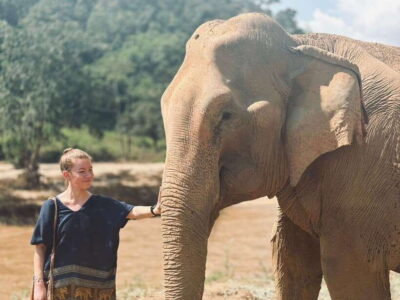
Chiang Mai: Elephant Sanctuary, Long Neck & Sticky Waterfall
Read our review →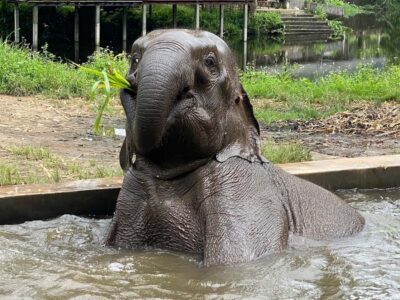
Chiang Mai: Small Group Ethical Elephant Sanctuary Tour
Read our review →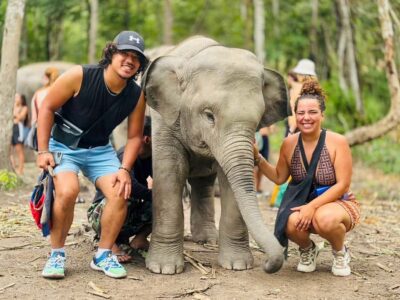
Chiang Mai: Doi Inthanon and Elephant Sanctuary Tour
Read our review →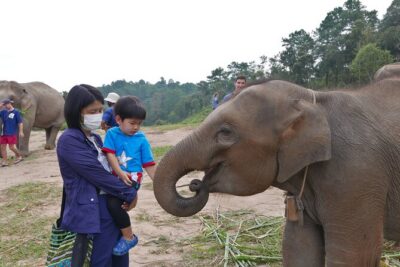
3-in-1: Doi Inthanon Tour, Elephant Sanctuary, and Trekking Trail
Read our review →
Chiang Mai Elephant Sanctuary, Bamboo Rafting and Waterfall Tour
Read our review →Browse the lists this tour appears in