
REVIEW · BALI
Bali Zoo: Guided Ethical Elephant Care Experience
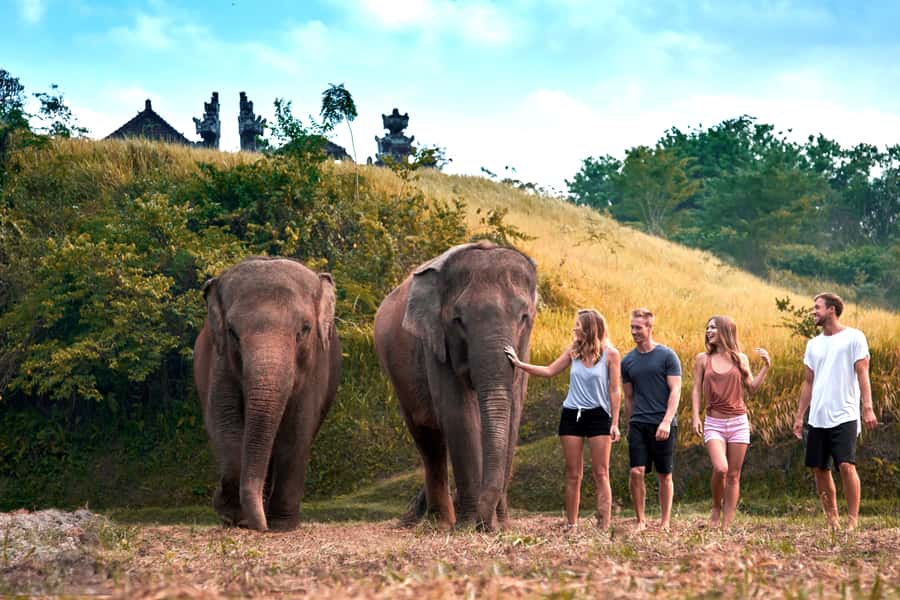
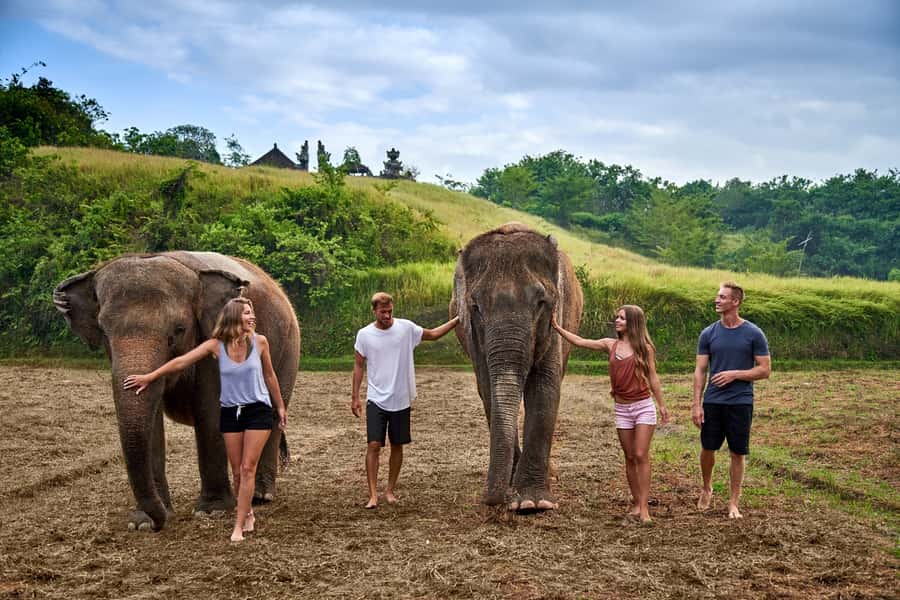
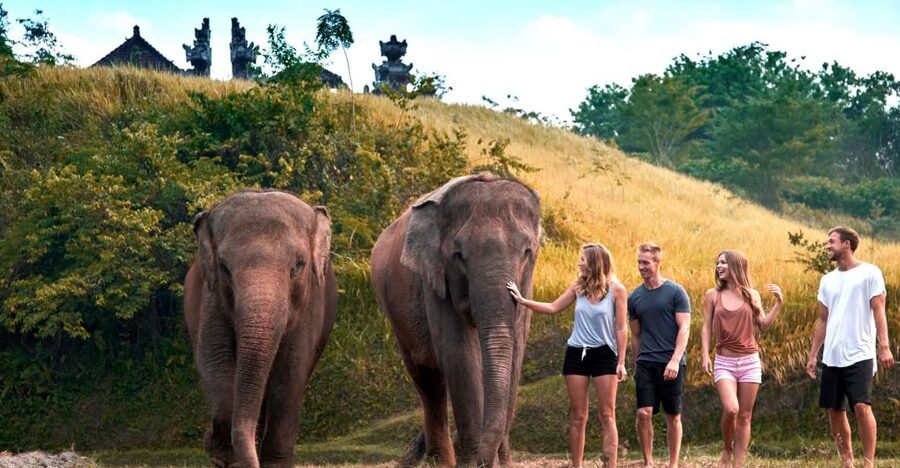
The best part of this Bali Zoo experience is that the elephants set the pace. You may feed them, brush them, help with a mud bath, and walk into the river with them, but only when the mahouts approve and the animals are willing. I like the clear move away from elephant rides toward on-foot care activities. I also like that the guides explain behavior and daily care instead of treating the animals as scenery.
The other strong point is the calm handling. Guides such as Niki, Wilson, Purna, Nicki, and Yuki have been praised for making the program friendly and informative. My main caution is practical: the photos cost extra and can be pricey, while some parts of the zoo have limited signage and slippery slopes after rain.
Key points to know
- Elephant-led activities: Feed, brush, mud-bathe, and meet the elephants only when they choose to take part.
- No elephant riding: The program uses supervised walking activities rather than riding.
- Seven-hour visit: You get time for the elephant session, lunch, and a walk around Bali Zoo.
- Optional orangutan breakfast: Add a guided breakfast with orangutans if that upgrade is available for your date.
- Transport can simplify the day: Hotel pickup is offered from Ubud, Sanur, Kuta, Seminyak, Canggu, Nusa Dua, Tanjung Benoa, Jimbaran, and nearby areas.
- Bring dry clothes: Mud, river water, and elephant showers are part of the fun, not a minor possibility.
Why the elephant care program feels different
Many animal encounters are built around getting a quick picture. This one is built around watching the elephant decide what happens next.
At Kampung Sumatra inside Bali Zoo, an English-speaking mahout introduces the elephants, their social behavior, daily routines, and the welfare rules for the session. You learn why mud is useful to elephants: it helps cool the body and keeps the skin in good condition. That explanation matters because it changes the activity from a staged bath into a chance to watch ordinary elephant behavior.
The rules are clear. You cannot chase, force, control, or pressure an elephant into touching you. Close contact happens only with a mahout’s approval, and the staff can adjust the activity if an elephant is tired, distracted, or simply not interested.
That approach also means the session may not unfold exactly as you imagine. An elephant might come forward for food, turn away from a brush, or spend more time in the mud than near the group. I see that as a strength, but you should book this only if you are comfortable with an animal encounter that is not fully controlled.
The elephants are described as former logging elephants. The program’s current approach is on foot, with no elephant rides, and the animals are allowed to take part at their own pace.
More Elephant Sanctuaries in Bali:
- Chiang Mai: Elephant Sanctuary, Waterfall & Bamboo Rafting
★ 4.9 · 9,160 reviews - Chiang Mai: Elephant Sanctuary & Waterfall Group Tour
★ 4.9 · 5,780 reviews - Chiang Mai: Elephant Sanctuary Feeding Program Half-Day Tour
★ 4.8 · 4,527 reviews
What your seven-hour day looks like
The day begins with hotel pickup if you choose a transfer package. Pickup is listed at 6:30 a.m. from Kuta, Seminyak, Canggu, Nusa Dua, Tanjung Benoa, and Jimbaran. Ubud and Sanur pickups are listed at 7 a.m. You can also meet at Bali Zoo’s main entrance on Jl. Raya Singapadu, near Sukawati in Gianyar.
The drive is part of the convenience. Several people have singled out drivers such as Agung, Bon, and Budi for being friendly and helpful. A transfer costs more than arriving on your own, but I think it is worth considering if you are staying outside central Ubud or do not want to arrange a taxi for an early start.
At the zoo, you receive a light drink and snack before the program. You then head to Kampung Sumatra, where the mahout explains what will happen. The check-in process is usually straightforward, though one person had trouble finding the elephant area after an orangutan breakfast because signs and staff directions were not clear. If you combine both activities, ask exactly where to go next before leaving the breakfast area.
The elephant session is the heart of the day. Expect feeding with fruit and sugarcane, close observation, brushing, mud, water, and time around a river area. The exact order can change with the elephants’ condition and willingness.
Afterward, you get time to shower and change before lunch. A towel is included. The day also includes admission to Bali Zoo, so you can walk around and see the other animal areas rather than leaving as soon as the elephant program ends.
Feeding Sumatran elephants at close range
Feeding is often the first moment when you understand the scale and gentleness of an elephant. The mahouts show you how food is offered, and the elephant’s trunk reaches out to take it. It is a simple activity, but it gives you a safe way to notice how the animal uses its trunk and how closely the keepers read its mood.
Do not expect every elephant to behave the same way. One may be eager for food, while another may wander or wait. That variation is part of the point. You are not being promised a mechanical photo opportunity where every animal repeats the same action for every person.
The guides make the activity more useful by discussing each elephant’s background, age, and personality when that information is available. Tina, Adele, Anna, and other named elephants appear in the daily conversations, and the presence of a playful young elephant has been noted during some sessions.
The program is suitable for children aged 12 and older, with a minimum height of 120 centimeters. Children who meet the height requirement pay the adult price. Pregnant women and people with mobility impairments are advised not to take part.
Mud, brushes, and the river area
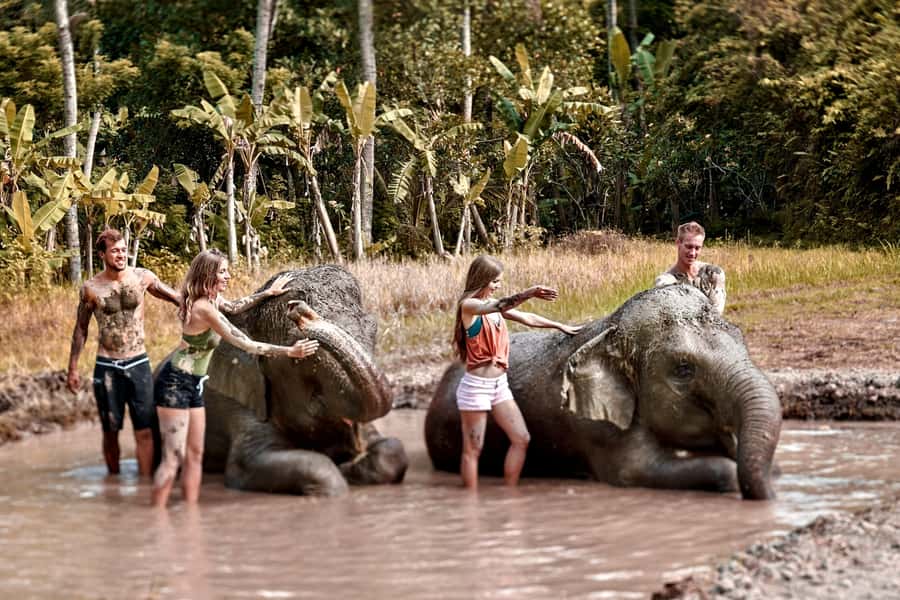
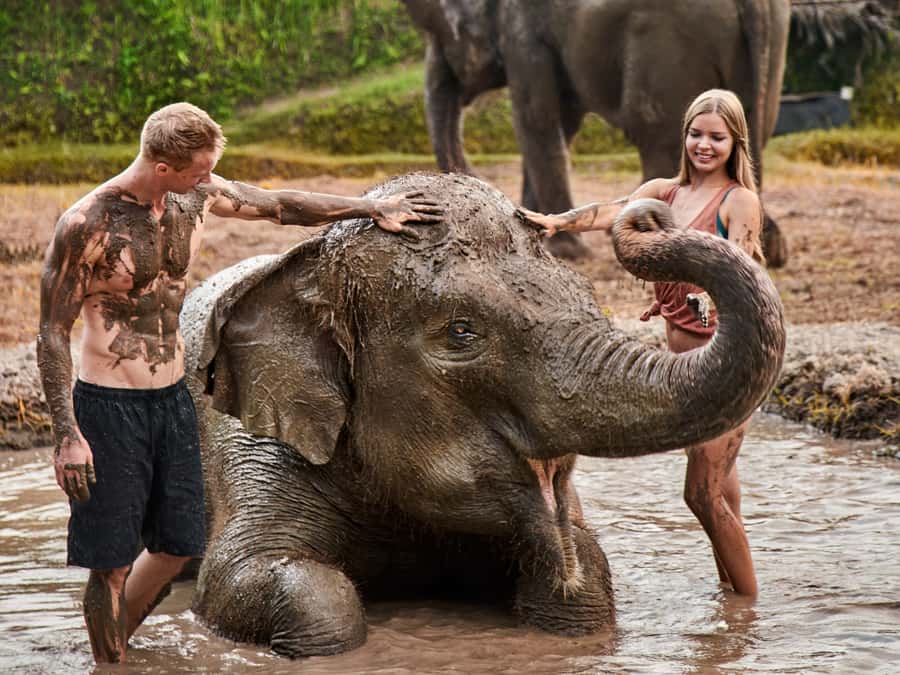
The mud bath is the messy part, so wear swimwear or clothes you can wash easily. You may help place mud on the elephants and brush them afterward. The mahouts explain how mud protects the skin and helps the elephants manage heat.
This is also where the elephant-led rule becomes easiest to see. You might be brushing an elephant when it turns, moves away, or presents another part of its body. One older elephant named Anna was described as somewhat grumpy, yet still pushed her trunk forward for more brushing during one session. That is the sort of small behavior that makes the activity feel less scripted.
The river section adds water, movement, and a good deal of splashing. Elephants may spray water with their trunks, and you can get wet quickly. Some people describe walking into the river with the elephants as the highlight of the day.
The word bath should be taken literally. Bring sandals, sunscreen, swimwear, and a full change of clothes. A towel is supplied, but I would still pack a small waterproof bag for your phone and other items.
Physical contact is limited to what the staff permits. You are not there to sit on the elephant, direct it, or make it perform. That is important if you want an animal encounter based on care rather than control.
More Guided Tours in Bali:
- Bali Zoo: Guided Breakfast With Observing Orangutans
★ 4.5 · 936 reviews - Phuket: Elephant Sanctuary Guided Tour with Hotel Transfers
★ 4.8 · 2,020 reviews - Ubud: Sacred Monkey Forest Sanctuary Ticket and Guided Tour
★ 4.8 · 675 reviews - Phuket: Guided Tour to Elephant Sanctuary & Hotel Transfer
★ 4.8 · 292 reviews
The mahouts make or break the experience
The mahouts are central to the day. They explain when to approach, where to stand, how to offer food, and when to stop touching an elephant. They also watch the animals while keeping the group organized.
The guides named in the feedback include Niki, Nikki, Wilson, Purna, Nicki, Yuki, Nike Hero, and Munif. Names and group assignments can change, but the recurring strength is the staff’s friendly, hands-on supervision. The best moments come when the guide pauses to explain a behavior instead of rushing everyone into the next photograph.
A large group does not automatically ruin the session. The activity can still feel calm when the staff rotates people carefully. Still, one person found the crowd a little heavy, and another hoped for more space for photographs. If your priority is quiet animal watching, ask how many people are scheduled for your time before booking, if that information is available.
The program runs twice a day according to one recent account, though the provided schedule does not give the exact session times. Check the available start time when you reserve.
Lunch, showers, and time at Bali Zoo
Lunch gives you a chance to clean up after the mud and river activities. Food is included, along with drinks and the initial snack. The meal has been praised for its variety and presentation, though one account noted that the vegetarian choices were limited to salad and boiled rice on that day.
For groups of more than 20 people, lunch is served as a buffet instead of the standard arrangement. If you have dietary needs, it is sensible to ask ahead rather than assume the buffet will have many meat-free or special-diet options.
The zoo itself is on the smaller side, but it gives the day useful breathing room. You can see tigers, birds, orangutans, and other animals after the elephant activity. You can also buy food for some animals for a small extra fee, according to the information provided.
Watch your footing. The slopes at the zoo entrance can become very slippery when wet. Sandals are useful for the elephant session, but shoes with a secure grip may be more comfortable for walking around the zoo.
Should you add breakfast with orangutans?
The orangutan breakfast is an optional upgrade, not part of every package. It gives you a guided morning meal inside the zoo with staff supervision and ethical wildlife viewing rules.
The breakfast has received especially warm attention for its range of food and photo opportunities. It can turn the day into a broader animal visit rather than an elephant-only program. If you want both activities, remember that you may need to move between areas afterward, and signage has not always been clear.
I would add it if you want a full zoo day and enjoy seeing several species. I would skip it if the elephants are your only priority or if you prefer a slower morning before the muddy activity.
Is $89 a fair price?
At $89 per person, the cost is not cheap for Bali, but it includes more than a short animal encounter. Zoo admission, welcome refreshments, an English-speaking mahout, elephant food, lunch, a towel, and insurance are included. Return transfers and the orangutan breakfast depend on the package you choose.
The value improves if you use the included zoo access and stay for lunch and the rest of the day. It also improves if you need hotel transportation, since arranging a separate early taxi can be inconvenient.
The price does not include personal expenses or the professional photographs. This is the most important extra cost to plan for. Several people felt the photos were expensive, with one account putting a package at about 1.5 million Indonesian rupiah. You are better off bringing a phone with a waterproof case and asking the photographer to take pictures on it. Staff have done this for some people, so you do not have to buy the official package to leave with memories.
Who will enjoy this and who should skip it?
I would recommend the experience to you if you want close contact with elephants but do not want riding, forced tricks, or a rushed photo stop. It suits adults, families with children at least 12 years old and 120 centimeters tall, and anyone who values explanations about behavior and animal care.
It is also a good fit if you want a full day from one booking. The combination of transfers, zoo admission, lunch, showers, and the elephant session removes a lot of small planning tasks.
I would be cautious if you have limited mobility, are pregnant, dislike getting muddy, or need a very quiet experience with minimal group activity. You should also think twice if expensive optional photos will bother you or if your diet requires a broad range of vegetarian choices.
The ethical label should not make you switch off your own judgment. Watch how the elephants behave, notice whether they can move away, and pay attention to whether staff respect a refusal. The stated rules are strong: the elephants are not forced, activities are supervised, and contact is adjusted to their comfort.
Practical details before you book
Hotel pickup is available from Kuta, Seminyak, Canggu, Nusa Dua, Tanjung Benoa, Jimbaran, Sanur, and Ubud. Locations outside those areas may carry an extra cash charge.
The tour is offered in English and Indonesian. Free cancellation is available up to 24 hours before the start time, and you can reserve now and pay later. Check the start time and package details carefully because transport and orangutan breakfast depend on the option selected.
Pack:
- Swimwear or clothes that can get muddy
- A complete change of clothes
- Sandals
- Sunscreen
- A waterproof pouch for your phone
- Shoes with good grip for wet zoo paths
Parents are responsible for children who remain at the restaurant. Bali Zoo does not provide babysitting, so the whole family should meet the age and height rules if everyone plans to join the elephant program.
Should you book the Bali Zoo elephant experience?
I would book it if you want an active, supervised elephant encounter that puts feeding, mud, water, and observation ahead of riding. The strongest parts are the patient mahouts, the chance to see natural behavior, and the simple rule that the elephant can say no.
Choose the transfer option if you value ease, and add the orangutan breakfast if you want a full animal-focused day. Bring your own camera, expect wet clothes, and budget nothing for the official photos unless you decide they are worth the extra cost.
For an $89 day, the package offers solid value when you use the lunch, zoo admission, and transport. It is not a private encounter, and crowd levels, signage, food choices, and photo pricing may not suit everyone. For the right visitor, though, it offers a respectful way to get close to Sumatran elephants without putting a rider on their backs.
FAQ
How long does the Bali Zoo elephant care experience last?
The experience lasts seven hours, including the guided elephant program, lunch, and time to explore Bali Zoo.
What activities can I do with the elephants?
You can feed the elephants, help with a mud bath, brush them, observe them around mud and river areas, and possibly get splashed by water from their trunks. All activities are supervised and depend on the elephants’ willingness.
Are elephant rides included?
No. The program is an on-foot experience. You cannot ride, chase, force, or control the elephants.
Is breakfast with orangutans included?
Breakfast with orangutans is an optional upgrade and depends on the package you select.
What should I bring?
Bring a change of clothes, sandals, sunscreen, and swimwear. A towel is included, but a waterproof pouch for your phone is also useful.
Can children participate?
Children must be at least 12 years old and at least 120 centimeters tall. Children who meet the height requirement pay the adult price. Bali Zoo does not provide babysitting for children who do not join the activity.
Just added around Bali
- Ubud: Walking Tour with Campuhan Ridge & Monkey Forest★ 4.7 · 34 reviews
- Sunrise Breakfest at kintamani cafe & Ubud private Tour★ 5.0 · 14 reviews
- Bali romantic floating breakfast – jungle swing – monkey forest – Ubud art shop.★ 5.0 · 2 reviews
- Monkey Forest, Ubud, Waterfall and Rice Terrace★ 4.5 · 53 reviews
- North Bali: Ulun Danu, Waterfalls, Swing and Monkey Forest★ 5.0 · 39 reviews
- Ubud: Hidden Waterfall, Monkey Forest, Rice Terrace & Swing★ 5.0 · 3 reviews
- Bali: Monkey Forest, Tegalalang, Uluwatu & Kecak Dance Tour★ 4.7 · 28 reviews
- Bali: ATV, Water Rafting, and Monkey Forest Tour★ 4.9 · 40 reviews
Bali Zoos, compared.
Ubud: Waterfall, Rice Terraces & Monkey Forest Private Tour
Read our review →
Ubud: Monkey Forest and Rice Terrace Private Tour
Read our review →
Bali: Swing with Falls, Rice Terrace, & Monkey Forest Option
Read our review →

Bali: Leke-Leke Waterfall, Monkey Forest & Jungle Swing Tour
Read our review →
Bali Pura Taman Ayun Temple, Monkey Forest & Tanah Lot Excursion
Read our review →
Browse the lists this tour appears in