
REVIEW · SINGAPORE
Jurong Bird Park Bird Photography
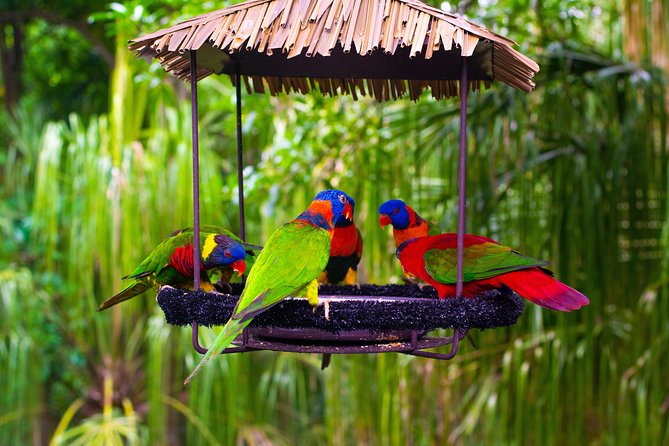
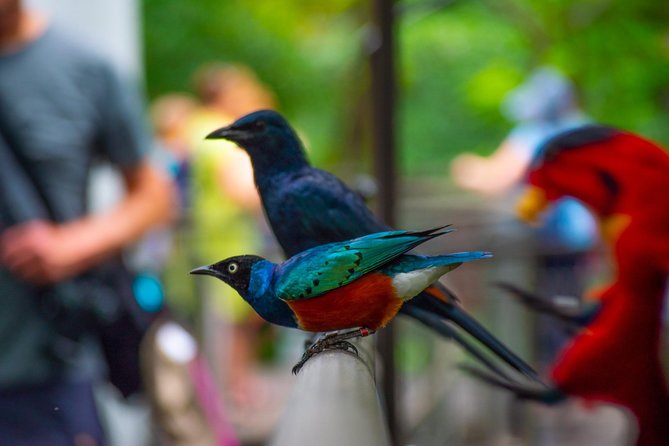
The best part of this three-hour photography class is its setting: Jurong Bird Park gives you colorful birds, large aviaries, reflective pools, and the 30-meter Jurong Falls in one morning. You are not stuck photographing a single tame subject. You can move from flamingos and toucans to penguins, pelicans, parrots, and free-flying lorikeets.
I like the small maximum group of 10, which gives the professional photographer room to offer personal help. I also like the clear focus on useful skills: composition, action shots, wildlife portraits, and fine detail. The main concern is practical and important: the meeting point information may need checking, and one booking account reported that Jurong Park was permanently closed and that the provider did not answer calls. Confirm the current meeting point before paying, since the booking is non-refundable.
Key Points at a Glance
- Jurong Falls gives you a dramatic indoor background: The 30-meter waterfall sits inside the huge Waterfall Aviary, where African bird species share a large open space.
- The morning has plenty of color and variety: You may photograph flamingos, toucans, lorikeets, parrots, ostriches, emus, fruit doves, penguins, and pelicans.
- The lesson covers more than simple bird spotting: Expect help with composition, action photography, wildlife portraits, and capturing small details.
- A group of no more than 10 keeps the class personal: You should have a fair chance to ask questions and receive one-to-one guidance.
- The $95 price does not include park admission: You also need your own camera equipment, food, drinks, and protection from sun or rain.
- The 8:30 am start matters: The course takes place in the morning and ends back at the meeting point after about three hours.
Starting Near Jurong Hill at 8:30 am
Your morning begins at 8:30 am near Jurong Hill in Singapore. The activity ends back at the meeting point, so you should plan around a three-hour session rather than a full day in the park.
The course is built around walking and photography rather than a formal classroom. You will move through the bird park with the photographer, stopping when a subject offers a useful lesson or a strong picture. That format makes sense for wildlife photography, since birds rarely wait for a neat teaching schedule.
You should arrive ready to walk and carry your camera gear. The information for the activity says participants need a moderate level of physical fitness and may walk on Singapore streets as part of the photography instruction. It does not describe a special vehicle, tram, or seated lesson, so do not treat this as a low-effort park visit.
The small group size helps here. With no more than 10 people, the photographer can look at your position, lens choice, framing, or timing without trying to manage a large crowd. You still need to take initiative. A small group does not guarantee that every bird will appear at the perfect angle.
More Bird Parks in Singapore:
- Penguin Parade, & Wildlife Encounters Eco Tour from Melbourne
★ 5.0 · 3,774 reviews - Dubai: Skip-The-Line Ticket to Butterfly Garden
★ 4.5 · 2,223 reviews - The Maui Butterfly Farm Tour
★ 5.0 · 446 reviews
Flamingos, Reflections, and the First Photography Lessons
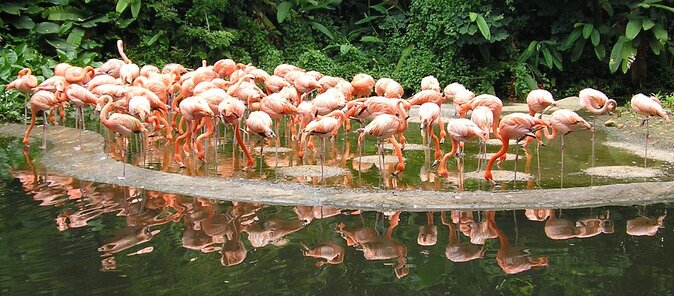
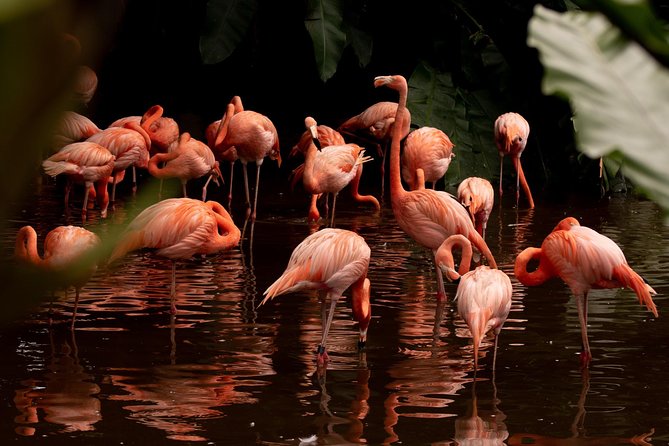
Flamingos are among the most useful subjects for a beginner because they offer shape, color, and reflections. If the water is calm, you may work on placing both the bird and its reflection in the frame. If the birds are moving, you can practice timing and focus instead.
This is where composition becomes more than a textbook idea. You can compare a tight portrait of one flamingo with a wider picture showing a group and the surrounding water. The photographer can help you decide when to leave space around the subject and when to fill the frame.
Colorful birds also create a simple trap: bright feathers can make you rush. A strong image still needs a clear subject, a useful background, and good timing. You might find that a quieter picture of one bird works better than a crowded frame full of competing colors.
The course is especially useful if you already know how to operate your camera but struggle to make wildlife pictures feel deliberate. You can ask for help with composition as the subject is in front of you, rather than trying to remember a general rule later.
Toucans, Parrots, and Capturing Fine Detail
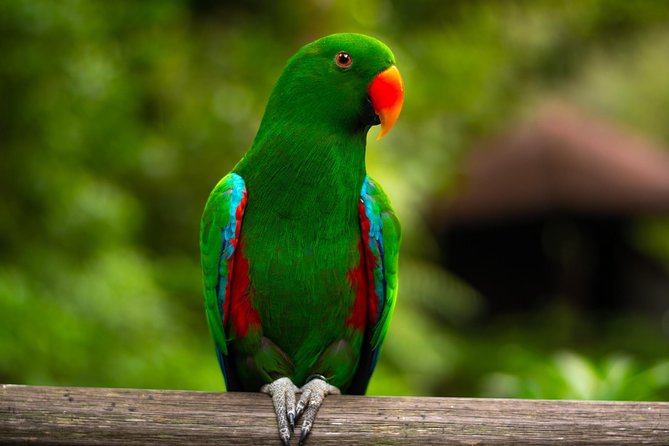
Toucans and parrots give you a chance to work on detail. Their bills, feathers, eyes, and strong color patterns can make good close subjects, but the hardest part is often deciding what to include and what to leave out.
A professional photographer can point out small distractions that you may miss while concentrating on the bird. A branch, wire, bright patch, or busy background can pull attention away from the subject. The lesson can help you find a cleaner angle without disturbing the bird.
The course also includes wildlife portrait photography. That means paying attention to the bird’s pose, eye, direction of gaze, and relationship with the frame. You may learn that a portrait is not simply a close photograph. It needs a sense of expression and a clear point of focus.
Do not expect the photographer to supply a camera or lens. Equipment is not included, so bring your own setup. The information does not specify a required camera type, lens length, or tripod. If you are unsure what to carry, contact Goblin Photography before booking rather than assuming rental gear is available.
Waterfall Aviary and Jurong Falls
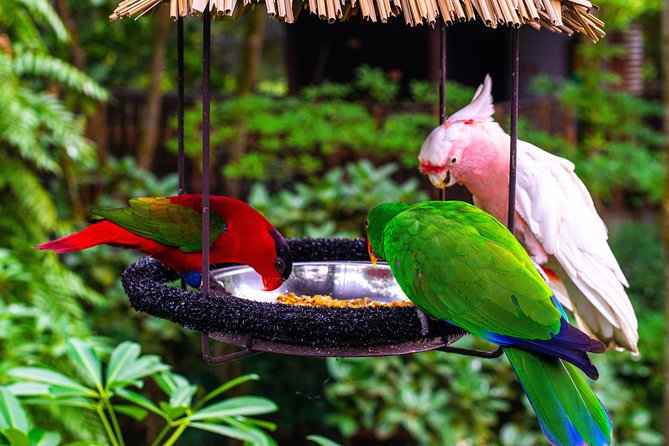
The Waterfall Aviary is one of the strongest reasons to choose this experience. It covers nearly five hectares and is described as the second-largest aviary in the world. Inside, you will find mainly African birds and the 30-meter Jurong Falls, one of the tallest man-made indoor waterfalls in the world.
This setting gives you more than a standard zoo enclosure. You may be able to photograph birds against foliage, open space, water, or the falls. The large scale also creates a useful lesson in choosing a subject. A wide photograph can show the relationship between birds and their surroundings, while a tighter image can isolate a single bird.
The waterfall can create technical problems, too. Bright water, shaded foliage, and moving birds may fool your exposure. The photographer can help you decide what to expose for and how to avoid losing detail in pale feathers or bright falling water.
There is no promise that every planned exhibit will be visited or that a particular bird will pose. That is normal for wildlife photography. The value comes from learning how to react when conditions change. You may leave with fewer perfect images than expected, but with better judgment about timing and framing.
More Photo Sessions in Singapore:
- Rovaniemi: Ranua Wildlife Park Tour with Photos & Guide
★ 4.9 · 10 reviews - Rovaniemi: Ranua Wildlife Park guided tour with Pro Photos
★ 5.0 · 2 reviews
Free-Flying Lorikeets and Action Photography
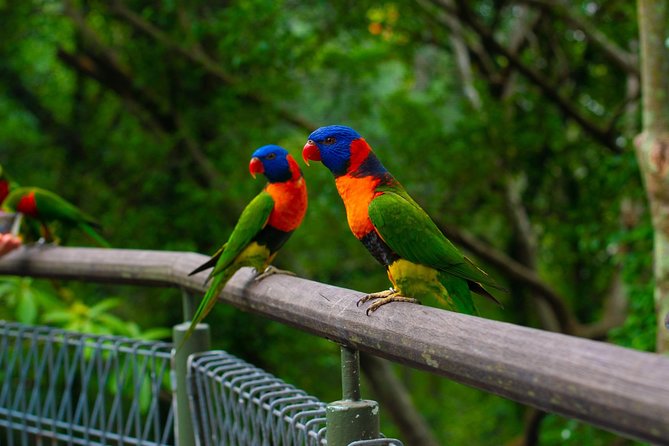
The free-range lorikeets may be the liveliest subjects of the morning. They are known to land on willing participants, which can create an unusual picture with a person and bird in the same frame.
You should treat this as a possibility, not a guaranteed encounter. Birds decide where they land, and the activity does not promise a particular interaction. Still, the chance adds variety to the session and gives you a chance to photograph behavior rather than a stationary display.
Action photography is one of the listed teaching goals. With lorikeets and other active birds, you can work on timing, focus, and shutter speed. The key lesson is often anticipation. You watch the bird’s body position and movement, then prepare before it takes off or lands.
This kind of photography can produce many unusable frames. That is part of the process. The photographer’s input is most useful when you can review what happened and adjust your timing for the next attempt. A fast bird may teach you more than a perfectly still subject.
Penguins, Ostriches, Emus, and Pelicans
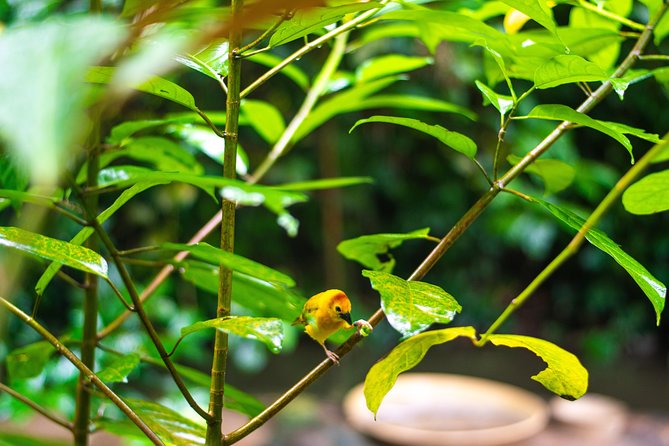
The park’s variety keeps the morning from becoming repetitive. Penguins offer compact shapes and expressive faces. Ostriches and emus bring height and unusual proportions. Pelicans have large bills and broad bodies that can be photographed as portraits or in wider scenes.
Each subject asks for a different approach. A tall ostrich may work best with a vertical frame, while a group of pelicans may suit a wider composition. Penguins can encourage you to watch behavior and spacing rather than simply record one bird.
You may also encounter fruit doves, additional parrots, and other birds throughout the park. The supplied information does not set out a fixed route or guarantee specific sightings. Keep your expectations flexible and use the variety as a chance to practice different styles.
This is also why the class suits more than serious birders. You do not need to know every species before arriving. If you enjoy colorful subjects and want help making better photographs, the park provides plenty to work with.
What the $95 Price Really Covers
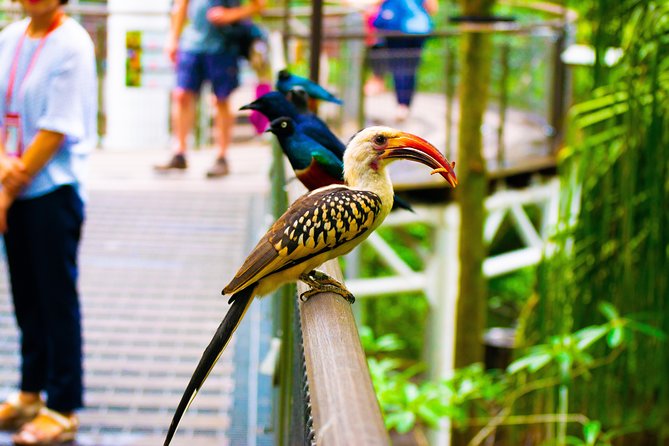
At $95 per person, the fee pays for the professional photographer as facilitator and roughly three hours of instruction in a specialized setting. The maximum group size of 10 gives the price some value, especially if you want personal feedback rather than a large lecture.
The fee does not include entry to Jurong Bird Park. You pay that separately, along with food, drinks, camera equipment, a hat, and rain protection. Add those costs before comparing this class with a general park visit or a private photography lesson.
The value depends on what you want from the morning. If you mainly want to see birds, paying for photography instruction may not make sense. You could spend less on a regular park visit and take pictures at your own pace.
If you want help with wildlife technique, the fee is more reasonable. You are paying for guidance in a place where birds provide different colors, distances, movements, and backgrounds. A group of 10 is not private tuition, but it is small enough for useful individual input.
The experience also makes the most sense if you already own suitable camera equipment. Since gear is not included, beginners without a camera may need to spend more or may not be able to take full advantage of the class.
The Important Meeting Point Warning
Check the meeting point carefully before you commit. The stated start point is before Jurong Hill in Singapore, while a separate booking account reported that Jurong Park was permanently closed, followed by unanswered calls and messages.
That creates enough uncertainty to justify direct confirmation with Goblin Photography. Ask for the current meeting location, the exact park entrance, and confirmation that the class is operating on your chosen date. Do this before paying because the activity is non-refundable and cannot be changed after booking.
The experience uses a mobile ticket, and confirmation is expected at booking. Keep that confirmation available on your phone, but do not assume it resolves the meeting-point question. A current phone number and written confirmation of the location are sensible safeguards.
The activity can also be canceled if the minimum number of participants is not reached. In that case, you are offered another date or experience, or a full refund. That protection applies to a provider cancellation, not to your own change of plans.
Who Will Get the Most From This Morning
This class suits an avid birder who wants stronger images, a photographer learning wildlife technique, or a visitor who enjoys colorful subjects and wants practical guidance. It is also a good fit if you prefer learning by shooting rather than sitting through a long presentation.
You will get more from it if you are comfortable walking, carrying your equipment, and adapting to changing subjects. Patience matters. Birds may turn away, move behind another bird, or remain too far away for the picture you hoped to make.
It is less suitable if you need guaranteed close encounters, a fully private lesson, or supplied camera equipment. It may also disappoint you if you want a relaxed sightseeing morning with little walking.
Bring weather protection, since hats and raincoats are not supplied. Food and drinks are also your responsibility. The morning start may help you use the rest of the day elsewhere, but you should still plan for Singapore’s outdoor conditions.
Should You Book the Jurong Bird Park Class?
Book it if you value instruction as much as sightseeing and already have a camera you know how to use. The best features are the compact group, the professional facilitator, and the mix of subjects, from reflected flamingos to fast lorikeets and the huge indoor waterfall.
Pause before booking if the $95 fee is stretching your budget, since park admission and equipment are extra. Most important, confirm that the stated meeting point is current. The reported communication problem and the non-refundable policy make that check essential.
If the location is confirmed and you want practical wildlife photography help, this can be a worthwhile Singapore morning. If you simply want to see the birds, visit independently and save the class fee for another experience.
FAQ
How long does the bird photography experience last?
The class lasts approximately three hours and begins at 8:30 am.
Where does the activity start and finish?
It starts near Jurong Hill in Singapore and ends back at the meeting point.
Is admission to Jurong Bird Park included?
No. Entry to the bird park is not included and must be paid for separately.
Is camera equipment provided?
No. You need to bring your own camera equipment.
How many people can join the class?
The group has a maximum of 10 participants.
What happens if the activity is canceled because too few people book?
You will be offered a different date or experience, or a full refund.
Just added around Singapore
- Singapore Zoo Entry Ticket★ 4.0 · 20 reviews
- Singapore Zoo & River Wonder Day Ticket & Transfer★ 5.0 · 2 reviews
- Singapore Bird Paradise & Zoo Full Day (Ticket & Transfer )★ 4.0 · 4 reviews
- Singapore Zoo & Night Safari Day ( Tickets & Transfer )★ 4.5 · 7 reviews
- Singapore Zoo with Tram Ride Experience for Tourist★ 4.5 · 3 reviews
- Singapore Zoo★ 4.5 · 8 reviews
- Breakfast In the Wild at Singapore Zoo Promo★ 4.5 · 3 reviews
- Singapore 3 Park Explorer Pass: Zoo, River Wonders, Bird Paradise★ 3.0 · 2 reviews
Singapore Zoos, compared.
Morning at the Zoo with 1-way Transfer (Free & Easy)
Read our review →
Singapore: Morning Zoo Ticket with Hotel Pickup
Read our review →
Singapore Zoo & Night Safari Day ( Tickets & Transfer )
Read our review →
Singapore: Zoo & Night Safari Combos with Hotel Pick & Drop
Read our review →Browse the lists this tour appears in