
REVIEW · JAIPUR
Elefun Best Elephant Sanctuary in Jaipur
An elephant encounter here is less about watching a performance and more about spending time beside one animal. You begin by letting the elephant smell you, then feed her, paint her with natural colors, walk alongside her, and wash her when the weather is warm enough. There are no elephant rides, which gives the visit a clearer welfare focus.
I like the calm, personal format. Each elephant has a private room, a caretaker, and space of her own, and the rescued herd includes animals formerly used in circuses across India. I also like the practical hospitality: hotel pickup, a welcome drink, tea, a three-hour visit, and a ride back to your accommodation.
The main consideration is that the experience includes close physical contact, painting, and washing. You should be comfortable following staff instructions and paying attention to the elephant’s mood. The washing activity is not offered from October through March because of the cold.
The details that matter most

- No riding: The activity centers on walking beside the elephants rather than sitting on them.
- Three hours on site: You have time for feeding, painting, walking, washing in warm months, tea, and free time.
- Rescued elephants: The sanctuary cares for elephants that include former circus animals from around India.
- Private care: Each elephant has an individual room and a dedicated caretaker.
- Hotel transport: Pickup and drop-off are included, with Hawa Mahal listed as both a pickup and return point.
- Flexible booking: You can cancel up to 24 hours before the visit for a full refund and reserve without paying immediately.
Meeting an elephant near Jaipur
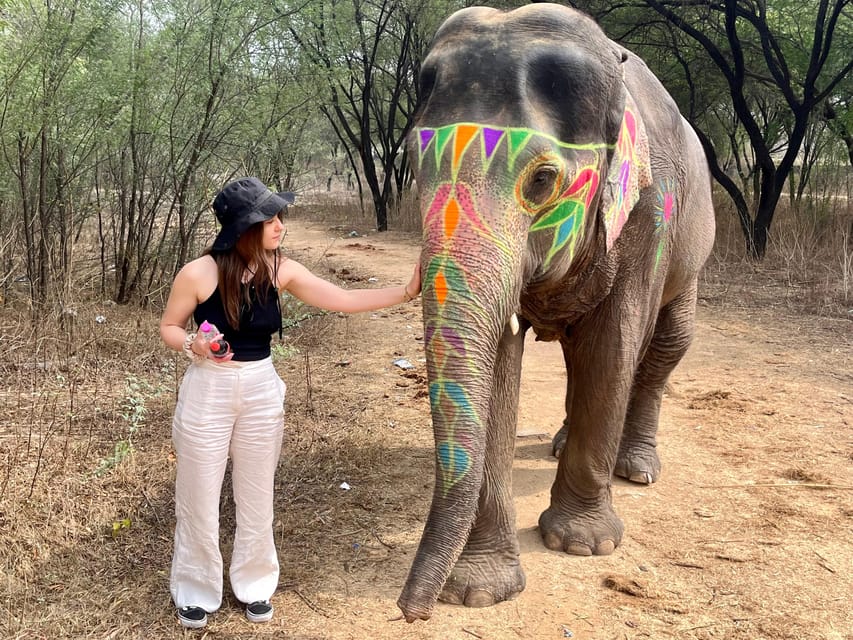
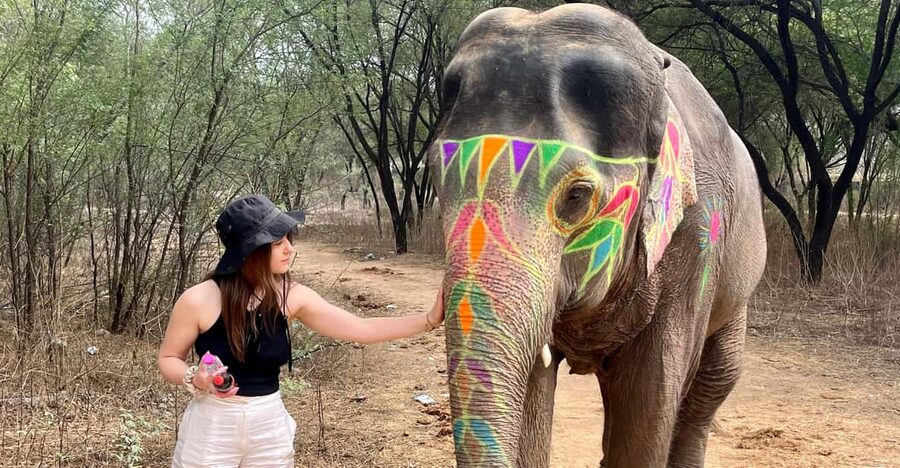
The first useful part of the visit is the introduction. Rather than rushing straight to feeding, you let the elephant catch your smell and become familiar with your presence. That small step matters. An elephant is a large, powerful animal, and a quiet introduction gives you a better sense of how to behave around her.
Staff explain the elephant’s age, temperament, daily routine, and background. This is where the visit gains meaning beyond the photo opportunity. You learn that individual elephants have different personalities and needs, rather than treating them as interchangeable animals.
The sanctuary describes its herd as rescued, including elephants formerly kept in circuses. Each animal has a personal room and a caretaker, with the aim of giving the elephants a safer and more settled life. You can look at the facilities and see how the private spaces are arranged.
I would pay attention to how staff handle each elephant. The best sign of a responsible encounter is not simply a promise of ethical care. It is the everyday behavior you can observe: whether the elephant is given time, whether staff respond to her signals, and whether interaction stops when she seems uncomfortable.
More Elephant Sanctuaries in India
- Private Elephant Sanctuary
★ 5.0 · 390 reviews - Jaipur: Elefantastic Elephant Sanctuary Tour
★ 4.9 · 44 reviews - Elephant Sanctuary for Best elephant experience in Jaipur
★ 5.0 · 8 reviews
Feeding time and elephant food
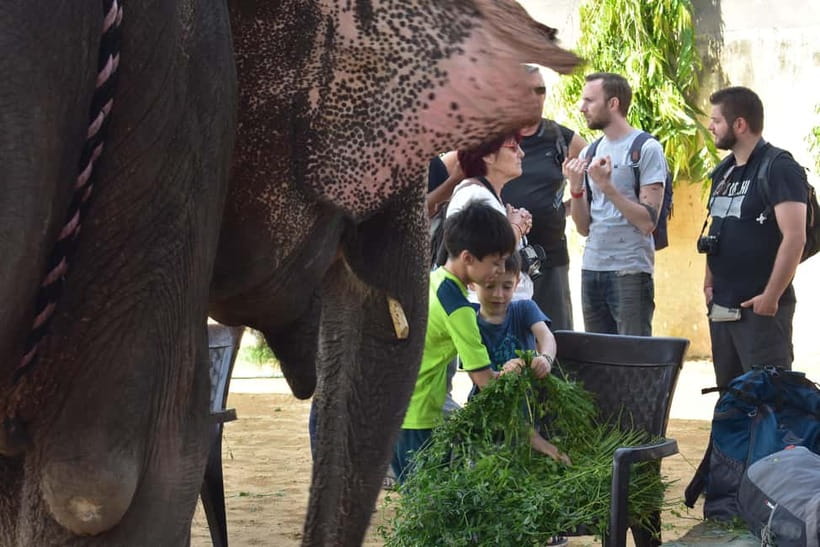
Feeding is one of the most enjoyable parts of the visit, but it is also a lesson in elephant care. Staff show you how to offer food safely and explain feeding habits and favorite treats. You do not simply toss food over a fence. You learn how to place it correctly and how to read the elephant’s response.
The feeding session helps you understand the elephant’s size and strength. A trunk can be gentle, quick, and surprisingly precise. Staff guide your hands so the animal can take the food comfortably, and you can watch how she uses her trunk to inspect what you offer.
This is also a good moment to ask about the elephant’s normal diet, daily schedule, and care. The activity description does not list the exact foods, so do not arrive expecting a specific fruit or sweet. The point is learning what the individual elephant eats and why.
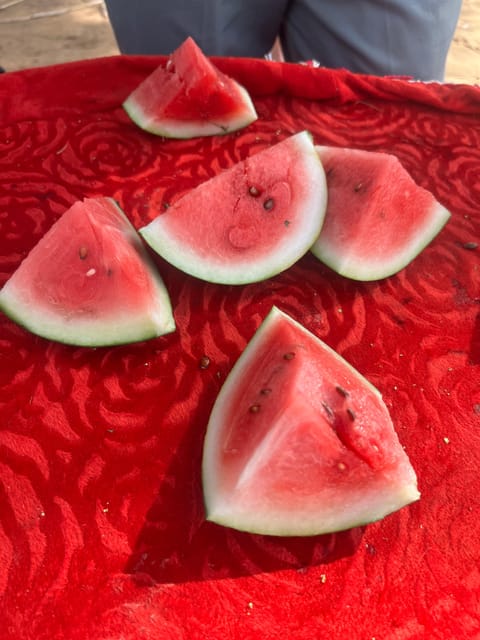
A small dessert for the elephant is included in the experience described by one visitor, but the exact treat may vary. Follow the caretaker’s instructions instead of bringing your own food. Alcohol and drugs are not allowed, and sensible clothing and behavior are essential around the animals.
Natural painting, with a welfare check
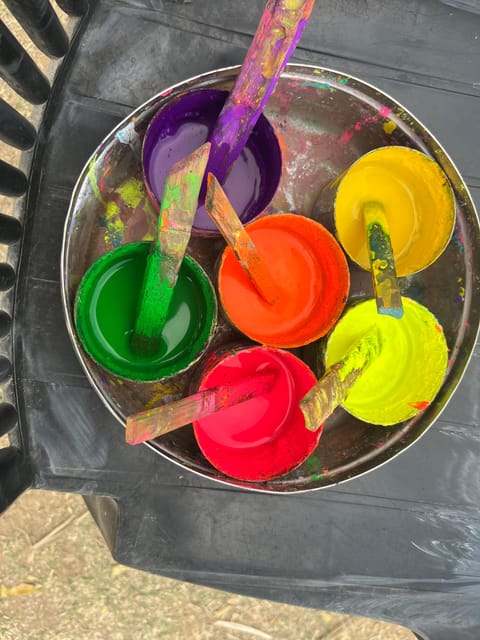
Painting is likely to be the most colorful part of the visit. You are shown how to use traditional designs with natural, skin-friendly paint, then get the chance to decorate the elephant’s skin. It gives you a hands-on activity and makes for memorable photographs.
Still, painting should be treated as an optional interaction, not a right. The elephant’s comfort comes first. Keep the designs modest, use only the materials supplied, and let staff decide where and how to paint. Avoid the ears, eyes, mouth, and any sensitive area unless the caretaker specifically directs you.
The use of natural paint is a positive detail, but natural does not automatically mean suitable for every animal. The important thing is that staff control the materials and watch the elephant during the activity. If the elephant seems restless, ask to stop painting and spend time walking or observing instead.
This is one reason I prefer the structure of this visit to a rushed photo stop. You have time to adjust your behavior and notice the elephant’s reactions. The aim is not to complete every activity at any cost.
Walking beside the elephants, not riding them
The walk is the clearest expression of the sanctuary’s stated approach. You walk beside the elephant rather than riding on her back. That lets you experience her size and pace without adding a rider’s weight or turning the animal into transport.
Walking also changes the photographs. Instead of posing on an elephant, you can take pictures while standing at her side, watching her move, or feeding her under staff direction. You may spend as much time as the schedule allows without feeling pushed through a quick turn, although the total visit still lasts three hours.
The walk may be especially appealing if you want close contact but do not want to support elephant rides. Keep your pace slow, stay where the caretaker tells you, and do not move behind the elephant without permission. You should also wear comfortable shoes, since walking is part of the planned visit.
The activity is described as an ethical engagement designed to raise awareness about elephant welfare. That is a reasonable goal, but you should still judge the experience by what you see on the day. Ask questions, notice the animals’ behavior, and let the staff set safe boundaries.
Same place, a different set of animals:
- Jhalana Panther Safari Park Tour in Jaipur
★ 4.5 · 127 reviews - Same Day Tajmahal at Sunrise and SOS wildlife sanctuary tour
★ 5.0 · 28 reviews - Delhi: All-Inclusive Day trip Taj Mahal with Elephant SOS
★ 4.8 · 25 reviews - Jeep Safari: A Skip the line access to Devalia Safari Park India
★ 4.5 · 19 reviews
Washing the elephant in warm weather
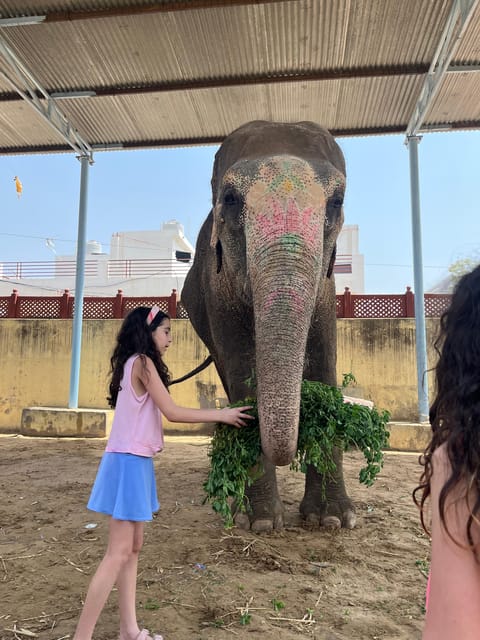
When conditions allow, washing is the most playful part of the visit. You help scrub and rinse the elephant at the farm, and the elephant may return the favor with a spray of water. One visitor described being washed by the elephant, which gives you a fair warning to expect a wet and slightly chaotic session.
Bring a change of clothes. That advice is not decorative. You may get splashed while bathing the elephant, and the activity specifically recommends spare clothing, sunscreen, a sun hat, sunglasses, and drinking water.
The shower is not available from October through March because the weather is too cold. If your Jaipur visit falls in those months, the rest of the encounter still includes feeding, painting, walking, introductions, and time with the elephants, but you should not book expecting a bath.
The seasonal rule is sensible. A responsible animal encounter should not force a water activity simply because it appears in the program. The absence of washing during cooler months is a small drawback if that is the part you most want, but it is better than an unsuitable shower.
A three-hour visit with tea and free time
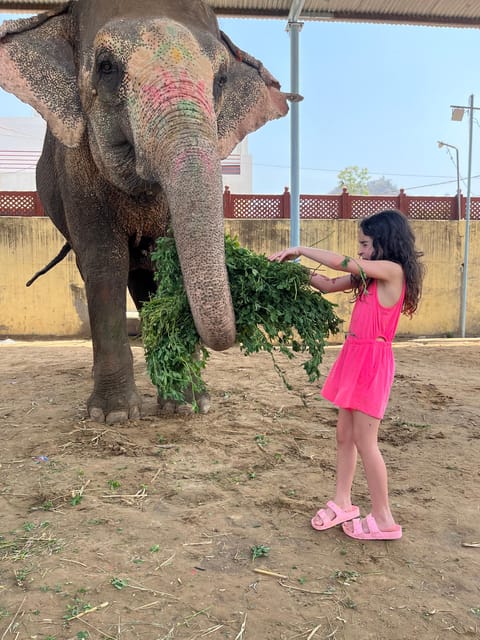
The visit is planned as a three-hour experience at Elefun Elephant Sanctuary. The time includes the guided tour, tea, free time, and walking, along with the hands-on activities. That length gives you room to slow down and enjoy the elephant instead of treating the encounter as a quick stop between Jaipur sights.
The listed pickup point is Hawa Mahal, and hotel pickup is included. You are asked to wait in your hotel lobby 15 minutes before the scheduled time. After the sanctuary visit, the provider offers drop-off back at your accommodation, with Jaipur and Hawa Mahal listed as return points.
Pickup is particularly useful in Jaipur, where a private transfer saves you from arranging a separate taxi to an out-of-town animal facility. If your hotel is farther from central Jaipur, request pickup when booking. One visitor specifically found that a hotel farther from the city was not a problem after arranging it with Elefun.
The exact group size is not provided, so you should not assume this is a private visit. The experience is described as personal and individual, but that may refer to time with one elephant rather than a private booking for your whole party. Ask the operator if group size matters to you.
Tea and a welcome drink add a simple but welcome pause. The refreshments are not the reason to book, but they make the three-hour format feel more relaxed, especially after walking and washing.
What $60 buys you
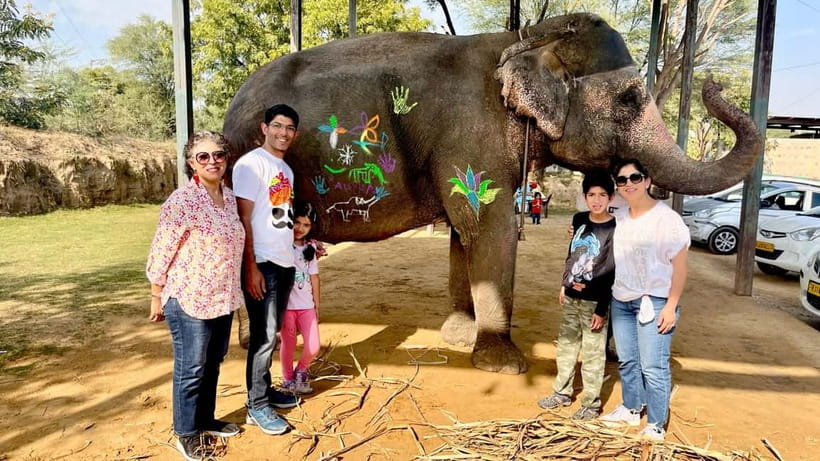
At $60 per person, the price is reasonable if you value transport and several hours of guided contact rather than only a short elephant photo. You are paying for hotel pickup, the introduction, feeding, painting, walking, possible washing, refreshments, a guided tour, and hotel drop-off.
The value is strongest for visitors who would otherwise need to arrange transport and who want a no-riding encounter. A separate taxi, entry fee, and brief animal interaction could easily become less convenient, even if the headline price were lower.
The value is weaker if you only want to see elephants from a distance. This is a hands-on experience. You are expected to feed, paint, walk with, and in warm months wash an elephant. If you prefer observation with no direct contact, a sanctuary visit with a viewing-only format may suit you better.
The provider promotes the experience as 100 percent ethical, but no outside certification is supplied in the information available here. I would treat that wording as a claim to examine rather than a fact to accept without thought. The useful details are the no-riding policy, individual rooms, caretakers, rescued animals, and staff-led interactions.
The listed rating is five out of five from 19 reviews. That is a small sample, but the praised points are consistent: kind staff, good organization, feeding, painting, washing, and the chance to spend unhurried time with one elephant.
Who will enjoy Elefun most
This experience fits families, couples, first-time visitors to India, and anyone who wants a close animal encounter without elephant riding. Children may enjoy the feeding and water play, but adults should supervise closely and follow every instruction. The elephant’s safety and the child’s safety depend on calm behavior.
It also suits people who want an activity outside Jaipur’s forts and palaces. The visit gives you a different view of Rajasthan, focused on animal care and daily routines rather than architecture.
Photography-minded visitors will find plenty to record: feeding, natural painting, walking beside the elephant, and washing in the warmer months. Keep the camera secondary, though. A phone held too close or a rush to pose can make the interaction less comfortable for the animal.
The experience is available in English, Hindi, Spanish, German, and French according to the supplied information. Another section specifically lists English, Spanish, and French, so language availability may depend on the guide scheduled for your visit. If language support is important, confirm it before booking.
What to bring to the sanctuary
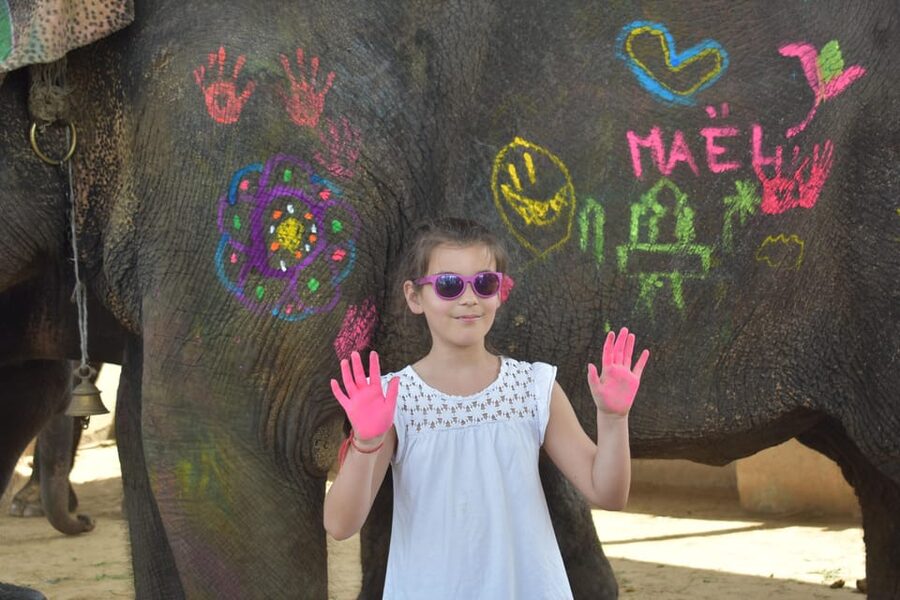
Wear comfortable clothes and shoes that can handle walking and possible water. From April through September, a change of clothes is especially sensible because elephant washing is offered during warmer months.
Pack sunglasses, a sun hat, sunscreen, water, and a camera. Keep your belongings secure around the animals, and use only food and paint provided or approved by staff.
Bring your passport or ID card, since it is listed among the required items. Alcohol and drugs are not allowed. You should also avoid loose behavior, loud movements, and any attempt to direct the elephant yourself.
Wheelchair access is listed, which is useful, but the available details do not explain the surface, bathroom setup, or how each hands-on activity can be adapted. If you need specific assistance, contact Elefun Activities and Tours before booking.
Booking tips for a smoother visit
Choose a morning or afternoon start based on the times offered for your date. The total duration is three hours, so leave enough room around the visit rather than placing it tightly between major Jaipur appointments.
If elephant washing is important to you, book outside October through March and confirm that weather conditions allow it. The seasonal restriction is clear, but day-to-day conditions can still affect outdoor activities.
Use the free cancellation policy as a safety net. You can cancel up to 24 hours before the scheduled visit for a full refund, and the reserve-now, pay-later option keeps your plans flexible.
Ask about pickup when you book, especially if your accommodation is outside central Jaipur. Wait in the lobby 15 minutes before pickup, and keep your phone available in case the driver needs help finding your hotel.
Should you book this elephant experience?
Book it if you want close contact with elephants, prefer walking to riding, and value pickup, drop-off, and several guided activities in one half-day visit. The strongest parts are the personal introduction, feeding lesson, individual caretaker structure, and the chance to observe how the elephants are housed.
Think twice if you want a quiet wildlife-viewing experience with no touching, painting, or bathing. Also check the season if washing is a must, since it is not offered from October through March.
For most people seeking an elephant encounter in Jaipur, the no-riding format makes this a more responsible choice than a standard elephant ride. Go with an open mind, keep the elephant’s comfort ahead of your photographs, and you should get a memorable three hours for the $60 price.
FAQ
How long does the Elefun Elephant Sanctuary visit last?
The experience lasts three hours, including the guided tour, tea, free time, walking, and elephant activities.
Does the activity include elephant riding?
No. The activity does not offer elephant rides. You walk alongside the elephants instead.
Can I wash an elephant during the visit?
Yes, elephant washing and showering are included when weather permits. The shower is not offered from October through March because of the cold.
Is hotel pickup included?
Yes. Hotel pickup is included, and you should wait in your hotel lobby 15 minutes before the scheduled pickup time.
Where can I be picked up or dropped off?
Hawa Mahal is listed as a pickup point. Drop-off is listed for Jaipur and Hawa Mahal, with hotel drop-off also included in the activity details.
What should I bring?
Bring comfortable shoes and clothes, sunglasses, a sun hat, sunscreen, water, a camera, a change of clothes, and your passport or ID card.
Can I cancel the booking?
Yes. You can cancel up to 24 hours in advance for a full refund. The reserve-now, pay-later option is also available.
Just added around India
- Jeep Safari: A Skip the line access to Devalia Safari Park India★ 4.5 · 19 reviews
- Delhi Zoo White Tigers & lions with Old Fort Visit★ 4.5 · 5 reviews
- Same day Tajmahal tour with SOS Elephant/Bear wildlife Sanctuary★ 5.0 · 4 reviews
- From Delhi: Taj Mahal & SOS Elephant Experience – Day Trip★ 5.0 · 8 reviews
- Bird Watching at Nandur Madhyameshwar Wildlife Sanctuary Nashik★ 5.0 · 2 reviews
- 6-Day Kerala Private Tour: Periyar Wildlife Sanctuary★ 4.5 · 3 reviews
- Tour of Pobitora Wildlife Sanctuary from Guwahati with Safari, Lunch and Guide★ 5.0 · 3 reviews
- 3 Day Camping Trip to Binsar Wildlife Sanctuary★ 5.0 · 2 reviews
Jaipur Zoos, compared.



Elephant Sanctuary for Best elephant experience in Jaipur
Read our review →
Jaipur: Jhalana Amagarh Leopard Safari Park Guided Tour
Read our review →Browse the lists this tour appears in