
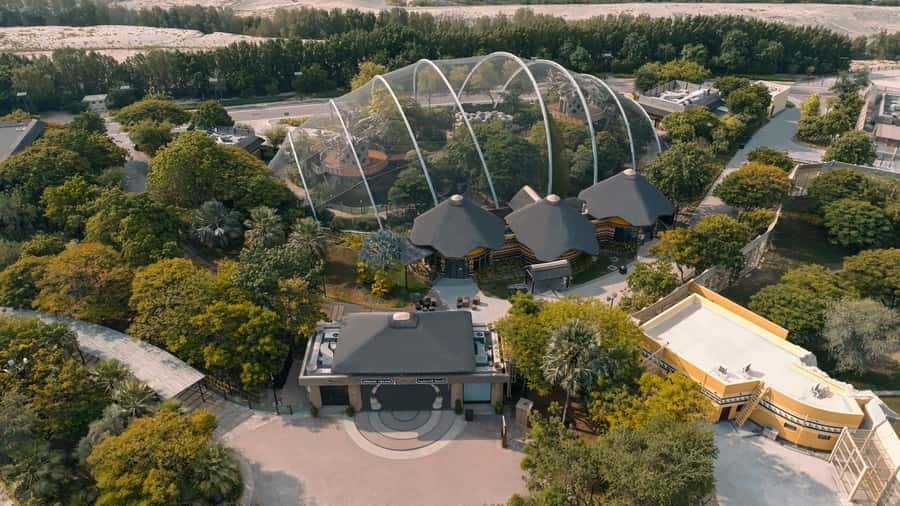
REVIEW · DUBAI
Dubai: Dubai Safari Park Entry Pass
Dubai Safari Park gives you a full day with about 3,000 animals spread across African, Asian, and Arabian themed villages. The best moments come when a guide points out an animal tucked into a carefully built habitat, or when the Explorer bus brings you close enough to study the animals without a long walk in the heat.
I like the park’s conservation focus and the amount of shade, misting fans, rest areas, and food stops. I also like the mix of serious wildlife viewing and simple family fun, from the Grand Aviary to the Kids Farm. The main drawback is size: you need at least four to six hours, and extra charges for some transport, feedings, and close encounters can push up the price.
Key points
- 119 hectares to cover: Plan most of a day, not a quick two-hour visit.
- The Explorer bus matters: It brings you close to animals in the Explorer Village and is worth considering if walking in the heat is difficult.
- The ticket includes more than entry: You get a 15-minute Arabian Desert safari, three live animal presentations, wildlife talks, and scheduled workshops.
- Free animal activities are limited: Pony walks, duck feeding, and bird feeding are included, while other feedings cost extra.
- Go early for special encounters: Giraffe feeding can fill up for the entire day.
- Getting there takes thought: The park is in Al Warqa, well away from central Dubai, and some bus routes leave you a long walk from the entrance.
A full day among animals in Al Warqa
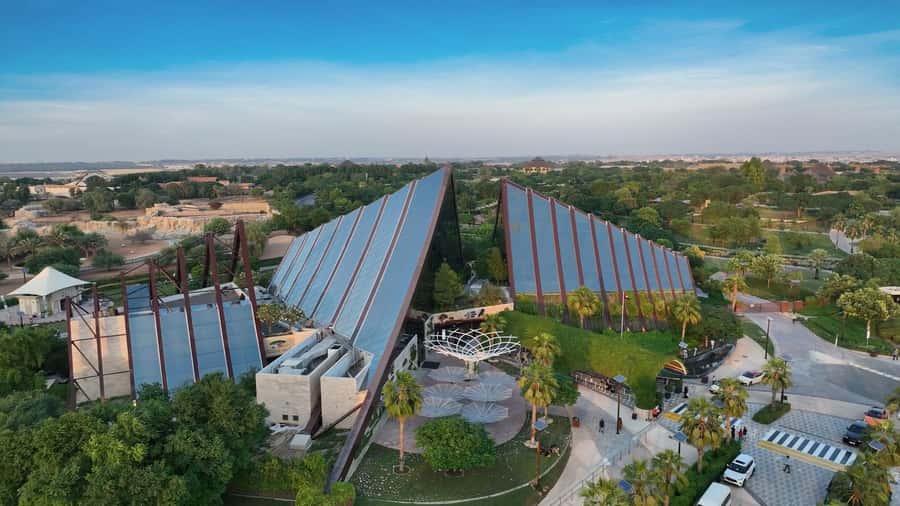
Dubai Safari Park is not a traditional open jeep safari. It is a large wildlife park divided into themed villages, with animals living in spaces designed to resemble African, Asian, and Arabian settings. That distinction matters. You will not be crossing open desert looking for wild animals, but you will get much closer to a wide range of species than you would on a standard city sightseeing stop.
The base admission costs about $13 per person, which is strong value if you use the ticket for a full day. Entry also includes a short 15-minute safari in the Arabian Desert Zone, three live animal presentations, wildlife talks, complimentary feeding or encounter activities based on the daily schedule, and Young Explorers workshops.
The park is big enough that you should arrive with a plan. I would allow six hours if you want to see the villages, watch presentations, stop for food, and ride the included or separately purchased transport options without rushing. A shorter visit can work, but you may need to choose between animal areas and shows.
More Safari Parks in Dubai
- Dubai Safari Park
★ 3.5 · 15 reviews - Dubai Safari Park With Transfer
★ 4.0 · 7 reviews - Dubai Safari Park
★ 5.0 · 7 reviews
How to plan the 119-hectare park
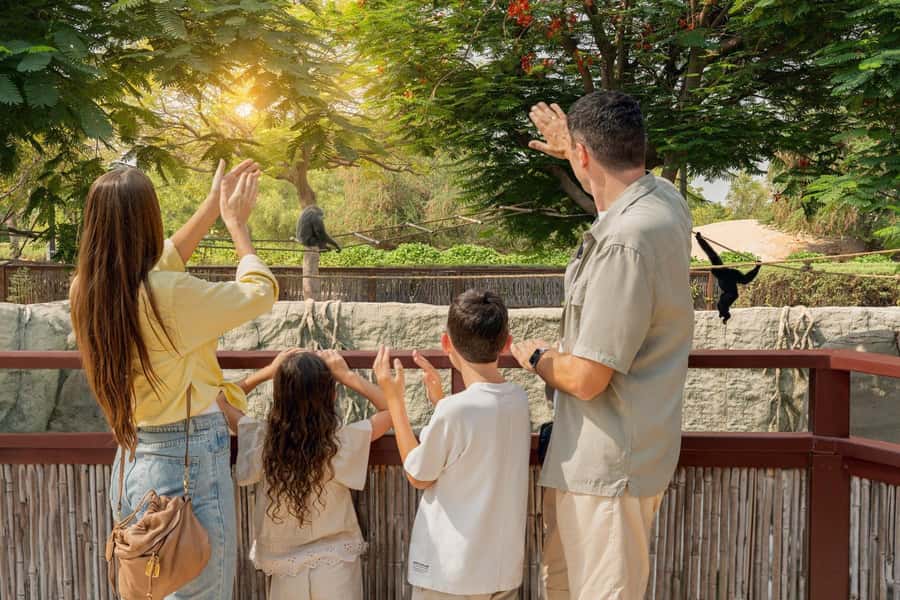
The biggest mistake is treating Dubai Safari Park like a small zoo. The 119-hectare site has wide paths, separate villages, viewing areas, food outlets, toilets, shaded seating, and transport links. You can walk between areas, but the heat can make those distances feel longer than they look on a map.
Start by checking the official opening hours and the day’s presentation and feeding schedule. The park’s last admission is 90 minutes before closing, but you should not wait until then to enter a new section. One useful rule is to reach your final village at least an hour before closing, since some areas stop accepting new arrivals before the gates shut.
The climate shapes the animal viewing. During hot weather, some animals may remain indoors or in shaded areas. That is good for animal welfare, but it means you may not see every species at its most active. Cooler months, especially from late autumn through winter, offer a better balance between comfortable walking and active animals.
The park uses misting fans and provides plenty of shaded spots. These are not minor comforts in Dubai. They can make the difference between enjoying a long visit and cutting it short.
Arabian Desert Zone: a short safari with useful context
The 15-minute Arabian Desert safari is included with admission. It is a brief introduction rather than a major safari expedition, but it gives you a chance to see animals associated with the region and adds variety to the walking sections.
This is a good early activity if you want to understand the park’s approach. The setting connects local wildlife to the wider conservation work taking place across the park. You get a sense of how the United Arab Emirates presents its own natural environment alongside species from other parts of the world.
Do not confuse this short ride with the optional Explorer Safari Tour. The Arabian Desert ride is the included taster. The Explorer option is the one to consider when you want a longer bus experience and closer views of animals in the Explorer Village.
African Village: large animals and wide viewing areas
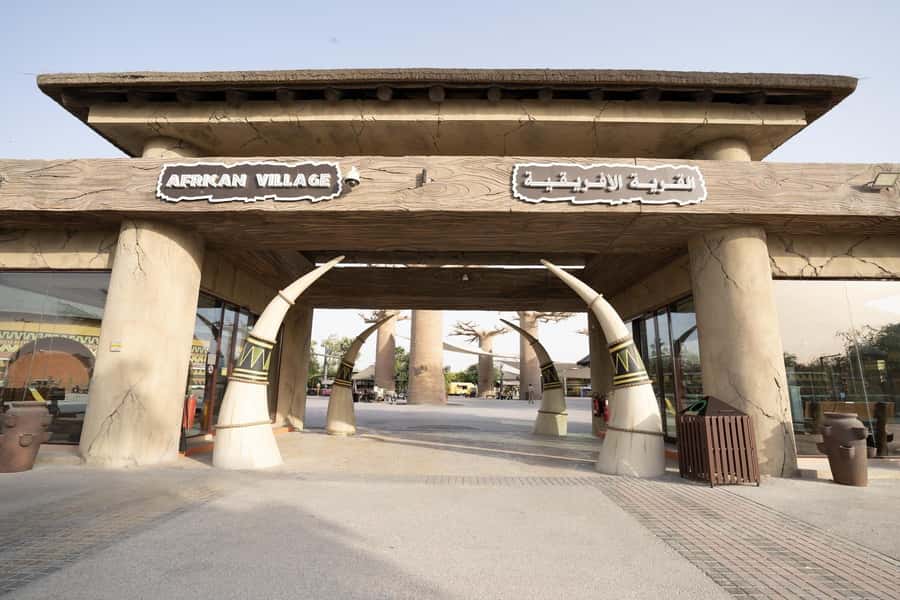
The African Village is likely to be one of the main reasons you come. It presents some of the world’s largest land mammals alongside smaller species, with habitats arranged to give animals room to move and visitors several places to watch.
You may see animals at a distance, especially when the weather is hot or when they choose a shaded corner. That is part of the tradeoff of a more spacious setting. A small enclosure can guarantee a view, but a larger habitat gives animals more control over where they spend their time.
The optional bus tour can help here. It reduces the walking required and offers close views from a seated vehicle. One point to keep in mind is that a moving bus does not always stop as long as you might want for photographs, especially in the African Village. Bring patience and enjoy the guide’s explanations rather than treating every stop as a photo session.
If you want a special feeding activity, ask about availability as soon as you arrive. Giraffe feeding can sell out for the entire day, even when other parts of the park are quiet.
More Safari Parks in the UAE
- Dubai Safari Park Entry Tickets
★ 5.0 · 3 reviews - Dubai Safari Park Visit with Hotel Pickup and Drop-off
★ 5.0 · 2 reviews
Asian Village: forests, ponds, and strong guide-led moments

The Asian Village focuses on animals associated with forests and ponds. It feels different from the open African areas, and the change of setting helps prevent the park from becoming one long sequence of similar viewing spaces.
This section benefits from a guide who can help you find animals that blend into their surroundings. Guides such as Glen, Ubaid Ullah, and Flyvian have been singled out for being friendly, careful, and helpful, while the Asian Village team has earned particular praise for making the visit more engaging.
The guides are useful not just for naming animals. They can explain why an animal is in a particular habitat, what conservation work involves, and why you may not see every creature immediately. The park’s layout is generally easy to follow, but signage and directions between sections could be clearer in places, so do not hesitate to ask staff for the next stop.
Explorer Village: the best paid upgrade for close views
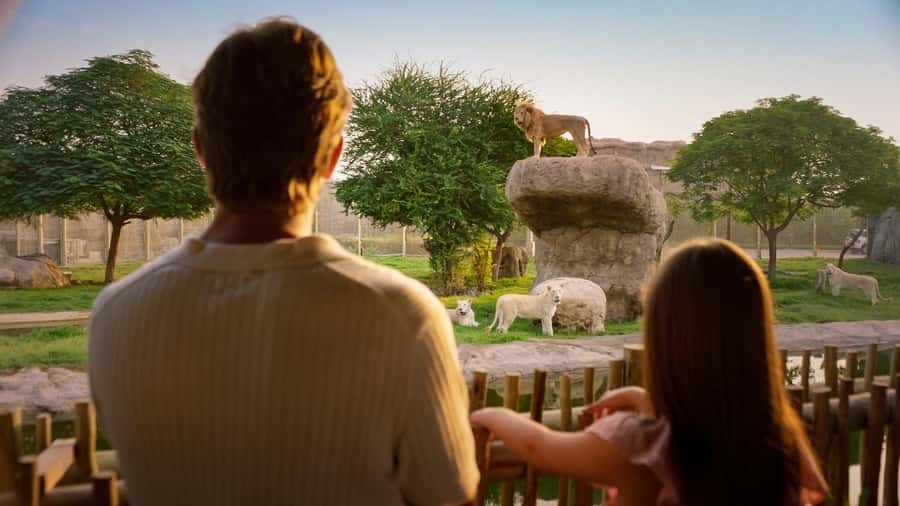
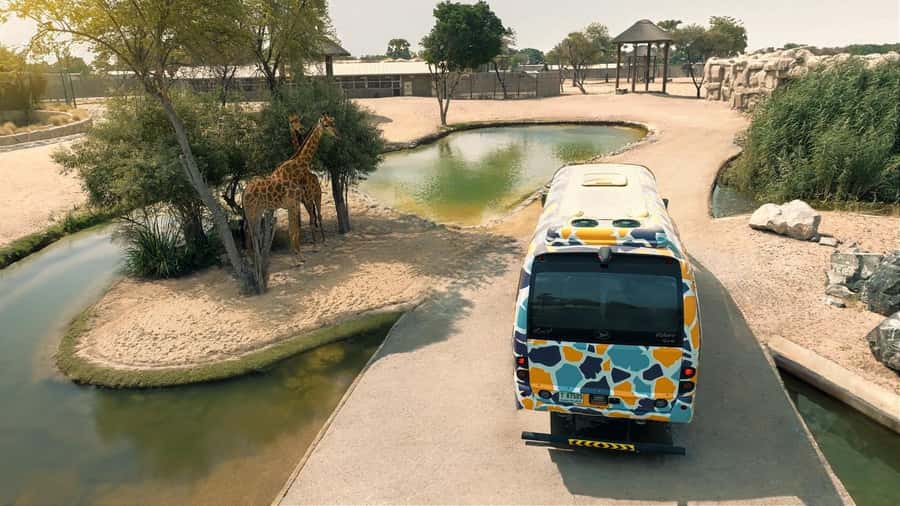
If you pay for one optional addition, I would look first at the Explorer Safari Tour. The bus gives you a closer look at animals while saving your legs for the villages, talks, and exhibits that require walking.
The value depends on your group. For a family, the bus can be a practical way to see more without tiring young children. For adults who enjoy watching animal behavior, it offers a better chance of seeing animals at close range than a long walk past large habitats.
The exact transport options can be confusing. Some tickets include the Explorer tour, while others offer it as an add-on. Trains and shuttle services may also cost extra. Check what your selected ticket covers before you arrive, then confirm the departure times at the park. Clearer signs for different train types and schedules would make this part easier.
The Explorer bus is not a guarantee that every animal will appear on cue. Animals still choose where to rest, and heat can affect what you see. Still, it is the most useful upgrade for a first visit, especially if you have limited time.
Kids Farm and Grand Aviary: two different kinds of family fun
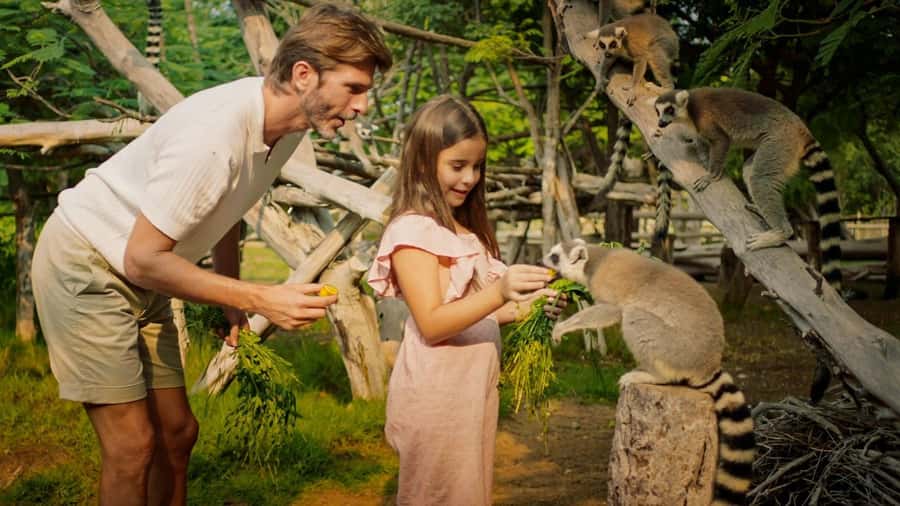
The Kids Farm gives children an easy, hands-on break from large animal viewing. Sheep, donkeys, ponies, goats, ducks, and birds are part of the experience. The free activities include the Alwada Pony Walk, duck feeding, and bird feeding, subject to the daily schedule.
These encounters are simple rather than grand, but they work well for younger children. They also give adults a chance to slow down after walking through the larger villages.
The Grand Aviary offers a different kind of stop. It contains a wide range of bird species, and the variety can be impressive even if you are not a dedicated bird watcher. Give yourself more time than you expect here. The aviary is not just a corridor between sections, and it can become one of the most memorable parts of the visit.
Shows, talks, and workshops worth timing carefully
The Asian Village Theatre hosts educational animal shows. The park also schedules three live animal presentations, wildlife talks, and Young Explorers workshops. These are included in admission, but only if you fit them into the published timetable.
Do not assume you can arrive late in the day and catch everything. The site is large, and it takes time to move from one village to another. I would choose two or three presentations that interest you most, then build your walking route around them.
The shows add value because they give structure to the visit. Instead of simply looking at animals through viewing areas, you get explanations of behavior, care, and conservation. The strongest experience comes from combining a talk with the habitats afterward, when you can look at the animals with a better sense of what you are seeing.
Conservation and animal care
The park describes itself as a sanctuary focused on conservation and rehabilitation. It houses rare and endangered species brought from zoos around the world, with the goal of providing a safe and calm setting.
You can judge the practical side of that work through the habitats, cleanliness, space, and the animals’ behavior. The park’s grounds are well maintained, and the viewing areas are designed to give animals room to move away from people. That means an animal may be hidden or resting when you arrive, but it also avoids the feeling of a cramped display.
The park is not a substitute for seeing animals in the wild. It is a managed setting, and some species may be resting indoors during hot periods. Still, the conservation message is not just decoration. Talks and guide explanations connect the animals to breeding, rehabilitation, and protection efforts.
Food, shade, and the realities of Dubai heat

Food and drinks are not part of the ticket, but food stalls and restaurants are available inside the park. Prices have been described as reasonable, and you should not need to leave simply to find a meal.
Smoking, vaping, and bringing food into the park are not allowed. Pets, drones, bikes, skateboards, scooters, and flash photography are also prohibited. These rules are easy to understand, and they help keep the animal areas calm.
Wear comfortable shoes and plan regular breaks. The park has shaded seating and cooling mist, but no cooling system can make a summer afternoon feel mild. If you are visiting with children, schedule a food or rest stop before everyone becomes tired rather than waiting for the final stretch.
Getting there and allowing enough time
The park is in Al Warqa, away from central Dubai. Hotel pickup and drop-off are not included, so you need to arrange your own transport.
A taxi can be costly if you are making a long return trip. Public transport requires care because not every nearby-looking bus stop provides a practical walk to the gate. Some routes can leave you about an hour from the entrance on foot, and map directions may send you toward a closed gate or a road that does not provide a direct approach.
For that reason, check the exact entrance before setting out. If you are using a taxi, use the official gate as your destination rather than relying only on the general park name.
The park is open for one day per ticket, and free cancellation is available up to 24 hours ahead. You can also reserve and pay later, which helps if Dubai weather or your wider schedule is uncertain.
Who will get the most from this ticket?
This is a strong choice for families, animal lovers, and anyone who wants a slower day away from Dubai’s towers and shopping centers. Teenagers can enjoy the safari bus and larger animals, while younger children have the Kids Farm and workshops.
It also suits visitors who prefer a managed wildlife setting to a traditional desert excursion. You get animal presentations, themed habitats, and an educational element without spending a full day in a dune vehicle.
It is less suitable if you want a quick attraction near central Dubai, guaranteed close-up views of every animal, or a compact itinerary. The park is large, the best encounters may cost extra, and hot weather can limit animal activity.
Children under three enter free with an identity card. Children from three to twelve must be accompanied by an adult.
Is Dubai Safari Park worth about $13?
Yes, if you use the ticket as a full-day admission. At roughly $13, the base price covers a large collection of animals, the Arabian Desert safari, three live presentations, talks, and scheduled activities. Add the Explorer bus only if closer views or reduced walking matter to you.
The ticket becomes less of a bargain if you arrive late, skip most of the villages, or expect every feeding encounter to be included. Paid activities can add up, especially if several people in your group want giraffe feeding or other special encounters.
My practical plan would be simple: arrive early, check the schedule, reserve any paid activity immediately, take the Arabian Desert ride, visit the African and Asian villages, use the Explorer bus if available and useful, then finish with the Grand Aviary or Kids Farm. That gives you a good spread of the park without trying to do everything at once.
Should you book Dubai Safari Park?
Book it if you can spare most of a day and want a family-friendly wildlife experience with plenty of shade, food stops, and organized activities. The base admission is good value, and the park’s conservation work gives the visit more purpose than a quick animal display.
I would be especially keen to book during the cooler months, when walking is easier and animals may be more active. Arrive early, check the daily schedule, and treat the Explorer bus as the most useful upgrade. If your Dubai visit is tightly packed or you dislike long transfers, choose a closer attraction instead.
FAQ
How long does Dubai Safari Park take?
Allow at least four to six hours, and consider a full day if you want to see the villages, presentations, feeding sessions, and workshops without rushing.
What does the basic ticket include?
It includes park entry, a 15-minute Safari Tour in the Arabian Desert Zone, access to three live animal presentations, wildlife talks, Young Explorers workshops, and scheduled complimentary feeding or encounter activities.
Is the Explorer Safari Tour included?
It is included only when you select a ticket option that specifically includes it. Otherwise, it may be available as an additional purchase at the park.
Is the train ride included?
The train ride is included only if you choose a ticket option that lists it. Check your selected ticket before arrival.
Are food and drinks included?
No. Food and drinks are not included, but restaurants and food stalls are available inside the park.
Are children under three admitted free?
Yes. Children under three enter free, but an identity card is required at the entrance.
Can children visit without an adult?
No. Children aged three to twelve must be accompanied by an adult.
Can I book giraffe feeding at the park?
Giraffe feeding and other special encounters can be purchased for an additional fee. Availability can run out early, so ask about it when you arrive.
What should I check before visiting?
Check the official opening hours and the schedules for animal presentations and feeding sessions. Last admission is 90 minutes before closing.
What are the opening hours during Ramadan?
During Ramadan, the park is open from 10:00 AM to 6:00 PM, with final entry at 5:00 PM for all ticket types.
More Zoo Entry Tickets in the UAE
- Dubai: City Tour with Burj Khalifa and Underwater Zoo Ticket
★ 4.8 · 15 reviews - Dubai Butterfly Garden Admission Ticket
★ 4.5 · 12 reviews - Full Day Dubai City Tour: Burj Khalifa & Underwater Zoo Ticket
★ 4.5 · 10 reviews - Private Garden City Tour with Zoo Ticket at Al Ain
★ 5.0 · 9 reviews
More Zoo Entry Tickets in Dubai
- Dubai: Skip-The-Line Ticket to Butterfly Garden
★ 4.5 · 2,223 reviews - Dubai Aquarium and Underwater Zoo Admission Ticket with Options
★ 3.5 · 168 reviews - Dubai: Skip-The-Line Ticket to Butterfly Garden
★ 4.0 · 61 reviews - Dubai Aquarium and Underwater Zoo Entrance Ticket
★ 5.0 · 19 reviews
Just added around Dubai
- Dubai Aquarium & Underwater Zoo★ 4.0 · 4 reviews
- Miracle Garden & Butterfly Garden with Ticket & Private Transfers★ 4.5 · 29 reviews
- Dubai Butterfly Garden Admission Ticket★ 4.5 · 12 reviews
- Private Al Ain Tour by 4×4 Vehicle with Zoo Tickets★ 5.0 · 3 reviews
- Dubai Safari Park Entry Tickets★ 5.0 · 3 reviews
- Dubai Safari Park Visit with Hotel Pickup and Drop-off★ 5.0 · 2 reviews
- Full Day Dubai City Tour: Burj Khalifa & Underwater Zoo Ticket★ 4.5 · 10 reviews
- Dubai Miracle & Butterfly Garden Tour with private round trip transfers★ 5.0 · 5 reviews
Dubai Zoos, compared.

Dubai Aquarium and Underwater Zoo Admission Ticket with Options
Read our review →
Dubai Mall Aquarium & Underwater Zoo with Penguin Cove Tickets
Read our review →

Dubai: Al Ain Garden City with Conservation Zoo
Read our review →
Dubai Aquarium & Underwater Zoo with Penguin Cove
Read our review →
Miracle Garden & Butterfly Garden with Ticket & Private Transfers
Read our review →
Tickets to Miracle Garden or Butterfly Garden or Global Village
Read our review →
Dubai Aquarium and Underwater Zoo with Penguin Cove Tickets.
Read our review →Browse the lists this tour appears in