
REVIEW · KHAO LAK
Ethical Elephant Sanctuary Experience in Khao Lak
The best thing about this Khao Lak outing is its clear rule: the elephants set the pace. You watch them walk, feed, play, or bathe only if they choose to do so. I like the quiet observation walk and the chance to hear each elephant’s story from experienced mahouts. I also like that the visit includes Thai culture, not just an hour of animal photos.
The $56 price is fair for a three-hour visit with hotel transport, admission, drinks, accident insurance, and several activities. The main drawback is simple: you do not touch, ride, lead, or bathe the elephants, so anyone seeking a hands-on encounter may find this too restrained. The sanctuary also does not serve a full meal.
Key points at a glance
- Elephant-led encounters: Watch rescued domestic elephants choose their own movements and behavior.
- Observation-only policy: No riding, bathing, touching, forced interaction, or scheduled animal performance.
- Mahout guidance: Learn how individual elephants arrived at the sanctuary and how their care is managed.
- Thai cultural activities: Prepare an elephant herbal supplement, make a Ya Dom inhaler, and cook Khanom Krok.
- Easy half-day plan: Hotel pickup, a 30-minute van ride, 105 minutes at the sanctuary, and a return transfer.
- Good practical value: The $56 fee includes transport, entry, water, cola, English-speaking staff, and insurance.
Why the no-contact policy matters
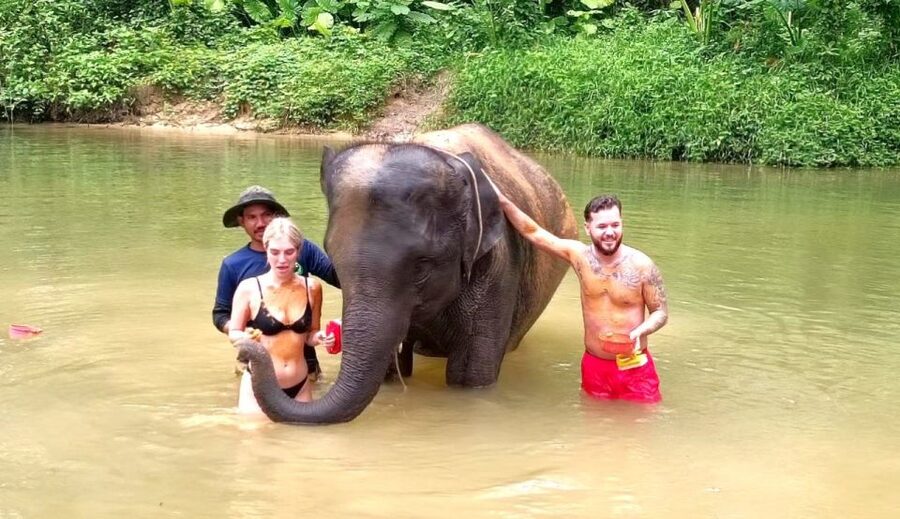
Elephant tourism in Thailand can be hard to judge. A place may use the word ethical while still asking elephants to perform, bathe on cue, or pose for close photos. This Khao Lak program takes a clearer position. You remain at a respectful distance, and the mahouts supervise the elephants without asking them to entertain you.
That changes the mood. Instead of waiting for a staged activity, you watch for small signs of natural behavior: an elephant choosing where to walk, pausing to feed, joining another elephant, or entering the water. The experience can feel less dramatic than a bathing session, but it gives you a better sense of the animal as a living creature rather than a prop.
The program focuses on rescued domestic elephants. These animals have individual pasts, personalities, ages, and habits. Before you meet them, a visual and audio introduction explains the place of elephants in Thai culture, the problems faced by domestic elephants today, and the sanctuary’s approach to care. The recording is available in 40 languages, though the live tour itself is conducted in English.
More Elephant Sanctuaries in Khao Lak:
- Khaolak: Elephant Sanctuary Guided Tour with Hotel Transfers
★ 4.7 · 226 reviews - Khao Lak: 2-Hour Elephant Sanctuary Eco-Walk with Guided
★ 4.7 · 206 reviews - Khao Lak: Ethical Elephant Sanctuary Experience
★ 4.9 · 112 reviews
The 30-minute ride from Khao Lak
Your day begins with hotel pickup in the designated Khao Lak area. You should wait in the lobby 10 minutes before the stated time and show your mobile confirmation when the guide arrives. The driver waits no longer than five minutes after pickup time, so this is not the morning to wander down for a last coffee.
The air-conditioned van ride takes about 30 minutes. That is long enough to leave the resort area and reach a quieter setting, but short enough that the tour does not eat up your day. Guides named Didi, Winnie, Lala, Bond, Shane, and others have led this program, and the guide may offer local information during the drive.
Transport is important here. At $56 per person, the package removes the need to arrange a taxi, negotiate a private transfer, or find the sanctuary yourself. You also return to your hotel after the visit, which makes this useful for a morning or afternoon when you have other plans.
First lessons before meeting the elephants
At Khao Lak Elephant Conservation, you begin with a short introduction rather than rushing straight to the animals. This is a smart choice. It gives you the basic context needed to understand why an observation-only program is different from a standard elephant attraction.
The presentation covers Thailand’s domestic elephants, their cultural role, modern welfare concerns, and the sanctuary’s approach. Because it uses both visuals and sound, it can help explain the program to people who know little about elephant care. The 40-language option is especially useful for mixed-language families and groups.
You will also have time for coffee, tea, water, cola, and local snacks during the visit. Do not confuse this with lunch. A full meal is not included, so eat before pickup or plan food afterward.
Preparing an herbal supplement for elephants
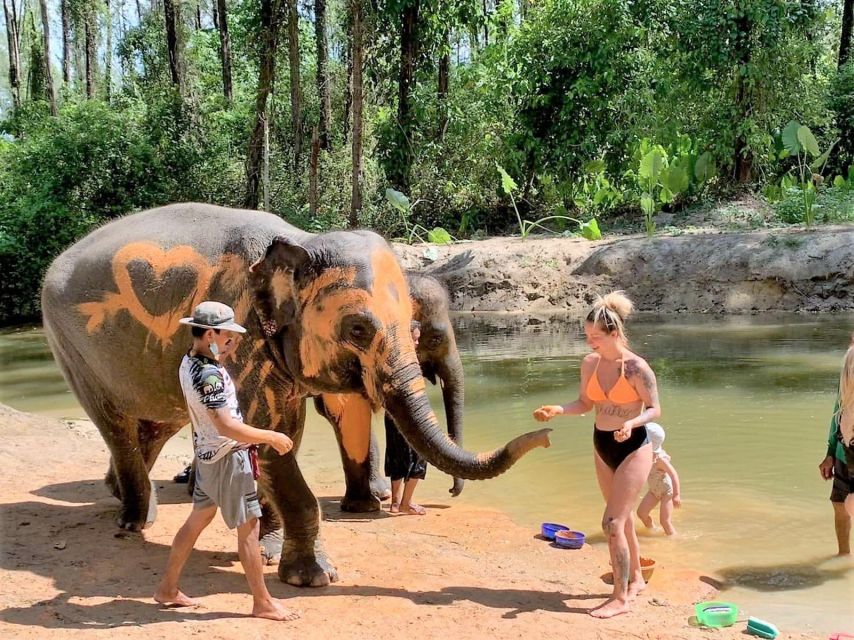
One of the more unusual parts of the visit is preparing a traditional herbal health supplement for the elephants. This is not a circus trick or a way to make the animals perform. You learn about a local care practice, prepare the mixture, and the caretakers later offer it to the elephants according to their feeding routine.
I like this activity because it gives you something useful to do without turning the elephants into a photo opportunity. It also shows that responsible wildlife tourism can include local knowledge and cultural learning. You are not simply watching from behind a fence, yet you are not placed in physical contact with the animals.
The exact ingredients and method are part of the on-site activity. The supplied information describes the supplement as traditional and herbal, so you should expect a demonstration and preparation task rather than a cooking class with a long recipe.
A few more animal parks around Khao Lak worth a look
- 2-Hour Guided Eco-Tour & Transfer to Khaolak Elephant Sanctuary
★ 5.0 · 91 reviews - Khaolak: Elephant Sanctuary Guided Tour with Hotel Transfers
★ 4.8 · 56 reviews - Guide Tour to Khaolak Elephant Sanctuary in Small Group
★ 5.0 · 47 reviews - Khaolak Elephant Sanctuary, Cooking Class and Waterfall Tour
★ 4.5 · 15 reviews
Meeting elephants as individuals
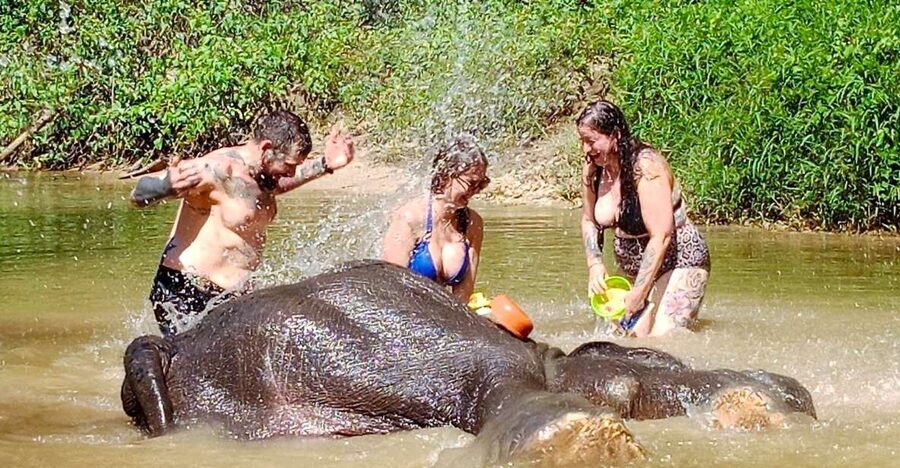
When you enter the sanctuary grounds, the staff introduces the elephants as individuals. You learn how they came to the conservation center, what their daily care involves, and how mahouts work with them.
The mahout’s role is central. These experienced caretakers understand the elephants’ habits and help keep the visit calm and controlled. You will hear about the relationship between a mahout and an elephant, but the program does not ask you to take over that relationship. You observe while the professionals remain responsible for movement, feeding, and safety.
This is where the experience earns its thoughtful character. You are encouraged to notice the animals rather than treat every moment as a chance for a close-up picture. Keep your voice low, follow instructions, and allow the elephant to remain the focus.
The observation walk and creek platform
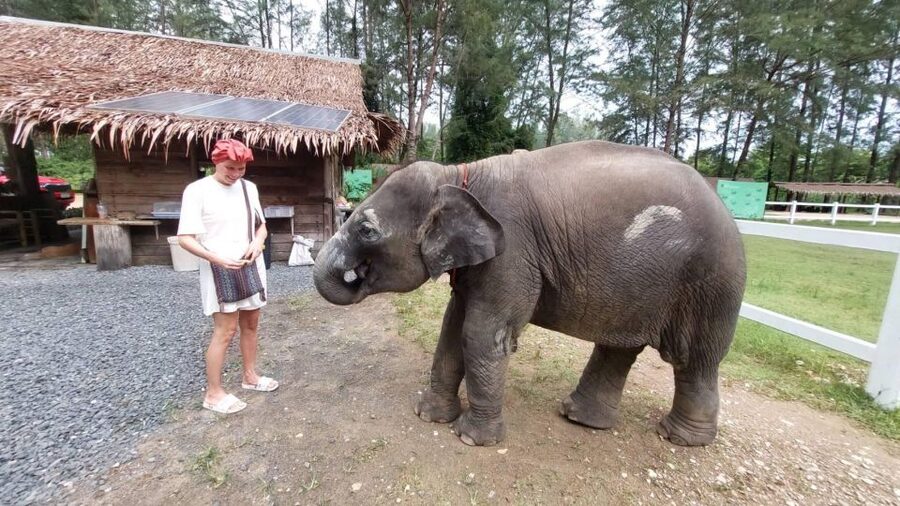
The guided walk follows behind the elephants at a respectful distance. You do not lead them, control them, or direct them toward a particular view. They move within a defined area under mahout supervision, while you follow and watch.
The pace may feel unhurried. That is a benefit if you want to understand elephant behavior, but it may disappoint you if you expect a tightly timed sequence of activities. The attraction here is uncertainty. An elephant might pause, wander, feed, socialize, or head toward the water, and the program does not promise a particular performance.
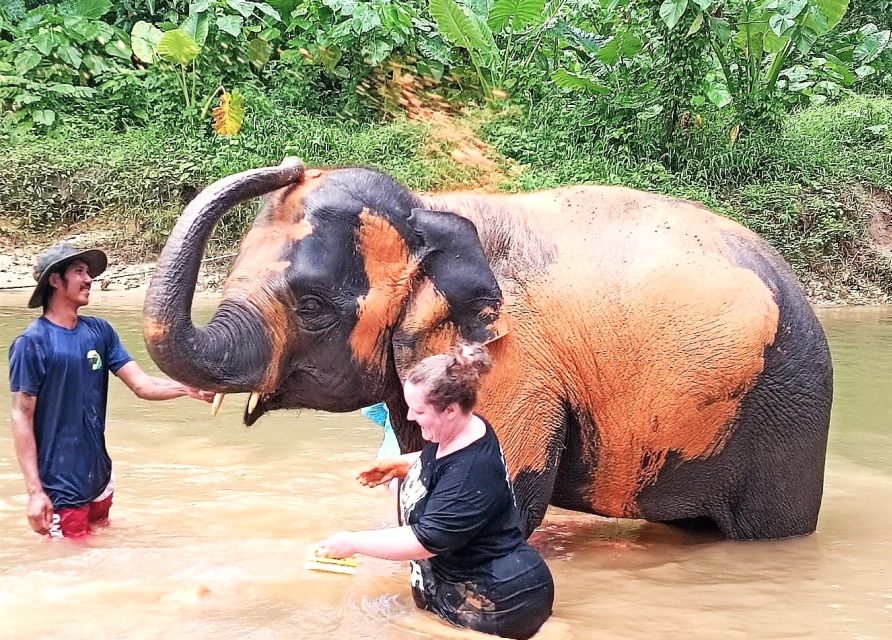
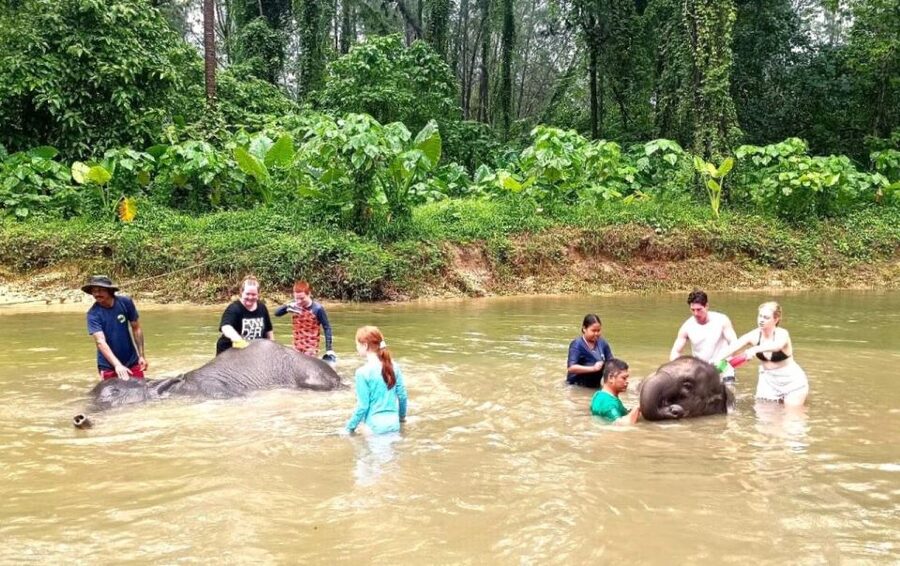
The group later reaches a designated viewing platform near a natural creek. From there, you may see elephants bathe or play in mud if they choose to do so. There is no bathing schedule and no guarantee that every animal will enter the water. That limitation is worth accepting because it is the clearest sign that welfare comes before your entertainment.
The policy also means you should not pack this as a swim excursion. Do not expect to enter the creek, scrub an elephant, or pose beside one in the water. Bring a change of clothes and a towel if you like, but the official experience is observation only.
Ya Dom and Khanom Krok
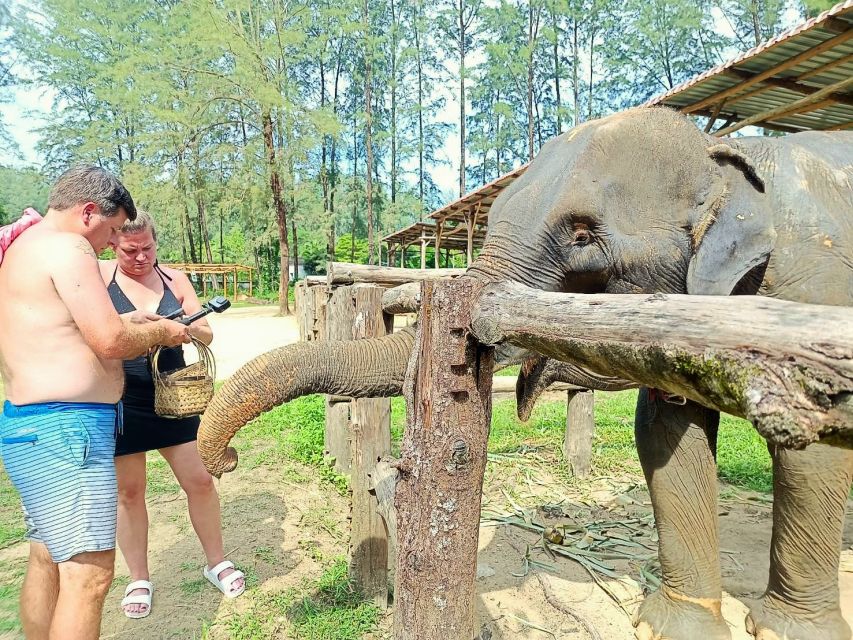
After the elephant visit, the program shifts to two small Thai cultural workshops. First, you make a Ya Dom, a traditional herbal inhaler used in everyday Thai life. It is compact, practical, and easy to take home as a souvenir.
This activity adds a local touch without requiring a long cultural lecture. You leave with something you made yourself, and you gain a small insight into familiar Thai wellness habits. If you are traveling with children, it also helps break up the animal-focused part of the morning.
Next comes Khanom Krok, often described as Thai coconut pancakes. You prepare this popular street snack in a relaxed setting, then enjoy it with a drink. It is not a full meal, but it is a welcome bite after walking around the sanctuary.
These workshops also make the tour more useful for people who have already visited an elephant center. The elephant encounter remains the main reason to book, but the Thai food and herbal activities give the three-hour visit a broader purpose.
How the $56 price works out
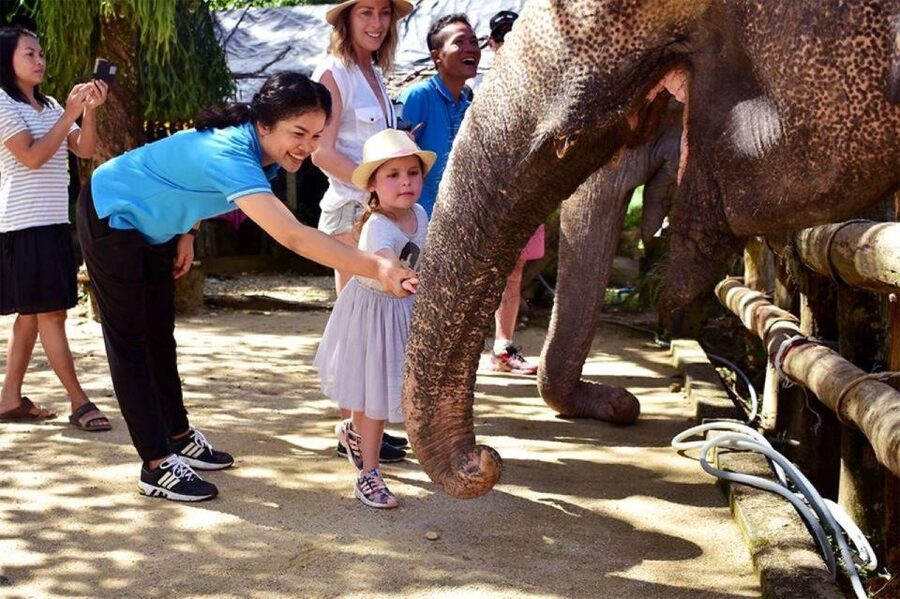
At $56 per person, this is not the cheapest elephant activity around Khao Lak. The value depends on what you want to pay for.
The fee includes pickup and drop-off within the designated Khao Lak area, an air-conditioned vehicle, entry, the observation walk, the introduction, the elephant supplement activity, the Ya Dom workshop, Khanom Krok, water, cola, English-speaking assistance, and accident insurance. You are paying for a managed visit with transport and staff, not just admission at a gate.
The 105 minutes at the sanctuary is a good length for this kind of program. It gives you time to learn, observe, make the herbal supplement, watch the elephants near the creek, and complete the cultural activities without making the outing an all-day commitment. The full schedule is about three hours, including two 30-minute van rides.
The tradeoff is that food beyond the snack activity is not included. If you compare this with a longer day trip that includes lunch, the total cost may look less favorable. If you compare it with an experience that includes staged bathing or riding, this program offers a more responsible format, but less physical contact.
Who will enjoy this visit most
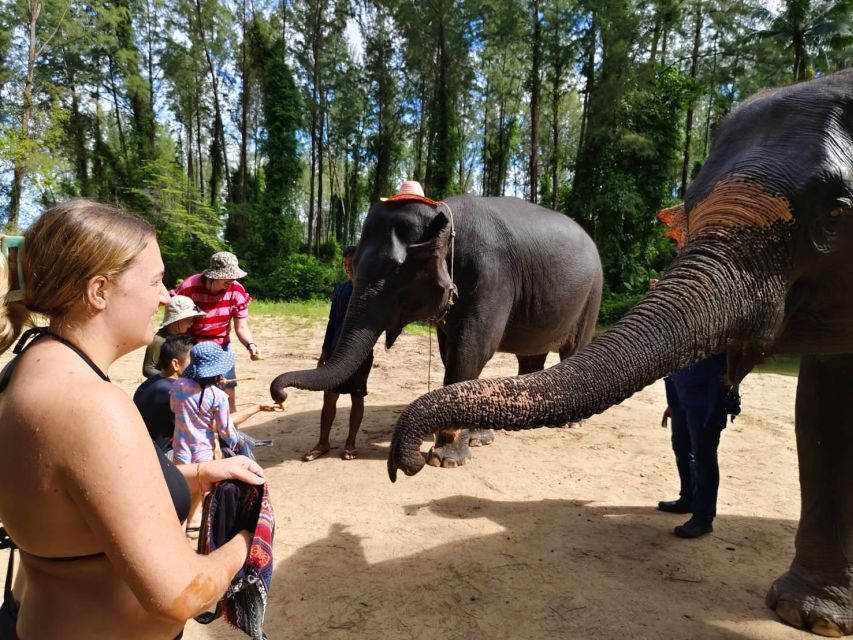
I would choose this tour for you if you want to see Thai elephants while keeping a firm ethical boundary. It suits couples, families, and first-time visitors who want a calm introduction rather than a packed adventure day. The three-hour length works well for children, and one family with children aged six and 11 found the duration manageable.
It is also a good choice if you have already rejected elephant rides or bathing programs. You can still watch the animals at close enough range to understand their size and behavior, while avoiding activities that ask them to perform for you.
The program is not suitable for pregnant women or people with mobility impairments. The grounds involve walking and outdoor observation, so ask before booking if you have concerns about standing, uneven surfaces, or keeping up with the group.
You should also be comfortable with weather. The tour runs as scheduled in all weather conditions. Bring a sun hat, sunscreen, insect repellent, a towel, a change of clothes, and a passport or ID card. A copy of your passport is accepted.
What the experience does not promise
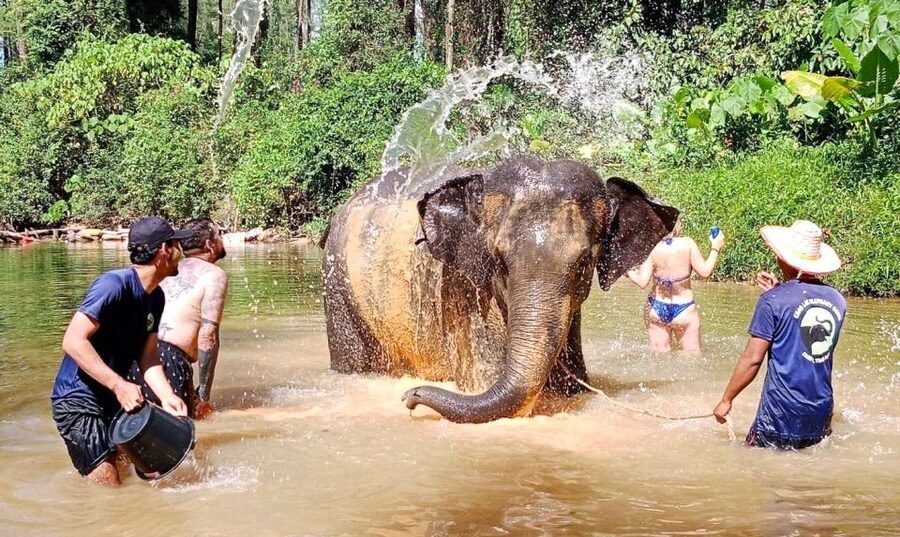
It does not promise a fixed elephant encounter. You may not see bathing, mud play, or every elephant at the creek. You also will not receive the familiar staged photo of sitting on an elephant, riding one, or scrubbing one in the water.
That is not a flaw if you understand the purpose. The sanctuary asks you to accept the animal’s choices. Still, I would rather you know this before paying than arrive expecting a hands-on session.
The facilities are described as basic but clean. You should think of this as a conservation visit with simple infrastructure, not a polished resort attraction. Bring the items you need for sun, insects, and changing weather.
Booking, cancellations, and daily logistics
Pickup is included only within the designated Khao Lak area. Starting times vary, so check availability for your date before booking. You can reserve now and pay later, which helps if your plans are still moving around.
Cancellation is free up to 24 hours before the activity for a full refund. The transport service has received a strong rating, with 89 percent of people giving it a perfect score. That matters because punctual hotel pickup can make or break a short tour.
The live guide speaks English. The introductory recording is available in 40 languages, but you should not assume the live explanation is offered in those languages.
Should you book the Khao Lak Elephant Conservation visit?
Book it if you want ethical boundaries, calm observation, and Thai cultural activities in one short outing. The best parts are the mahout-led explanations, the elephant-led walk, the creek viewing platform, and the fact that no animal is required to bathe, perform, or pose.
Skip it if your main goal is touching, riding, washing, or bathing an elephant. Those activities are not part of the stated program, and the whole point is to avoid them.
For most visitors who want a responsible first look at Thailand’s domestic elephants, I think the $56 fee is reasonable. You get transport, education, food preparation, and a respectful encounter without giving up an entire day. Just arrive ready to watch patiently, accept that nature does not run on a timetable, and treat the elephants as the reason for the visit rather than the backdrop.
FAQ
Where is this elephant experience located?
The activity takes place at Khao Lak Elephant Conservation, with hotel pickup and drop-off available within the designated Khao Lak area.
How long does the tour last?
The complete experience lasts about three hours. The journey includes two 30-minute van rides and about 105 minutes at the sanctuary.
Can I ride or bathe the elephants?
No. The stated policy is observation only, with no riding, bathing, touching, leading, or forced interaction.
Will I see the elephants bathe?
You may watch them bathe or play in mud from a designated viewing platform if they choose to do so. Bathing is not scheduled or guaranteed.
What cultural activities are included?
You prepare a traditional herbal health supplement for the elephants, make a Thai herbal inhaler called Ya Dom, and prepare Khanom Krok, a Thai coconut snack.
Is food included?
A full meal is not included. The program includes local snacks, Khanom Krok, water, cola, and other refreshments.
What should I bring?
Bring a sun hat, change of clothes, towel, sunscreen, insect repellent, and a passport or ID card. A copy of your passport is accepted.
Can I cancel the booking?
You can cancel up to 24 hours in advance for a full refund. You can also reserve now and pay later.
Just added around Khao Lak
- Guide Tour to Khaolak Elephant Sanctuary in Small Group★ 5.0 · 47 reviews
- Early Bird James Bond Island and Elephant Sanctuary from Khaolak★ 5.0 · 2 reviews
- Guided Tour to Takua Pa and Elephant Sanctuary in Khao Lak★ 5.0 · 4 reviews
- Khaolak Elephant Sanctuary, Cooking Class and Waterfall Tour★ 4.5 · 15 reviews
- Khao Lak Elephant Sanctuary Visit and Mangrove Kayak Tour★ 4.5 · 7 reviews
- Khao Lak Ethical Elephant Sanctuary Conservation Experience★ 4.5 · 8 reviews
- Khao Lak Elephant Sanctuary Full Day Small Group Tour★ 5.0 · 8 reviews
- Khao Lak Elephant Sanctuary Tour with Waterfall and Lunch★ 4.5 · 11 reviews
Khao Lak Zoos, compared.
Khaolak: Elephant Sanctuary Guided Tour with Hotel Transfers
Read our review →
Khao Lak: 2-Hour Elephant Sanctuary Eco-Walk with Guided
Read our review →
Khao Lak: Ethical Elephant Sanctuary Experience
Read our review →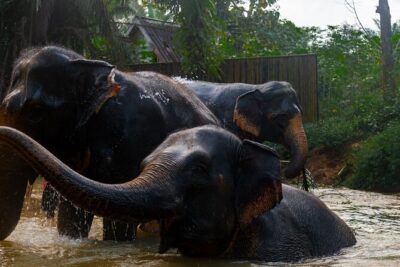
2-Hour Guided Eco-Tour & Transfer to Khaolak Elephant Sanctuary
Read our review →Khaolak: Elephant Sanctuary Guided Tour with Hotel Transfers
Read our review →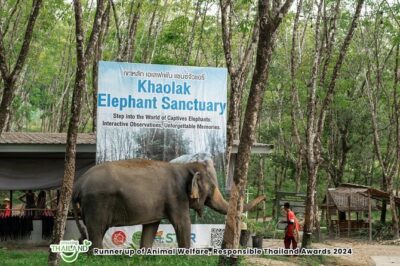
Guide Tour to Khaolak Elephant Sanctuary in Small Group
Read our review →
Khaolak Elephant Sanctuary, Cooking Class and Waterfall Tour
Read our review →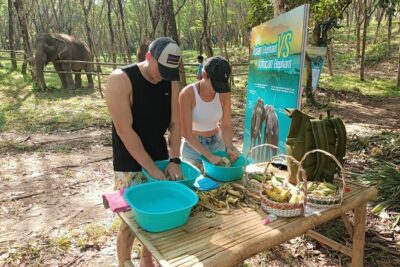
Khao Lak Elephant Sanctuary Tour with Waterfall and Lunch
Read our review →Browse the lists this tour appears in