
REVIEW · BALI
Ubud: Monkey Forest and Rice Terrace Private Tour
The most memorable part of this Ubud day is the mix of Bali’s working culture and famous sights. You move from a family compound and artisan workshops to Tegallalang’s rice terraces, then on to coffee, a royal palace, macaques, and Ubud’s central streets. I like that the day gives you both postcard views and useful cultural context. I also like that guides such as Edi, Agung, Cok, Pande, and Nyoman are praised for explaining Balinese customs, taking photos, and adjusting the pace.
The tradeoff is time on Bali’s crowded roads. From some pickup areas, this can become a long day of driving, and the full route may feel rushed if you want extended walks at every stop. The tour is best for seeing many Ubud highlights in one day, not for a slow, unplanned wander through one village.
Key points to know before booking
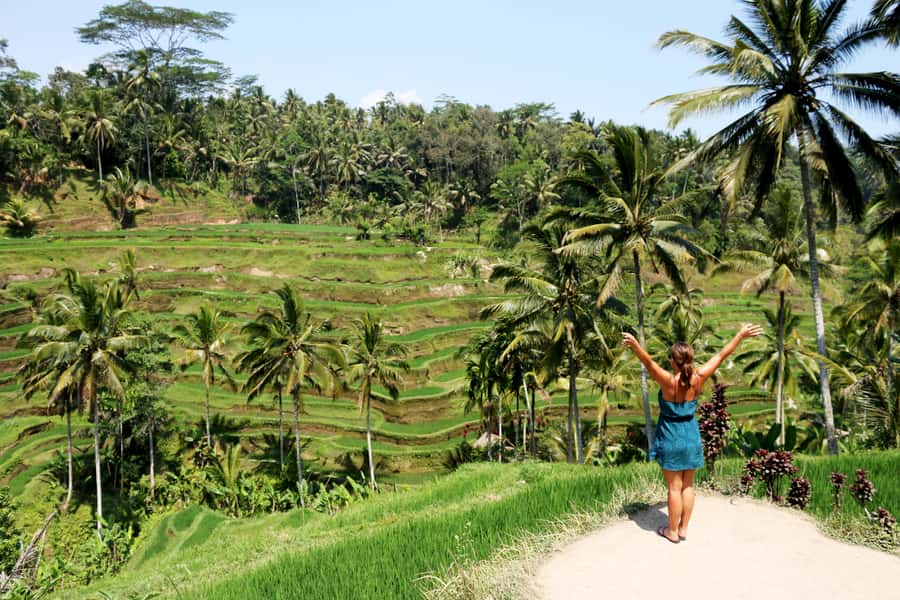
- Tegallalang is the scenic centerpiece: Expect broad views over rice paddies, hillside terraces, and the traditional subak irrigation system.
- The day begins with culture, not just scenery: A Balinese home compound helps explain how separate buildings serve different purposes.
- Luwak coffee is a farm lesson and tasting stop: You see how beans are collected, cleaned, roasted, and ground, then sample coffee, tea, and cocoa drinks.
- The guide can make or break the day: Edi, Agung, Cok, Pande, Nyoman, Gede Wisnu, Teddy, and others are singled out for care, safe driving, clear explanations, and photography.
- The macaque forest is lively and unpredictable: Around 200 long-tailed monkeys live around the temple grounds, often appearing along the roads.
- This is a long, full day: Pickup and drop-off are offered from Ubud, Sanur, Kuta, Nusa Dua, Jimbaran, Seminyak, and Canggu.
Why this Ubud day works so well
Ubud is not one single attraction. It is a town, an art center, a farming area, a temple setting, and a collection of villages where craft work remains part of daily life. Seeing those pieces in one day is the main strength of this tour.
You do not need to arrange separate taxis, entrance tickets, and drivers for each stop. An air-conditioned vehicle carries you between the sights, while a guide explains what you are seeing. That matters in Bali, where traffic can turn a short distance into a slow journey.
The experience lasts about 8 to 10 hours. Pickup is included from the listed resort areas, and English and Korean guides are available. Small-group and private arrangements are offered, though you should check the exact option and starting time when booking.
I would choose this tour if I had only one day for Ubud or if I wanted a guide to handle the roads. I would not choose it for a quiet morning in the rice fields. This is a full sightseeing circuit, with several stops and a fair amount of time in the vehicle.
More Monkey Forests in Bali:
- Ubud: Waterfall, Rice Terraces & Monkey Forest Private Tour
★ 4.9 · 4,894 reviews - Bali: Swing with Falls, Rice Terrace, & Monkey Forest Option
★ 4.8 · 509 reviews - Bali: Leke-Leke Waterfall, Monkey Forest & Jungle Swing Tour
★ 4.8 · 204 reviews
Starting with a Balinese family compound
The first cultural stop is a local home. Rather than showing you one decorated room, the visit introduces the Balinese compound, where several buildings are arranged for different purposes.
This is a useful beginning because Balinese architecture can seem decorative at first glance. A guide can explain why the compound is divided into separate areas and how the buildings relate to family life, worship, and everyday work. That context makes later temples and palace buildings easier to understand.
The home visit also gives the day a more human start. You are not simply looking at a monument through a camera. You are being shown how space is organized in a traditional Balinese setting.
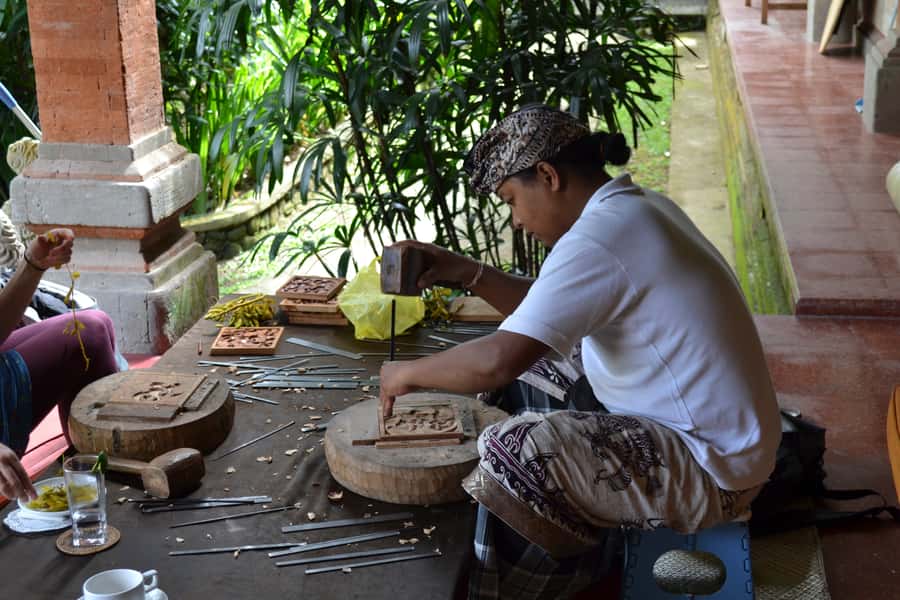
The experience does include craft villages around Ubud and nearby areas. Depending on the day’s route, you may watch wood carving, painting, textile work, or other local production. The craft stops can be worthwhile if you enjoy seeing hands-on work, but remember that these places may also present items for sale. You can browse without buying, and it is sensible to ask about prices before committing to anything.
Some guides are especially good at making these stops useful. Cok, for example, is praised for explaining the home, coffee plantation, monkey forest, and craft work in clear English. Nyoman is also described as taking visitors to wood carvers, painters, and women making scarves and other goods.
Tegallalang Rice Terraces and the subak system

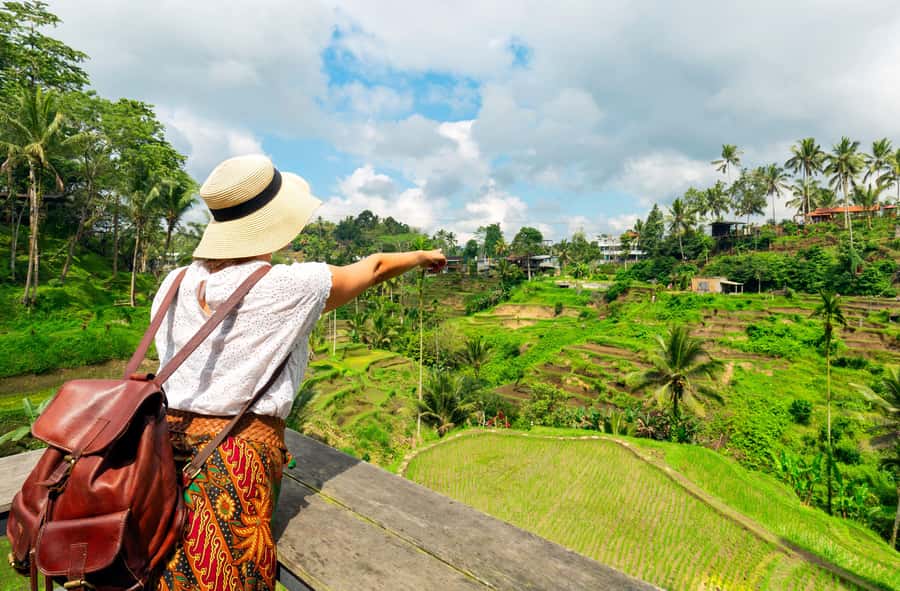
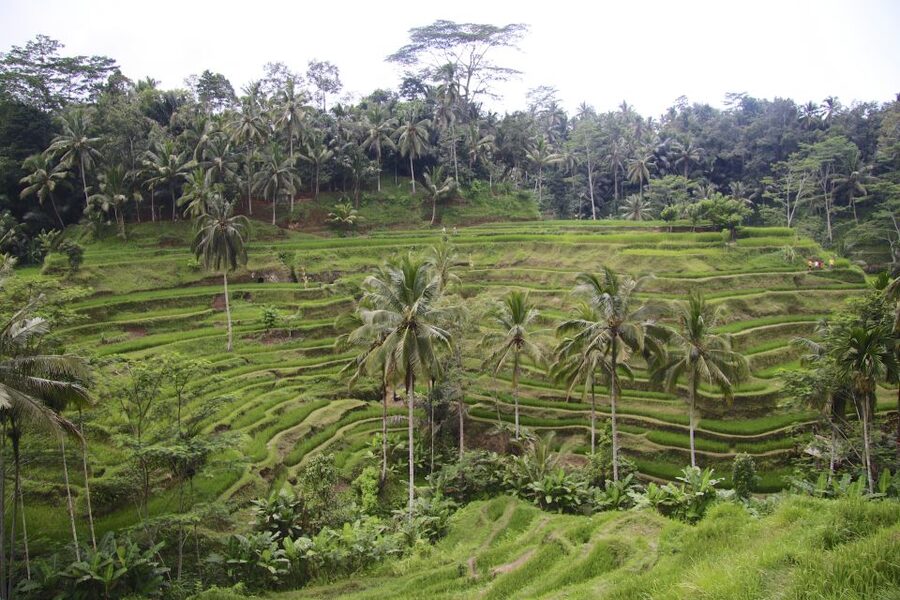
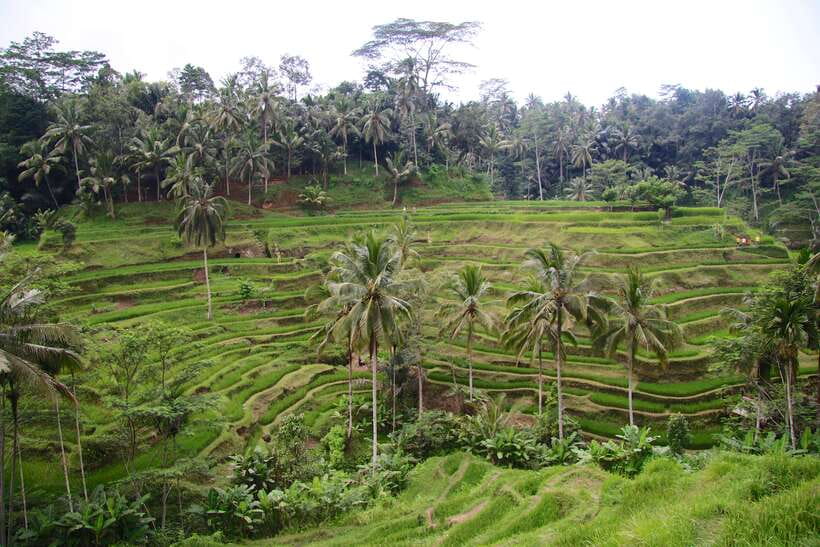
The rice terraces near Tegallalang are the visual high point of the day. From viewpoints on the hillsides, you can look across layered paddies cut into the slopes and valleys. The cool, breezy air is a welcome change from Bali’s warmer coastal areas.
The terraces are not simply arranged for beauty. They depend on the traditional subak irrigation system, which distributes water through a coordinated network. Your guide can explain how this system connects farming communities and temples. That detail gives the view more meaning: the green fields are working farmland shaped by cooperation, not just a scenic backdrop.
You should allow yourself time to look beyond the obvious photo angle. The best part is often the wider view across the valley, where the terraces, paths, palms, and hills form one broad scene. Conditions and crowd levels can vary, so do not expect the same view in every season.
The stop may involve walking around uneven paths or viewpoints. The activity is not suitable for wheelchair users, and it is listed as unsuitable for pregnant women. If you have mobility concerns, ask in advance how much walking your specific route requires.
The rice fields are one reason this tour receives such strong praise. They offer the kind of Bali scenery that is difficult to reach efficiently without a driver, especially if you are staying outside Ubud. They also give you a break from the town’s shops and traffic.
What happens at the luwak coffee plantation
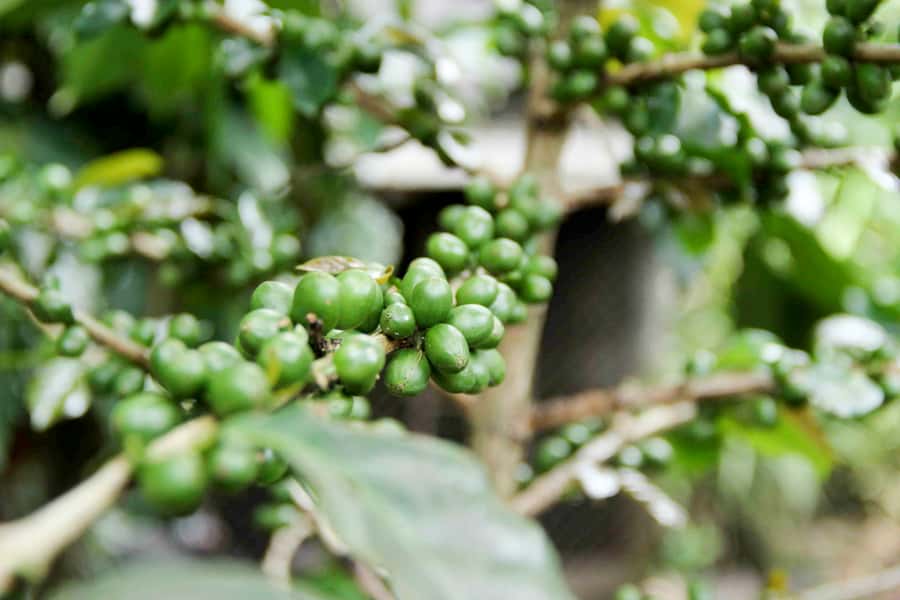
The coffee stop explains the production of luwak coffee, one of Bali’s most unusual drinks. You learn that farmers collect intact coffee beans from the forest floor after they have passed through the digestive system of palm civets. The beans are then cleaned, roasted, and ground.
The value here is the process. You are not only handed a cup and told a curious story. The visit covers the stages that turn the collected beans into a drink, followed by tastings of other coffees, teas, and cocoa beverages.
I would treat this stop as an introduction rather than a full coffee education. It is a good chance to compare several drinks and ask your guide or host about local production. If you are sensitive to animal welfare questions surrounding civet coffee, ask how the beans are sourced before purchasing anything. The provided details explain the traditional collection process, but they do not guarantee that every product comes from the same type of operation.
Food and drinks are not included in the tour price. Tastings at the plantation are part of the described coffee visit, but you should budget separately for meals and any purchases.
More Rice Terrace and Wildlife Tours in Bali:
- Monkey Forest, Ubud, Waterfall and Rice Terrace
★ 4.5 · 53 reviews - Bali: Monkey Forest, Tegalalang, Uluwatu & Kecak Dance Tour
★ 4.7 · 28 reviews - Ubud: Hidden Waterfall, Monkey Forest, Rice Terrace & Swing
★ 5.0 · 3 reviews - Bali romantic floating breakfast – jungle swing – monkey forest – Ubud art shop.
★ 5.0 · 2 reviews
Ubud Royal Palace and the banyan tree
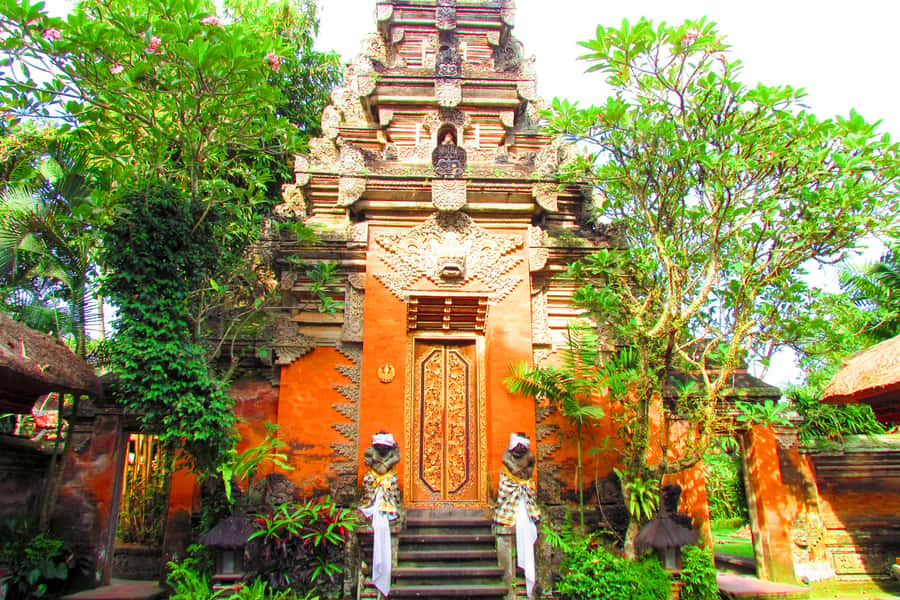
Puri Saren Ubud, also called Ubud Royal Palace, is one of the area’s key monuments. It was built in traditional Balinese style and preserved by the heirs of Ida Tjokorda Putu Kandel.
The palace is a good stop after the open rice fields because it brings you back into Ubud’s town center. Look for the gardens, carved details, and the large banyan tree that provides shade. The stop is more about architecture and atmosphere than a long palace tour.
Do not expect a vast European-style royal residence. Balinese palace compounds are made up of courtyards, gates, gardens, and separate structures. A guide’s explanation helps you read the site, especially if you have not visited Bali before.
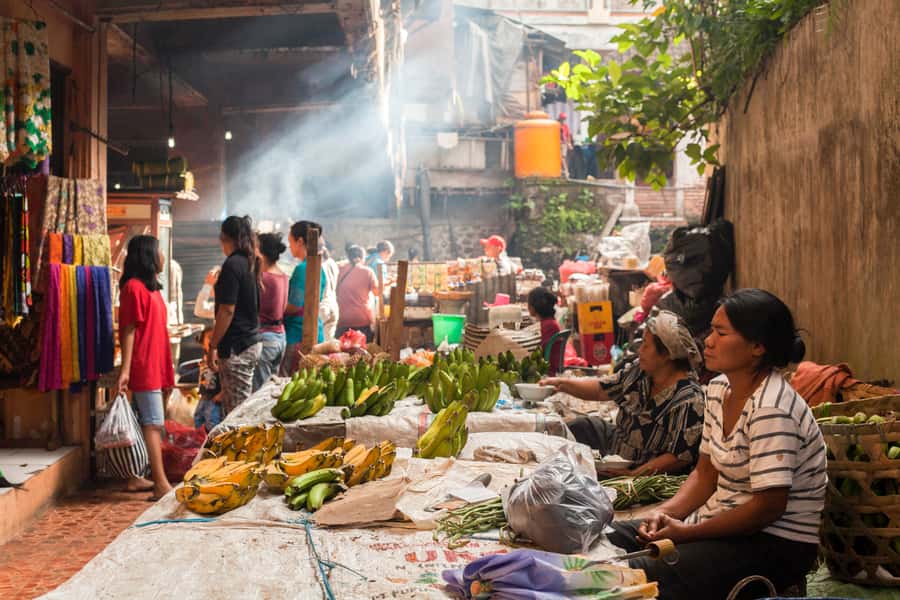
The palace also places you close to Ubud’s market and central streets. The route includes time walking in the central area before returning to your accommodation. That gives you a chance to see the commercial heart of town rather than only the organized stops.
Meeting the macaques at Sacred Monkey Forest
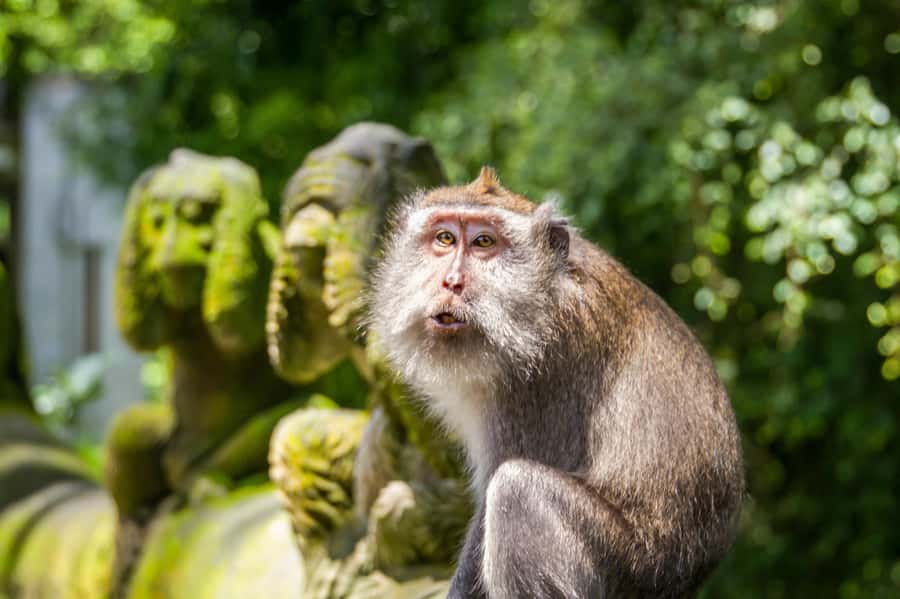
Sacred Monkey Forest is the most energetic stop of the day. Around 200 long-tailed macaques live in the forested temple area, which locals regard as the guardians of Dalem Agung Temple.
You may see the monkeys near the roads and moving through the grounds. Their presence makes the visit entertaining, but it also means you should pay attention to your guide and local rules. Do not treat the macaques like tame pets. Keep your belongings secure, avoid provoking them, and follow instructions around food and personal items.
The temple setting matters as much as the animals. The forest is tied to Balinese religious life, so a good guide will explain the connection between the macaques, the temple, and local belief rather than reducing the stop to an animal photo opportunity.
This is the attraction many people will remember most, but it can also be the least predictable. The monkeys decide where they go, and the forest may feel crowded. One guide, Nyoman, has sometimes used a less crowded monkey site farther out when conditions at the main forest were not ideal. Do not assume that alternative is part of every booking, but it is worth asking your guide about the day’s plan.
Craft villages and the artistic side of Ubud
Ubud’s artistic identity is spread across its surrounding villages. The route may include places where woodworkers, painters, textile makers, silver workers, or other artisans work close to home.
These stops help you see that Balinese art is not confined to galleries. You may watch a piece being shaped or decorated and ask how long the work takes. The experience is more useful when you focus on the skill and process rather than treating each stop as a shopping obligation.
The practical drawback is that craft visits can take time away from the major sights. If your priority is the monkey forest and rice terraces, tell your guide early. If you enjoy finding handmade souvenirs, the village stops may be one of the best parts of the day.
The tour has some flexibility. Agung is praised for adapting the plan to what people wanted to do, while Edi is described as discussing the route beforehand and helping make the most of the day. That flexibility is valuable, but it depends on traffic, opening conditions, and the amount of time you spend at earlier stops.
Guides, drivers, and the private-tour advantage
The guide is central to this experience. The strongest guide reports focus on punctual pickup, careful driving, clear English, cultural explanations, patience, and help with photos.
Names frequently associated with especially good days include Edi, Agung, Cok, Pande, Nyoman, Teddy, Gede Wisnu, Gede Susila, Natha, Damar, and Cokorda. You cannot necessarily request a particular person, but you can ask when confirming your booking.
A private vehicle also lets you ask questions and change the pace more easily than on a large coach. Solo visitors may appreciate the company and help with photos. Families may like the ability to pause when children need a break. Couples can ask for more time at a favorite viewpoint, traffic permitting.
The vehicle is air-conditioned, which matters during a long Bali day. Pickup and drop-off are included from selected areas, including Ubud, Sanur, Kuta, Nusa Dua, Jimbaran, Seminyak, and Canggu.
The main limitation is distance. From the southern resort areas, the drive to Ubud can be lengthy, and the roads around Ubud are often slow. A 10-hour day can feel longer if traffic is heavy. Start with realistic expectations and avoid scheduling a demanding evening activity immediately afterward.
Price, meals, and what your $44 covers
At about $44 per person, the tour offers good value if you want a driver, guide, transport, and several entrance fees handled in one day. The price covers hotel pickup and drop-off in selected areas, an air-conditioned vehicle, the guide and driver, and entrance fees.
It does not cover food or drinks. Plan for your own meal budget, and remember that coffee, tea, cocoa, and souvenirs may lead to extra spending.
The value is strongest for first-time visitors who would otherwise hire a private driver and pay separate admission costs. It is less compelling if you already have a car and driver arranged or if you only want to visit two attractions.
The free cancellation policy allows cancellation up to 24 hours in advance for a full refund. You can also reserve and pay later, which is useful when your Bali plans are still shifting.
Important route questions before you go
Some accounts of this tour include extra stops such as Tanah Lot, while the core Ubud plan described here focuses on the home compound, rice terraces, coffee plantation, palace, monkey forest, craft villages, and central Ubud. Ask exactly what your departure includes before you book.
Tanah Lot is a major addition, not a minor detour. A stop there can make the day much longer, especially if you are hoping to watch sunset. One account describes more than an hour of travel each way between Ubud and Tanah Lot, with the return taking even longer in traffic.
That may be worthwhile if you want a packed Bali highlights day. It is not ideal if your main goal is a relaxed Ubud visit. Confirm the route, expected return time, and whether any extra admission or meal costs apply.
Who should book this Ubud tour?
I recommend it for first-time Bali visitors, couples, families with a full day available, solo visitors who want a driver, and anyone staying outside Ubud who wants several major sights in one trip.
It suits people who prefer explanations and organized transport over finding each stop alone. The guides are often praised for making the day friendly and informative, and several are also good photographers.
I would be cautious if you dislike shopping stops, long drives, uneven paths, or tightly packed sightseeing days. It is also not suitable for pets, wheelchair users, or pregnant women according to the supplied restrictions.
Should you book it?
Book this tour if you want to cover Ubud’s rice terraces, macaques, coffee, palace, crafts, and central streets in one well-supported day. At $44 per person, the combination of transport, guide, and admission fees is a solid deal.
Before confirming, ask for the exact route and whether Tanah Lot is included. Then tell your guide which stops matter most. If you want broad coverage and helpful cultural explanation, this is a smart choice. If you want long walks, quiet fields, or an unhurried day, choose a shorter custom tour instead.
FAQ
How long does the Ubud tour last?
The tour lasts about 8 to 10 hours. Starting times depend on availability.
What places does the tour visit?
The described route includes a Balinese home compound, Tegallalang Rice Terraces, a luwak coffee plantation, Ubud Royal Palace, Sacred Monkey Forest, craft villages, and Ubud’s central market area.
Is hotel pickup included?
Yes. Pickup and drop-off are included from selected areas in Ubud, Sanur, Kuta, Nusa Dua, Jimbaran, Seminyak, and Canggu.
Which languages are available?
Live guides are available in English and Korean.
Is the tour private?
Private and small-group options are available. Check the specific option when booking.
Are entrance fees included?
Yes. Entrance fees are included.
Are meals and drinks included?
No. Food and drinks are not included. The coffee plantation offers coffee, tea, and cocoa tastings as part of that stop, but separate food and drink costs may apply.
Is luwak coffee explained during the tour?
Yes. You learn how beans are collected after passing through palm civets, then cleaned, roasted, and ground. You can also try other coffees, teas, and cocoa drinks.
Is the tour suitable for wheelchair users?
No. The experience is listed as unsuitable for wheelchair users.
Can I cancel the booking?
Yes. You can cancel up to 24 hours in advance for a full refund. You can also reserve now and pay later.
Just added around Bali
- Ubud: Walking Tour with Campuhan Ridge & Monkey Forest★ 4.7 · 34 reviews
- Sunrise Breakfest at kintamani cafe & Ubud private Tour★ 5.0 · 14 reviews
- Bali romantic floating breakfast – jungle swing – monkey forest – Ubud art shop.★ 5.0 · 2 reviews
- Monkey Forest, Ubud, Waterfall and Rice Terrace★ 4.5 · 53 reviews
- North Bali: Ulun Danu, Waterfalls, Swing and Monkey Forest★ 5.0 · 39 reviews
- Ubud: Hidden Waterfall, Monkey Forest, Rice Terrace & Swing★ 5.0 · 3 reviews
- Bali: Monkey Forest, Tegalalang, Uluwatu & Kecak Dance Tour★ 4.7 · 28 reviews
- Bali: ATV, Water Rafting, and Monkey Forest Tour★ 4.9 · 40 reviews
Bali Zoos, compared.
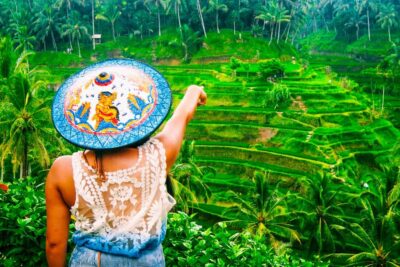
Ubud: Waterfall, Rice Terraces & Monkey Forest Private Tour
Read our review →
Bali Zoo: Guided Ethical Elephant Care Experience
Read our review →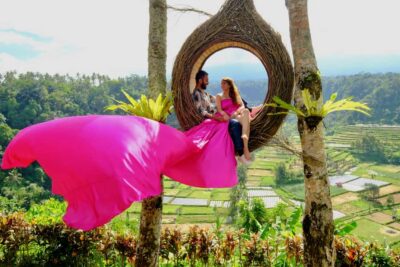
Bali: Swing with Falls, Rice Terrace, & Monkey Forest Option
Read our review →
Bali: Leke-Leke Waterfall, Monkey Forest & Jungle Swing Tour
Read our review →
Bali Pura Taman Ayun Temple, Monkey Forest & Tanah Lot Excursion
Read our review →
Browse the lists this tour appears in