

REVIEW · SAPPORO
Hokkaido Highlights of Flower Blossom, Asahiyama Zoo& Blue pond「Aoi-ike」!
Hokkaido packs a lot into this long day: flower fields in Furano, Biei’s striking Blue Pond, famous roadside trees, and Asahiyama Zoo. I like the way the tour connects places that are awkward to reach in one day without a car, and I like the comfortable air-conditioned bus, especially during Hokkaido’s warm summer months.
I also like the price. At $87.76 per person, transport, zoo admission, taxes, and the driver-guide are covered. The catch is time: 12 hours is a serious day, and the schedule can feel rushed. English support has also been uneven, with some guides, including Shizuka, making a special effort while other departures have offered only limited translation.
At a glance
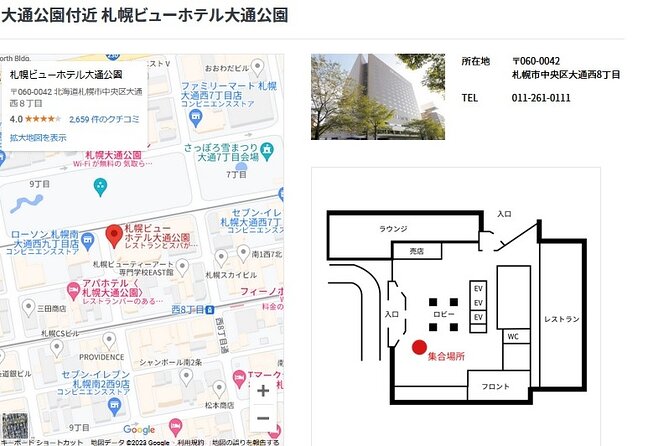
- Farm Tomita gives you a short taste of Furano’s flower country: You get 30 minutes in the shoulder seasons and 50 minutes from June through September.
- The Blue Pond is the visual star: Its unusual blue color, pale tree trunks, and easy photo stop make it one of the day’s most memorable places.
- Asahiyama Zoo is a major part of the schedule: You have about two hours, including time to buy or bring your own lunch.
- The famous Biei trees add a scenic countryside element: Look for the Parent and Child Tree, Seven Star Tree, and Ken and Mary Tree from the bus.
- The tour solves a real transport problem: These sights are spread across Hokkaido, and combining them independently by public transport is difficult in one day.
- Your guide experience may vary: The group can include up to 45 people, and the tour is mainly Japanese with English translation.
A long route from Sapporo into rural Hokkaido
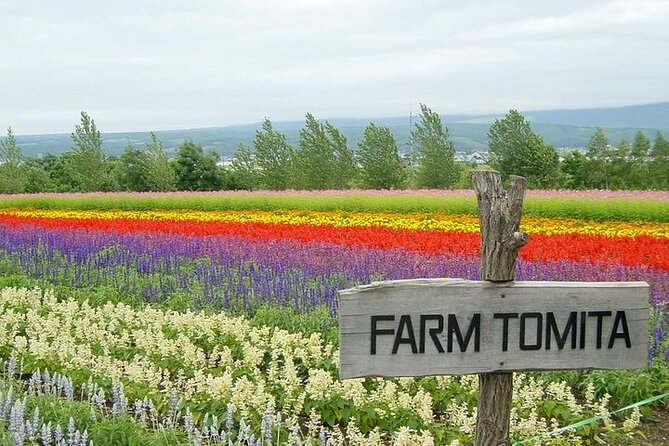
The bus leaves from the ANA Crowne Plaza Sapporo at 7:35 a.m. and returns to Sapporo Station Bus Terminal around 6 p.m. That early start is necessary. Furano, Biei, and Asahiyama are well north and east of Sapporo, so much of the day is spent on the road.
That driving is not wasted time. The route passes through open countryside, farms, and broad views of Hokkaido’s interior. You get the benefit of a driver who knows the route, rather than spending your day changing trains and trying to connect local buses.
The tradeoff is simple: this is a sightseeing sampler, not a slow country escape. You will see several headline sights, but you will not have long, unhurried visits at every stop.
The bus holds up to 45 people. It is a mixed tour with Japanese participants, and there are no reserved bus seats. Bring water, a phone battery, and something to do during the longer road sections. One useful detail from the practical side: the bus may not have phone charging outlets, so charge your phone before departure.
A few more animal parks around Japan worth a look
- 【Private Car】Asahiyama Zoo, Blue Pond, Shirahige Falls, Ningle Terrace (from Sapporo)
★ 5.0 · 60 reviews - Very popular in Harajuku♡Animal petting zoo
★ 4.6 · 39 reviews - Sapporo Winter : Asahiyama Zoo (Penguin Fun & Snowmobile)
★ 5.0 · 28 reviews
Farm Tomita and the changing flower season
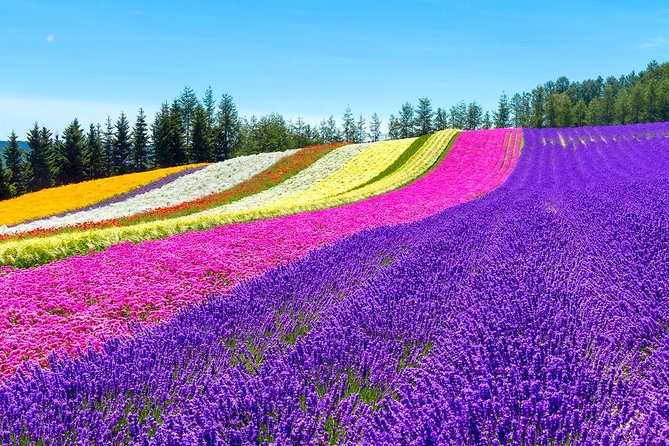
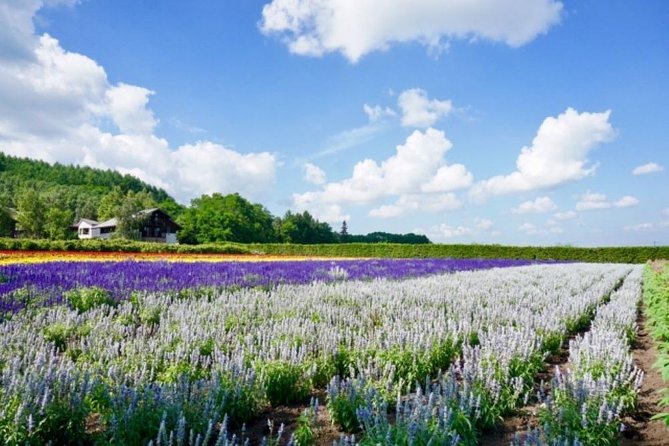
Farm Tomita is the stop most closely linked with Furano’s famous flower fields. In peak season, rows of flowers spread across the hills in bands of color, making this an easy place to understand why Furano is one of Hokkaido’s best-known summer destinations.
Your time here depends on the date. From June through September, the stop is scheduled for 50 minutes. From April 26 through May 31 and October 1 through November 3, you get only 30 minutes.
July is usually the best month for lavender. That timing matters. If you visit outside the main flowering period, you may see only scattered blooms or flowers in a greenhouse rather than the full purple display shown in promotional photographs. Some departures have arrived before the fields reached full bloom, yet still found attractive patches of flowers.
I would treat Farm Tomita as a photographic stop, not a full farm visit. Fifty minutes is enough to walk around, take pictures, and enjoy the colors, but it is not enough to inspect every path, shop, and flower bed at a relaxed pace. If the fields are your main reason for booking, consider visiting Furano separately for more time.
This is also where the schedule can frustrate people. Several experiences on this route compete for attention, and some people would gladly exchange part of the zoo visit for another hour among the flowers. If you care most about lavender, check the season carefully before paying.
Biei’s Blue Pond, a beautiful but busy half hour
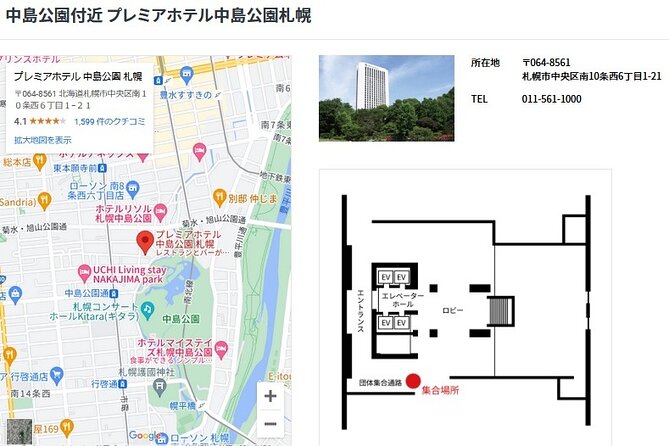
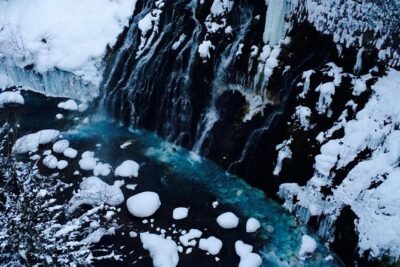
The Shirogane Blue Pond is the day’s most unusual natural sight. Water flowing from a nearby waterfall carries aluminum into the Biei River, where a colloid forms. Sunlight interacting with the water produces the pond’s distinctive blue appearance.
The effect is especially striking beside the pale trunks of Japanese birch and larch trees rising from the water. The dead trees give the pond a quiet, almost surreal quality, and the short walk to the viewing area makes this an efficient stop.
You have about 30 minutes here. That is enough for photographs and a quick look around, but not enough for a long wander. The pond can be crowded during the popular tourist season, so you should expect a quick photo stop rather than solitude.
Traffic is a genuine concern. The road to the Blue Pond can become heavily congested, and the guide may replace it with a hill in northwest Biei if conditions are poor. That alternative may still provide countryside views, but it is not an equal substitute if the pond is high on your wish list.
For the best chance of enjoying this stop, keep your group’s meeting instructions clear and return to the bus promptly. A late departure here can affect every stop that follows.
Biei’s famous trees and patchwork farms
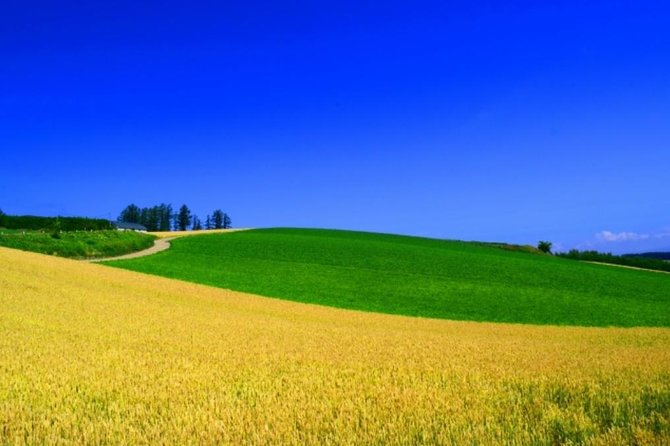
Biei is known for gently rolling flower slopes and wide farm views. The bus passes near several trees made famous through advertising and photography, including the Parent and Child Tree, Seven Star Tree, and Ken and Mary Tree.
You should not expect a long walking visit at each one. The trees are mainly part of the scenery viewed from the bus, with the patchwork farmland spreading around them. This works well as a visual break between the major stops. You get a sense of Biei as a working agricultural area, not just a series of photo points.
The countryside is one of the tour’s quieter pleasures. After the crowds at the Blue Pond and before the zoo, the open fields and rolling roads give you time to rest and look out the window. If you hoped to stop and photograph every famous tree up close, this tour may feel limited. If you are happy to see them as part of a moving panorama, the arrangement makes sense.
The day can also include a short visit connected with craft cottages and Ningle Terrace, where small cabins offer handmade goods and woodland paths. The time there may be brief, and some people prefer to walk the paths rather than shop. Think of it as a pleasant extra, not the central reason to book.
Same place, a different set of animals:
- Hokkaido Asahiyama Zoo Ningle Terrace Day trip
★ 5.0 · 14 reviews - Penguin Fun & Snowmobile : Sapporo Winter (Asahiyama Zoo)
★ 4.8 · 14 reviews - Hokkaido Day Tour from Sapporo: Asahiyama Zoo, Blue Pond Japan
★ 5.0 · 10 reviews - Hokkaido Asahiyama Zoo and Blue Pond Elf Terrace Day Trip
★ 3.0 · 10 reviews
Asahiyama Zoo and its close-up animal displays
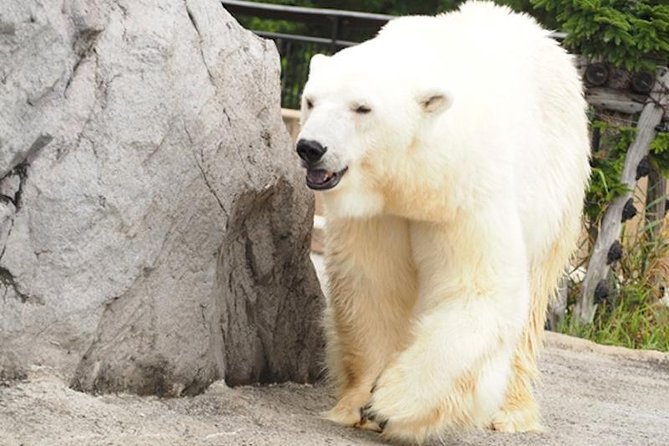
Asahiyama Zoo is the longest scheduled attraction, with about two hours on site. It is in northern Hokkaido and is known for displays designed to show animal behavior, not only animals standing behind conventional barriers.
The Seal Hall is a good example. A glass tube called the Marine Way lets you watch seals swimming through the water at close range. The zoo also has a Hippopotamus Hall, along with ostriches and warthogs presented in a setting intended to suggest more natural behavior.
Penguins are another popular draw, and seeing them active can be a highlight for families. The zoo is well organized, but it is smaller and more compact than some large zoos elsewhere. If you are used to enormous North American facilities, you may find the space more enclosed.
Two hours gives you enough time to see selected sections, but not every animal at a leisurely pace. The zoo can also feel hot when the weather is warm, so wear light clothing and comfortable shoes. Some animals may be resting or out of view, which means the quality of the visit depends partly on timing and luck.
This is the tour’s biggest point of disagreement. I understand why the operator gives the zoo a substantial block of time: it is a major Hokkaido attraction, it works well for families, and its behavior-focused displays are different from a standard animal park. But if your priority is flowers, scenery, or traditional rural Japan, two hours may feel too long.
Lunch is not included. The schedule expects you to eat at your own expense at the zoo, so do not assume you will have a separate restaurant stop. Use part of the zoo visit for food and keep the remaining time for the exhibits you most want to see.
How good is the English support?
This point deserves a clear warning. The tour is mainly Japanese, with English translation or assistance depending on the guide and departure.
Some guides have been excellent at helping international participants. Shizuka is specifically known for being friendly, cheerful, professional, and careful to make sure English speakers understood the instructions. Another guide, Noguchi, used a mobile translator to communicate with overseas participants. Helen has also been praised for her friendly help.
That level of care is not guaranteed on every departure. English-speaking passengers have sometimes received only part of the information, especially when the Japanese guide continued speaking while the translation was brief or delayed. If you need detailed commentary at every stop, this may not be the right choice.
You should be comfortable following written instructions, watching the meeting time, and asking for clarification when needed. The tour can work well for English speakers when the guide takes an active role, but the experience is not the same as a fully English-language small-group tour.
What the $87.76 price really buys you
At $87.76, this is good value if your goal is to cover a lot of ground in one day. The fee includes the air-conditioned vehicle, driver-guide, taxes, all listed activities, and Asahiyama Zoo admission. You avoid arranging a rental car, paying for fuel, navigating rural roads, and finding connections between distant sights.
The price is less attractive if you want a relaxed schedule. You are paying for access and convenience, not generous time at each location. Lunch, drinks, shopping, and personal expenses are extra.
I would compare the cost with the price and effort of renting a car, but also with the value of your time. A private car would give you more control, yet driving this route in one day would be tiring. Public transport would require careful planning and may not connect these places neatly.
For a solo visitor based in Sapporo, the group bus is especially practical. It lets you see several major Hokkaido sights without paying for a private vehicle. Families may also appreciate having the route handled, though younger children may find the long day demanding.
Timing, weather, and the risk of a late return
The advertised return is around 6 p.m., but road conditions can change the plan. Summer traffic near the Blue Pond may cause delays, and the operator may shorten or change the route because of traffic or other conditions.
Bad weather, including typhoons, can lead to cancellation. You should receive notice by email the day before in that situation. If the operator cancels for weather, you can receive a different date or a full refund.
Do not book this for your final day in Hokkaido. A traffic delay could affect your onward plans, and no compensation is offered if you miss a flight, train, or other connection. I would leave this tour at least one flexible day before a major departure.
The cancellation rule is straightforward: cancel at least 24 hours before the local start time for a full refund. Changes or cancellations inside that 24-hour window are not accepted for a refund.
Who should book this Hokkaido day trip?
I would recommend it to you if you want a broad introduction to rural Hokkaido from Sapporo and prefer not to drive. It suits families, solo visitors, and anyone who wants to see the Blue Pond, Furano flowers, Biei scenery, and Asahiyama Zoo in one ambitious outing.
You will get the most from it if you enjoy scenic bus travel and can accept fixed stop times. The trip gives you many useful first impressions, and the bus makes the route far easier than arranging it alone.
I would hesitate if your main goal is a slow visit to Farm Tomita, detailed English commentary, or a quiet nature experience. Flower lovers may want a separate Furano visit, while people less interested in zoos may find the two-hour stop too long.
Should you book it?
Book this tour if convenience matters more than flexibility. For a reasonable price, you reach several distant Hokkaido sights in one day, with zoo admission and transport handled for you. The Blue Pond, Biei farmland, and flower fields make the route visually rewarding, while Asahiyama Zoo gives families a clear focal point.
Skip it if you have several days for Hokkaido and can rent a car or arrange separate local trips. You will have more time at Farm Tomita and Biei, and you can choose how long to stay at the zoo.
For most short stays in Sapporo, I see this as a useful, demanding sampler. Charge your phone, bring lunch money, wear comfortable shoes, watch the meeting times, and do not place it on the day before your flight.
FAQ
How long does the tour last?
The tour lasts about 12 hours. It starts at 7:35 a.m. and is expected to return to Sapporo Station Bus Terminal around 6 p.m.
Where does the tour start?
The meeting point is outside the ANA Crowne Plaza Sapporo by IHG, at Kita 3-Jo, 1-chome-2-9 Nishi, Chuo Ward, Sapporo.
Where does the tour end?
The return destination is Sapporo Station Bus Terminal.
Is lunch included?
No. Lunch is at your own expense, and you are expected to eat during the visit to Asahiyama Zoo.
How much time do I get at Farm Tomita?
You get 30 minutes from April 26 through May 31 and October 1 through November 3. From June through September, the scheduled time is 50 minutes.
Is lavender guaranteed to be in bloom?
No. The usual best time for lavender is July, but flowering conditions vary by date. Outside the main season, you may see fewer flowers or greenhouse displays.
Is the tour conducted in English?
This is a mixed tour with Japanese participants. English translation or assistance is provided, but the amount of English information can vary by guide and departure.
What happens if bad weather cancels the tour?
If poor weather causes cancellation, you will be offered another date or a full refund. The operator says it will contact you by email the day before.
Just added around Japan
- 2 Day Tour to Icebreaker Mombetsu and Asahiyama Zoo in Hokkaido★ 5.0 · 2 reviews
- Hokkaido Asahiyama Zoo Ningle Terrace Day trip★ 5.0 · 14 reviews
- Hokkaido Day Tour from Sapporo: Asahiyama Zoo, Blue Pond Japan★ 5.0 · 10 reviews
- Winter Asahiyama Zoo and blue pond “Aoi-Ike” 1 Day bus tour★ 4.5 · 3 reviews
- Hokkaido Asahiyama Zoo and Blue Pond Elf Terrace Day Trip★ 3.0 · 10 reviews
- Hokkaido Asahiyama Zoo, Furano and Biei Bus Tour★ 4.5 · 4 reviews
- Tokyo:Customizable Private Day Trip to Mt.Fuji & Safari Park★ 4.8 · 6 reviews
- Hokkaido│Kurodake Ropeway, Asahiyama Zoo Autumn Leaves Tour★ 5.0 · 2 reviews
Sapporo Zoos, compared.
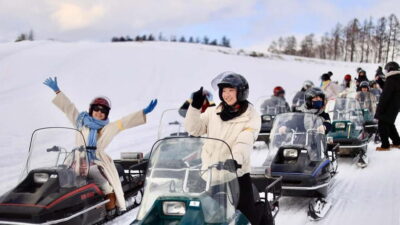
Sapporo Winter : Asahiyama Zoo (Penguin Fun & Snowmobile)
Read our review →
Penguin Fun & Snowmobile : Sapporo Winter (Asahiyama Zoo)
Read our review →
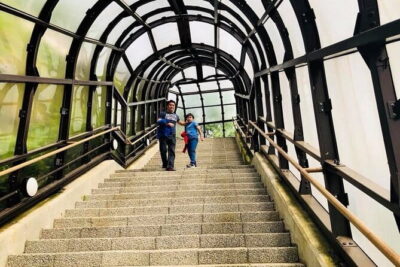
Hokkaido Asahiyama Zoo and Blue Pond Elf Terrace Day Trip
Read our review →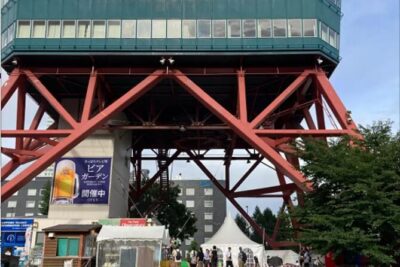
Hokkaido Day Tour from Sapporo: Asahiyama Zoo, Blue Pond Japan
Read our review →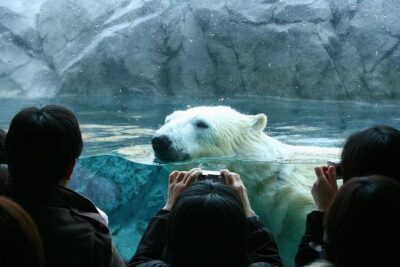

Winter Asahiyama Zoo and blue pond “Aoi-Ike” 1 Day bus tour
Read our review →Browse the lists this tour appears in