
REVIEW · AUSTRALIA
DINOSAUR and FOSSIL ZOO TOUR Rockhampton
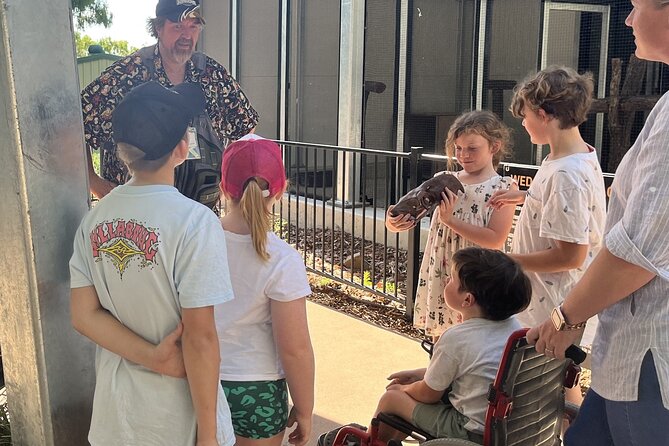
Rockhampton’s Dinosaur and Fossil Zoo Tour puts real fossils in your hands, then shows you living animals connected to that ancient past. You may hold dinosaur remains, saber-tooth skulls and teeth, giant crocodile fossils, and evidence of Australia’s lost mega-fauna. I like that the experience makes evolution feel physical rather than distant behind glass.
I also like the way it joins the zoo with the Rockhampton Botanic Gardens. You get animals, fossils, local history, palms, plant adaptation, and the story of how Rockhampton helped stop the prickly pear invasion in about an hour. The main consideration is pace: at $10.76 per person, it is excellent value, but the short duration means this is an introduction rather than a long museum-style visit.
Key points at a glance
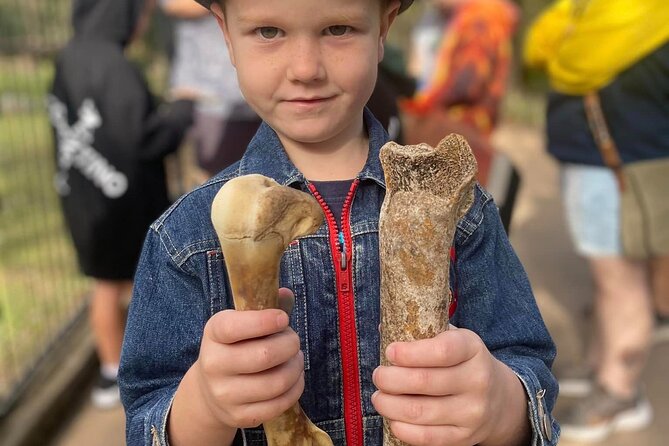
- Real fossils you can hold: Handle fossils linked to dinosaurs, including T. rex, along with saber-tooth teeth, giant crocodile remains, and other prehistoric pieces.
- Living animals beside ancient relatives: The zoo setting helps you connect modern creatures with the animals that came before them.
- Australia’s lost mega-fauna: Learn about giant kangaroos, killer wombats, giant killer birds, and other vanished animals.
- A second stop in the Botanic Gardens: Explore plant evolution, unusual adaptations, a zombie tree, and Rockhampton’s prickly pear story.
- Private one-hour format: Your group takes part on its own, starting and finishing at Rockhampton Zoo.
- Family-friendly scale: The activity suits a broad age range, from children aged 30 months to adults aged 80, according to the supplied group experience.
Why holding the fossils changes the visit
Many fossil displays ask you to keep your hands behind a line. This tour takes the opposite approach. You can hold selected real fossils and have your photograph taken with skulls and teeth linked to creatures such as saber-toothed predators, giant crocodiles, and large prehistoric birds.
That physical contact matters, especially for children. A fossil can look like an ordinary stone until you feel its weight, shape, and texture. The guide can then connect that object to an animal, an era, and the process of evolution. You are not simply memorizing names. You are using an object to picture a creature that once lived.
The experience also includes fossils from dinosaurs such as T. rex. The information does not specify the exact fossil pieces you will handle, so you should expect a selection rather than a full display of every item described. Still, the chance to hold authentic material gives this tour its clearest point of difference.
I would bring a camera or phone if you want the fossil-holding photograph. The activity specifically includes the chance to pose with skulls and teeth, making it more interactive than a standard zoo talk.
A few more animal parks around Australia worth a look
- Penguin Parade, & Wildlife Encounters Eco Tour from Melbourne
★ 5.0 · 3,774 reviews - Sydney: Taronga Zoo Tickets
★ 4.6 · 1,551 reviews - From Brisbane: Australia Zoo Transfer and Entry Ticket
★ 4.9 · 1,539 reviews
From Rockhampton Zoo to prehistoric life
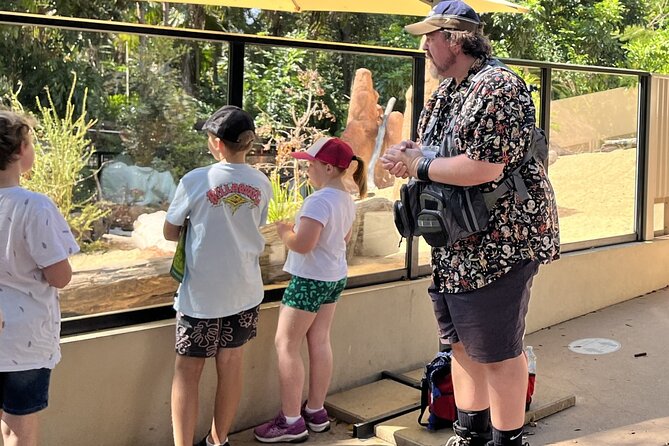
The tour begins at Rockhampton Zoo, 100 Spencer Street, The Range, at 9:00 am. It returns to the same meeting point, which keeps the morning simple. You do not need to work out a separate end location or arrange a transfer between the start and finish.
At the zoo, the guide links the living animals around you with their prehistoric relatives. This is a useful teaching method because evolution can feel abstract when it is presented only as a timeline. Looking at a living animal, then considering an earlier form or relative, gives the subject a clear reference point.
The supplied information does not list individual animal species or name the guide, so I would not book expecting a fixed animal-by-animal route. The focus is broader: evolution, the zoo’s animals, and the ancient creatures connected to them.
The private format helps here. Only your group takes part, so the experience is not built around a large crowd. That can make it easier to ask questions or adjust the conversation for your group’s age range. A family with young children may need simpler explanations, while adults may want more detail about fossils and Australia’s past. The tour’s private structure gives the guide room to respond to that mix.
Australia’s lost giant animals
One of the strongest parts of the subject matter is Australia’s lost mega-fauna. The tour covers giant kangaroos, killer wombats, and giant killer birds. These examples help correct the familiar picture of Australia as a place known only for its current marsupials and reptiles.
A giant kangaroo is not just a larger version of the animal you might see today. A killer wombat sounds funny at first, but it points to a past Australia filled with animals very different from the mild-looking creatures associated with the country now. Giant birds and giant crocodiles add another sense of scale.
This is where the tour should work well for children. The names are memorable, and the fossils turn unusual facts into something you can see and touch. Adults may also appreciate the way the activity connects Australian natural history with the wider story of animal change and extinction.
The one-hour time limit keeps the session lively, but it also limits how far the science can go. If you want a detailed study of extinction dates, fossil sites, or Australian paleontology, you will need another attraction or book. If you want a clear, hands-on introduction, the length is a strength.
A different kind of stop at the Botanic Gardens
The Botanic Garden portion shifts the subject from animals to plants. You visit the Rockhampton Botanic Gardens to learn about the town’s history, the gardens, plant evolution, and the ways plants adapt to their surroundings.
The gardens are described as home to the southern hemisphere’s largest collection of palm trees. That makes the plant section more than a gentle walk between fossil topics. You are looking at a major collection while learning how plants change and cope with conditions around them.
The tour also points out a zombie tree, an unusual feature that should catch the attention of children and adults alike. The supplied details do not identify the species or explain precisely why it has that name, so treat it as a feature to discover with the guide rather than a fact to research in advance.
You will also hear how Rockhampton helped end the prickly pear invasion. This adds a practical local story to the plant discussion. Instead of treating botany as a list of exotic specimens, the tour shows how plants can become a serious problem and how people respond.
I like this change of subject because it broadens the experience. You begin with fossils and animals, then move into living plant collections and local history. The connection is evolution: animals adapt over time, and plants do the same.
Same place, a different set of animals:
- Brisbane River Cruise with entry to Lone Pine Koala Sanctuary
★ 4.5 · 1,522 reviews - Brisbane River Cruise and Koala Sanctuary Visit
★ 4.7 · 1,397 reviews - Sydney: Taronga Zoo Ticket with Return Ferry
★ 4.5 · 1,142 reviews - Sydney Taronga Zoo General Entry Ticket
★ 4.0 · 941 reviews
Why the private format matters
This is a private activity, so only your group participates. That is useful for families, couples, or a small group with different ages and interests. You can ask for clarification without raising your voice across a crowd, and children may get a better chance to engage with the fossils.
The supplied experience included children from 30 months through 12 years, along with adults up to age 80. That is a good sign for mixed-age groups. It suggests the tour can work as a shared family activity instead of an outing aimed only at very young children or serious fossil fans.
Still, private does not mean fully customized. The available information gives a set start time, a one-hour duration, and a stated combination of zoo and garden topics. You should expect the guide to lead the planned experience rather than design an entirely new route around your personal interests.
The short format also helps if you are fitting Rockhampton into a larger day. You begin at 9:00 am and finish back at the zoo, with no separate transfer described. Keep in mind that the tour requires good weather. If poor weather causes cancellation, you are offered another date or a full refund.
Is $10.76 a good price?
At $10.76 per person, the value is strong if you want an informal introduction to Rockhampton’s natural history. You are not paying only for a zoo entry or a garden walk. The price covers a private guided activity that combines living animals, real fossils, local history, Australian mega-fauna, and plant evolution.
The hands-on fossil element gives the price much of its appeal. A standard visit may let you look at displays, but this activity adds explanation and the chance to hold selected fossils. The garden portion adds another setting without requiring a separate booking.
The tradeoff is time. One hour does not allow a slow inspection of every zoo animal or a long walk through every part of the gardens. Think of the tour as a focused sampler. It gives you several memorable subjects, then leaves you free to spend more time elsewhere if you want a fuller visit.
The price is especially sensible for a family group because the activity is designed to include very young children, older children, and adults. I would consider it less suitable for someone who wants a full-day paleontology program or a specialist fossil study.
Who will enjoy this most?
I would recommend this experience to families looking for an activity that is educational without feeling like a classroom. The fossils provide an immediate hook, and the names of the lost animals give the guide material that children can remember.
It also suits adults who want a short local experience rather than a major attraction requiring half a day. The Botanic Gardens section adds Rockhampton context, while the zoo section makes the science easier to picture.
You may want to choose another activity if you dislike touching natural specimens, want a long and detailed museum visit, or need a completely indoor plan. The tour depends on good weather and takes place across a zoo and garden setting.
The broad age range is one of its best qualities. A group that includes a toddler, school-age children, parents, and grandparents can all find a point of interest. Very young children may not follow every explanation, but they can still respond to the animals and the chance to see large fossil pieces.
Booking, meeting point, and cancellation
You meet at Rockhampton Zoo, 100 Spencer Street, The Range, at 9:00 am. The activity ends at that same meeting point. It is near public transportation, and most people can participate.
A mobile ticket is provided, which keeps the booking easy to carry on your phone. Confirmation is received at the time of booking.
Free cancellation is available if you cancel at least 24 hours before the start time. Changes or cancellations made inside that 24-hour window are not accepted for a refund. The cut-off uses Rockhampton local time, so check the time carefully if you are booking from another location.
Because the experience requires good weather, poor conditions may lead to a new date or a full refund. That policy is worth noting before you build a tightly timed day around the tour.
My verdict on the Dinosaur and Fossil Zoo Tour
Book this tour if you want a short, low-cost, family-friendly introduction to Rockhampton’s animals, fossils, plants, and local stories. The chance to hold real fossils is the main reason to choose it, while the Botanic Gardens gives the hour more range than a zoo talk alone.
I would be realistic about the limits. You will not get a long paleontology lecture or an exhaustive garden tour in 60 minutes. But for $10.76, a private group format, a 9:00 am start, and a mix of hands-on fossils with living animals, the experience offers unusually good value. It is a smart pick for curious families and anyone who wants a memorable slice of Rockhampton before moving on.
FAQ
Where does the tour start?
The tour starts at Rockhampton Zoo, 100 Spencer Street, The Range, Queensland 4700.
What time does the tour begin?
The stated start time is 9:00 am.
Where does the tour finish?
The activity ends back at the Rockhampton Zoo meeting point.
How long does the experience last?
The tour lasts approximately one hour.
Can I hold the fossils?
Yes. The experience includes the opportunity to hold real fossils, including pieces connected with dinosaurs such as T. rex, as well as skulls and teeth from prehistoric animals.
What animals and prehistoric subjects are covered?
The tour connects zoo animals with their prehistoric relatives and discusses Australia’s lost mega-fauna, including giant kangaroos, killer wombats, and giant killer birds. It also includes saber-toothed animals and giant crocodiles.
Does the tour include the Botanic Gardens?
Yes. The Botanic Garden portion covers Rockhampton’s history, plant evolution, plant adaptation, the zombie tree, the palm collection, and the town’s role in ending the prickly pear invasion.
Is this a private tour?
Yes. Only your group participates in the activity.
Is the tour suitable for children and older adults?
Most people can participate. The supplied age range for one group included children aged 30 months to 12 years and adults up to age 80.
What happens if I need to cancel?
You can receive a full refund if you cancel at least 24 hours before the experience starts. Cancellations or changes made less than 24 hours before the start time are not accepted for a refund. If poor weather causes the activity to be canceled, you are offered another date or a full refund.
Just added around Australia
- Zen In The Zoo★ 5.0 · 2 reviews
- Wings Wildlife Park Burnie Shore Excursion★ 4.2 · 13 reviews
- Ultimate Blue Mountains Private Tour with Scenic World and Wildlife Park★ 5.0 · 10 reviews
- Blue Mountains Small Group Tour with Lunch, Zoo and Scenic World★ 5.0 · 25 reviews
- Taronga Zoo & Whale Watching Cruise Combo – Sydney Harbour★ 4.5 · 15 reviews
- Sydney Zoo General Entry Admission Ticket★ 5.0 · 3 reviews
- Sydney Private Tour Inc The Royal National Park and Symbio Zoo★ 5.0 · 9 reviews
- Featherdale Wildlife Park with Exclusive Private Transfers★ 4.5 · 32 reviews
Australia Zoos, compared.
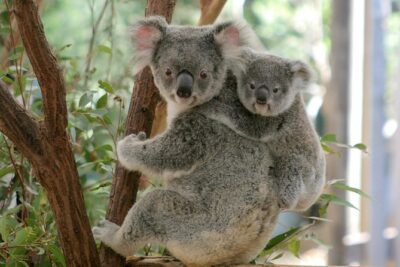
Brisbane River Cruise with entry to Lone Pine Koala Sanctuary
Read our review →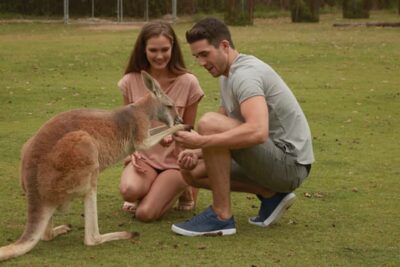
Brisbane River Cruise and Koala Sanctuary Visit
Read our review →
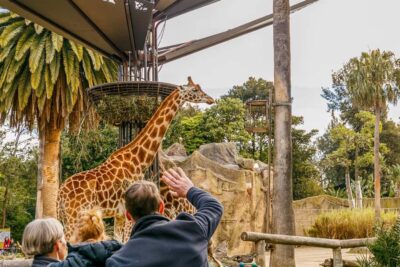
Taronga Zoo Entry & Return Ferry – Sydney Harbour
Read our review →
Currumbin Wildlife Sanctuary General Entry Ticket
Read our review →Browse the lists this tour appears in